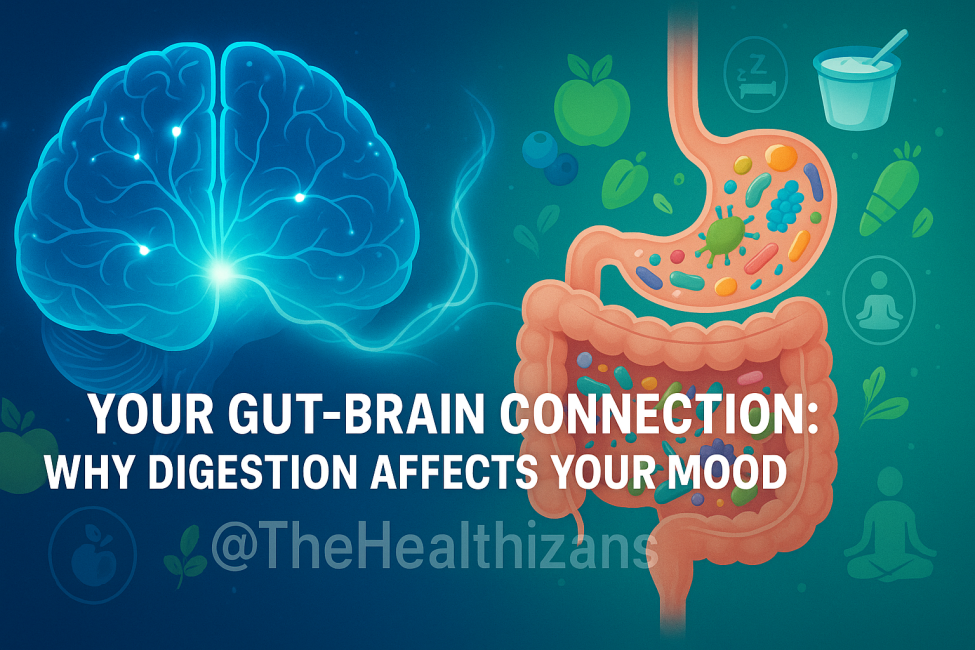
Ever had “butterflies” before an exam or felt your stomach knot up when you’re stressed? That’s no coincidence. Your gut and brain are in constant conversation, and scientists now call the gut the “second brain.” This gut-brain connection may hold the key to better mood, mental health, and even disease prevention.
🧠 What Is the Gut-Brain Axis?
The gut-brain axis is a two-way communication network linking your digestive system and your nervous system.
- The gut has over 100 million nerve cells — more than the spinal cord.
- Signals travel between the gut and brain through the vagus nerve and chemical messengers like serotonin.
- About 90% of serotonin, the “feel-good” neurotransmitter, is actually produced in the gut, not the brain.
This means what happens in your stomach can strongly influence what happens in your head.
🦠 The Role of the Gut Microbiome
Your gut is home to trillions of microbes (bacteria, fungi, viruses) collectively known as the microbiome. These tiny organisms play a big role in mental wellbeing.
- Healthy microbes produce mood-boosting chemicals like short-chain fatty acids and neurotransmitters.
- Imbalanced microbes (dysbiosis) are linked to anxiety, depression, and even neurodegenerative diseases.
- Probiotic-rich foods like yoghurt, kefir, and fermented vegetables may support a healthier gut-brain connection.
🍎 Food and Mood: The Direct Link
Nutrition is one of the fastest ways to influence the gut-brain axis.
- Diets rich in fruits, vegetables, whole grains, and omega-3s support beneficial microbes and reduce inflammation.
- Ultra-processed foods, sugar, and alcohol disrupt gut balance, which can worsen mood and stress resilience.
- A Mediterranean-style diet has been shown to reduce depression risk by up to 30%.
😴 Stress, Sleep, and the Gut
It’s not just food. Stress and sleep patterns also shape the gut-brain dialogue.
- Chronic stress increases gut permeability (“leaky gut”), which can trigger inflammation that affects mood.
- Poor sleep changes microbial diversity, which may worsen anxiety and depression symptoms.
- Mindfulness, yoga, and adequate rest have been shown to improve gut health and mood regulation.
🌍 Why This Matters Globally
The WHO estimates that 1 in 8 people worldwide live with a mental health condition. At the same time, gut-related disorders like irritable bowel syndrome (IBS) affect nearly 10% of the global population. The overlap is no accident — and addressing gut health could become a key part of future mental health care.
🔑 Key Takeaways
- Your gut and brain constantly communicate via the gut-brain axis.
- Most serotonin is made in the gut, not the brain.
- A healthy microbiome supports better mood and resilience.
- Nutrition, stress, and sleep directly influence this gut-brain link.
- Supporting your gut may be one of the simplest ways to protect your mental wellbeing.
💬 What’s Your Take?
Have you noticed your mood change after eating certain foods or during digestive upsets? Share your experience in the comments — your story could help someone else!
📚 Sources
- Mayer, E. A. (2011). Gut feelings: the emerging biology of gut–brain communication. Nature Reviews Neuroscience.
- Foster, J. A. & Neufeld, K. (2013). Gut–brain axis: how the microbiome influences anxiety and depression. Trends in Neurosciences.
- World Health Organization. Mental health fact sheet.
- Jacka, F. N. et al. (2017). A randomised controlled trial of dietary improvement for adults with major depression (the SMILES trial). BMC Medicine.
- Benedict, C. et al. (2012). Gut microbiota and sleep-wake regulation. Current Opinion in Clinical Nutrition & Metabolic Care.
About the Author