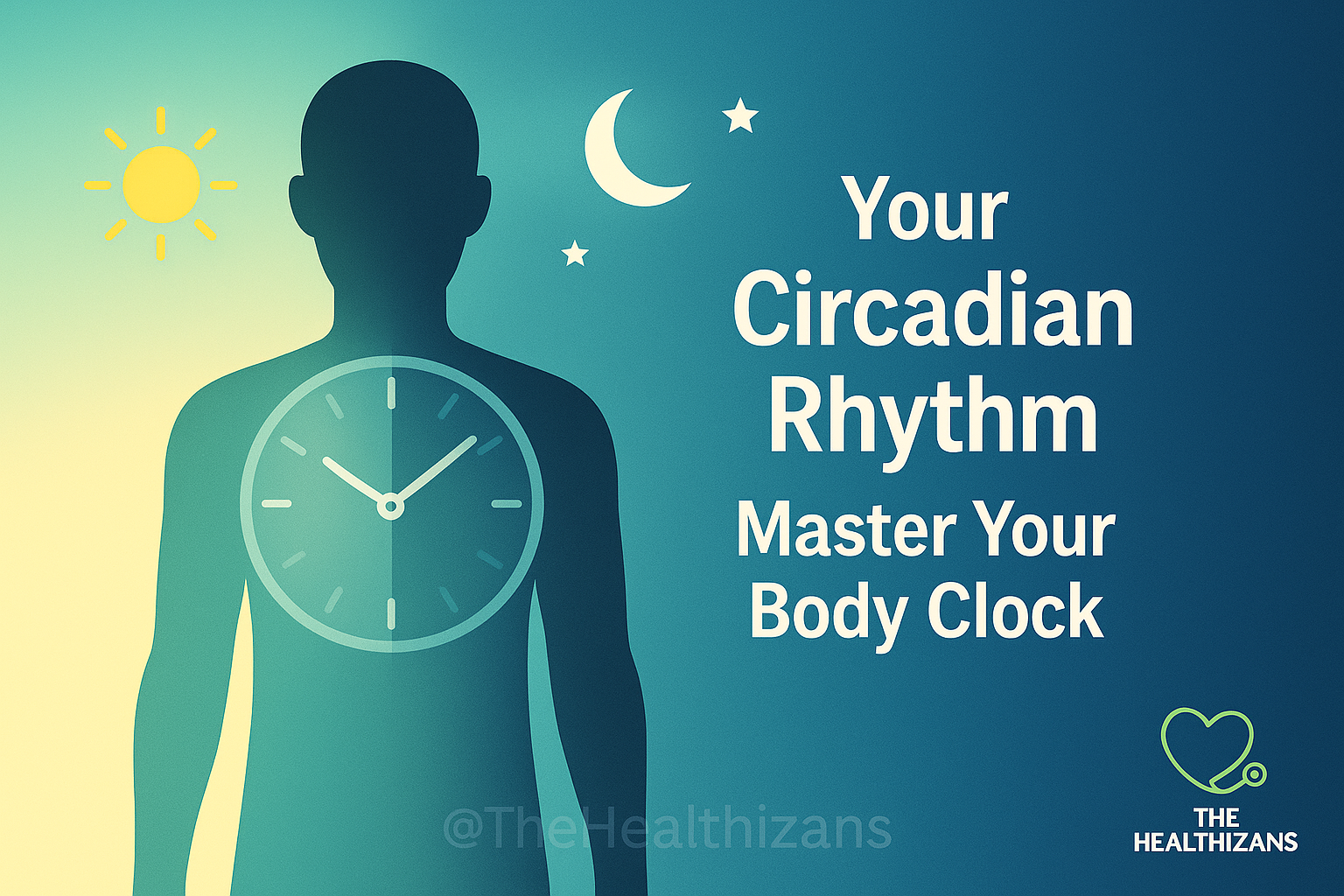
Have you ever wondered why you feel alert at certain times of the day but sluggish at others? Or why staying up late for a few nights leaves you feeling completely out of sync? It all comes down to your circadian rhythm — your body’s internal 24-hour clock that silently influences almost every process in your body.
When you learn how to master your body clock, you can boost your energy, sharpen focus, improve your sleep, and even protect your long-term health. So,Let’s explore how your circadian rhythm works and what you can do to keep it running smoothly.
🧠 1. What Exactly Is the Circadian Rhythm?
Your circadian rhythm is your body’s natural timing system, controlled by a tiny area in your brain called the suprachiasmatic nucleus (SCN). Located in the hypothalamus, the SCN acts as your internal timekeeper, helping to coordinate everything from your sleep and digestion to your hormones and metabolism.
When daylight hits your eyes, it sends a signal to the SCN that says, “Wake up — it’s morning.” As night falls, the absence of light tells your brain, “Time to rest.” This rhythm affects not only your sleep but also your body temperature, hormone release, and even mental performance throughout the day.
💡 Fun fact: Almost every cell in your body has its own mini clock that synchronises with your master circadian clock in the brain.
☀️ 2. How Light Controls Your Body Clock
Light is the most powerful cue for your circadian rhythm and the morning sunlight triggers the release of cortisol, a hormone that helps you feel alert, while suppressing melatonin, which promotes sleep.
As the day goes on and natural light fades, your melatonin levels rise again, signalling to your body that it’s time to wind down. This is why spending too much time indoors or staring at bright screens late at night can confuse your body clock.
💡 Tip: Get at least 20–30 minutes of natural light each morning. It helps reset your internal rhythm and stabilise your energy levels throughout the day.
👉 If you’re struggling with evening alertness or poor-quality sleep, you might also enjoy reading our article on Stress and Sleep: Breaking the Cycle, which explains how stress hormones like cortisol can interfere with your circadian rhythm.
🍽️ 3. How Your Meals Influence Your Circadian Rhythm
Your internal clock doesn’t just listen to light — it also responds to when you eat. Irregular or late-night eating can also disrupt your circadian rhythm and confuse your metabolism.
So, try to:
- Eat your main meals at consistent times each day.
- Avoid heavy meals within 2–3 hours of bedtime.
- Keep late-night snacks light and occasional.
💡 Research shows that eating late can increase the risk of insulin resistance, weight gain, and poor sleep quality — all signs that your body clock is out of balance.
🕒 4. What Happens When Your Circadian Rhythm Goes Out of Sync
When your circadian rhythm is disrupted whether from shift work, frequent travel, or staying up late too often, your body’s natural systems start to drift out of alignment.
This misalignment can lead to:
- Chronic sleep deprivation and fatigue
- Metabolic changes and weight gain
- Higher risk of cardiovascular disease
- Mood swings, irritability, and poor concentration
💡 Even mild disruptions, like “social jet lag” from late weekend nights, can throw your rhythm off for days. So, the more your lifestyle conflicts with your body’s natural timing, the harder it becomes to recover.
🌿 5. How to Reset and Master Your Body Clock
The good news? You can train your circadian rhythm to work for you rather than against you. It’s all about consistency and gentle, natural cues.
Try these proven strategies:
- Get sunlight early. Morning light helps set your rhythm for the day.
- Keep a regular sleep schedule. Go to bed and wake up at the same time every day — yes, even on weekends.
- Reduce light at night. Dim your lights and avoid screens 1–2 hours before bed.
- Eat on time. Have meals at regular intervals to keep your body clock stable.
- Prioritise sleep. Aim for 7–9 hours of quality sleep each night.
💡 Bonus tip: If your schedule allows, a short morning walk outdoors (even on cloudy days) can help reinforce your natural light-dark cycle.
✅ Key Takeaway
Your circadian rhythm is like the conductor of an orchestra — when it’s in sync, every part of your body performs better. But when it’s offbeat, everything from your mood to your metabolism suffers.
By aligning your daily habits with your natural rhythm — regular light exposure, consistent meals, and steady sleep times — you can master your body clock and improve both your physical and mental wellbeing.
💬 What’s Your Take?
Do you notice how your energy or mood shifts when your sleep schedule changes? Share your experience in the comments 👇
📚 Sources
- National Sleep Foundation – What Is Circadian Rhythm? – https://www.thensf.org/what-is-circadian-rhythm/
- Explains how the body’s internal clock regulates sleep, hormones, and daily functions.
- NHS – Why Sleep Is Important for Health
- Details the link between circadian rhythm, sleep quality, and long-term health.
- Harvard Health Publishing – How to Reset Your Sleep Schedule
- Offers practical, science-backed tips to realign your sleep cycle and support your circadian rhythm.
- World Health Organization (WHO) – Night work and circadian disruption
- Discusses global research on how night shifts and disrupted rhythms affect health and disease risk.
- American Academy of Sleep Medicine (AASM) – Circadian Rhythm Disorders
- Covers causes, symptoms, and treatments for circadian rhythm disruptions.
About the Author