Have you ever stood up after a long meeting, car journey, or day at your desk and felt your legs unusually heavy or sluggish? Sometimes they feel stiff, other times slightly swollen or tired — almost as if they’re slow to respond.
This sensation is far more common than many people realise. In fact, understanding why your legs feel heavy after sitting too long — and what to do about it can help you protect your circulation, reduce discomfort, and support long-term leg health in a world where sitting has become unavoidable.
What Does “Heavy Legs” Actually Mean?
When people describe heavy legs, they’re usually referring to a mix of sensations rather than a single symptom. It may feel like tightness in the calves, a dull ache, stiffness around the ankles, or a general sense that your legs are harder to move when you first stand up.
Although this feeling often passes once you start walking, it’s a sign that normal blood and fluid flow in the legs has temporarily slowed down.
Why Sitting Too Long Makes Your Legs Feel Heavy
To understand what’s happening, it helps to know how circulation works in the lower body.
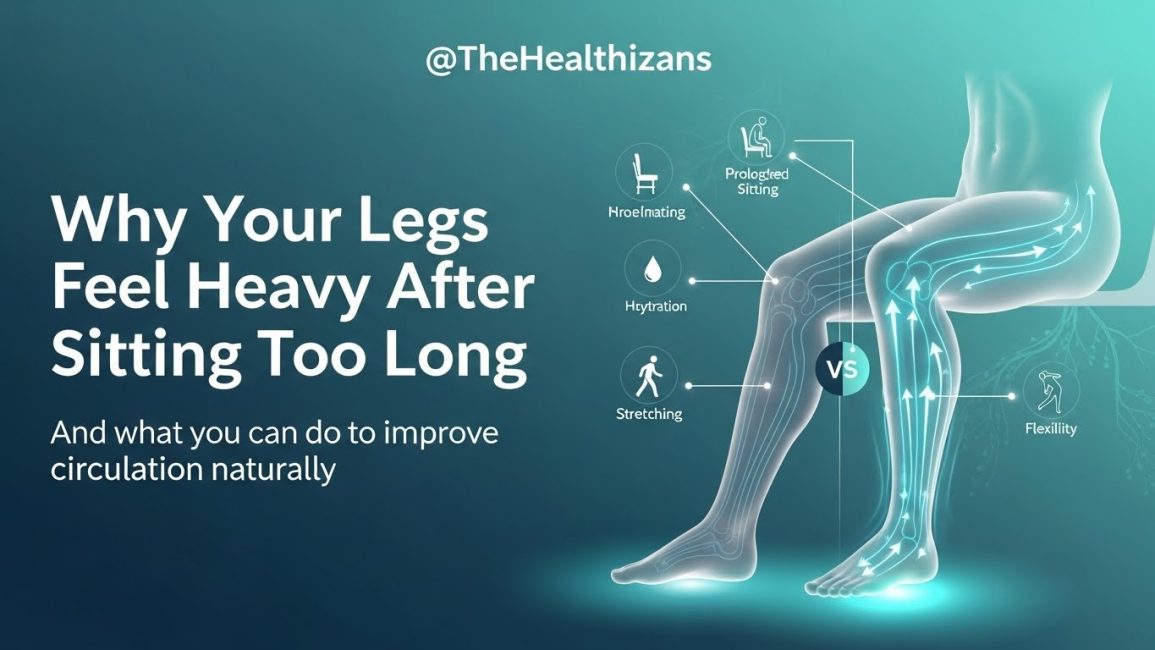
Slower blood flow – When you walk, your calf muscles act like a pump, helping push blood back up toward your heart. However, when you sit still for long periods, those muscles stay inactive. As a result, blood can pool in the lower legs due to gravity, making them feel heavy or tired when you stand.
Fluid build-up in the tissues – In addition to blood, excess fluid can collect around the ankles and lower legs. This explains why shoes may feel tighter later in the day after hours of sitting. While mild swelling is usually harmless, repeated fluid build-up can increase discomfort over time.
Reduced muscle activity and stiffness – Muscles that aren’t regularly moved tend to stiffen. Sitting for long stretches shortens certain muscles while weakening others, particularly in the hips and calves. Over time, this imbalance contributes to that heavy, sluggish feeling when you change position.
Posture and nerve compression – Poor sitting posture — such as crossing your legs or sitting on the edge of a chair — can compress nerves and blood vessels. This may add tingling or numbness to the heaviness, especially when you first stand up.
What to Do When Your Legs Feel Heavy
The good news is that relieving heavy legs doesn’t require complicated treatments. Small, consistent habits can make a noticeable difference.
Move little and often – First and foremost, movement is key. Standing up for just a couple of minutes every 30–60 minutes helps restart circulation. Even gentle actions such as marching on the spot, doing heel raises, or walking to get a glass of water can ease that heavy sensation.
Stretch to restore flow – Stretching loosens tight muscles and encourages better blood movement. Simple calf and hamstring stretches, ankle circles, or seated leg extensions can all help — especially if done regularly throughout the day.
If you experience leg discomfort at night, stretching before bed may also reduce stiffness and help prevent cramps. You may find it helpful to read our article on Muscle Cramps: Why They Happen and How to Prevent Them Naturally for additional guidance.
Stay properly hydrated – Although it sounds counterintuitive, dehydration can worsen fluid retention. Drinking enough water helps your body manage fluids more efficiently, reducing the likelihood of heaviness and swelling in the legs.
Improve your sitting setup – Your chair and posture play a bigger role than many people realise. Sitting with both feet flat on the floor, avoiding leg crossing, and keeping your knees level with your hips can reduce pressure behind the knees and support healthy circulation.
Elevate your legs when resting – At the end of a long day, elevating your legs slightly above heart level for 10–15 minutes allows excess fluid to drain naturally. This simple habit can leave your legs feeling noticeably lighter.
Consider compression support when needed – For people who sit or stand for long hours — such as office workers, drivers, or frequent travellers — graduated compression socks can provide additional support by encouraging blood flow back toward the heart.
When Heaviness Shouldn’t Be Ignored
In most cases, heavy legs after sitting too long are harmless. However, it’s important to seek medical advice if you notice persistent swelling, pain, redness, or warmth in one leg, or if leg symptoms are accompanied by shortness of breath.
These signs may indicate circulation issues that need proper assessment.
The Bigger Picture: Movement as Daily Medicine
Heavy legs are often your body’s gentle reminder that it was designed to move. By standing up regularly, stretching, staying hydrated, and paying attention to posture, you can keep your legs lighter and more comfortable — even during busy, sedentary days.
For a broader approach to circulation and recovery, you might also find value in our article Ice or Heat? When to Use Each for Pain or Injury Relief, which explains how simple therapies can support muscle and joint comfort.
💬 What’s Your Take?
Do your legs feel heavier after work, long journeys, or screen time?
What small habit — stretching, walking, or leg elevation — has helped you the most? Share your experience in the comments and help others move more comfortably.
📚 Sources
- NHS — Swollen ankles, feet and legs
- Harvard Health — The dangers of sitting too much
- Cleveland Clinic — Poor circulation symptoms
About the Author