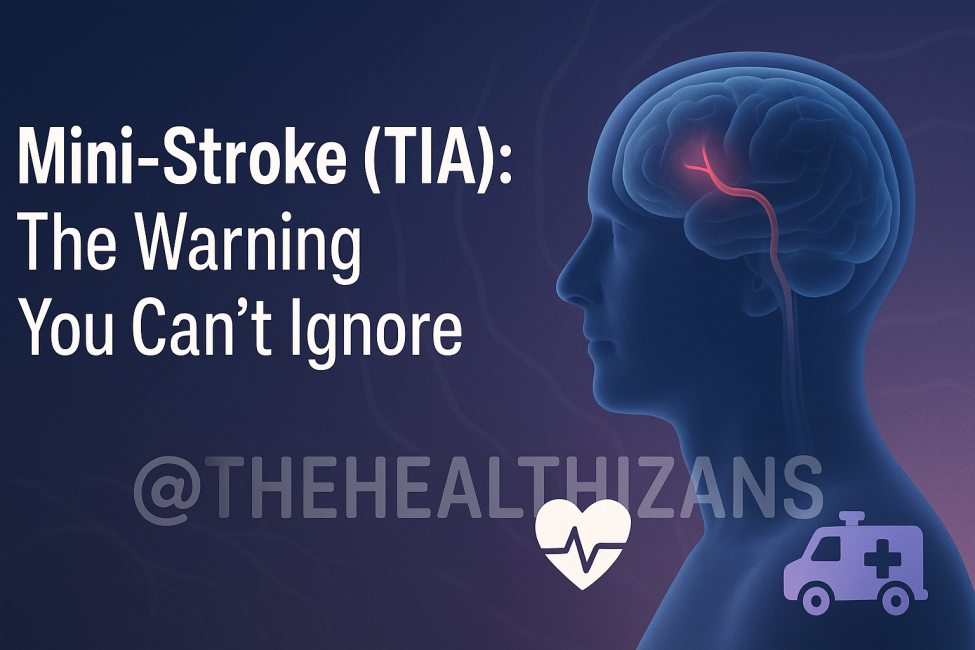
Many people experience stroke-like symptoms that disappear after a few minutes and think it’s nothing to worry about. However, that episode could be a Transient Ischaemic Attack (TIA) — also known as a mini-stroke. While the symptoms vanish quickly, the danger doesn’t.
A TIA is your body’s urgent warning that a major stroke could follow soon — sometimes within just 48 hours. Recognising and acting on these signs could save your life.
💡 What Happens During a TIA?
A TIA occurs when a temporary blockage of blood flow to the brain interrupts oxygen supply.
The symptoms usually last less than 24 hours and may include:
- Facial drooping on one side
- Arm weakness or numbness
- Slurred or confused speech
Even if these signs clear up quickly, seek medical help immediately. Waiting it out could allow a full stroke to occur next.
For a reminder of how to identify stroke symptoms fast, check out our earlier article How Can You Spot a Stroke FAST and Act in Time?
⚠️ Why Ignoring a TIA Is Dangerous
- 1 in 3 people who have a TIA will suffer a major stroke later.
- Half of those strokes occur within 48 hours of the warning event.
That’s why health experts stress: if in doubt, call emergency services right away.
🩺 What You Should Do After a TIA
After hospital evaluation, doctors may recommend:
- Blood thinners or statins to reduce clot risk.
- Lifestyle changes such as quitting smoking and eating heart-healthy meals.
- Regular blood pressure and cholesterol checks.
For long-term protection, read our follow-up article on Stroke Recovery and Prevention — it outlines practical daily steps to stay stroke-free.
🌍 NHS and WHO Insights
The NHS classifies TIAs as medical emergencies, urging patients to seek help even if symptoms disappear. Similarly, the World Health Organization reports that up to 80% of strokes are preventable through timely action and risk-factor control.
💬 What’s Your Take?
Have you or someone you know ever experienced sudden stroke-like symptoms?
Share your experience — awareness saves lives.
📚 Sources
- NHS – Transient Ischaemic Attack (TIA)
- World Health Organization – Stroke Burden and Prevention
- American Stroke Association – Transient Ischemic Attack (TIA)
About the Author