💡 Why This Matters
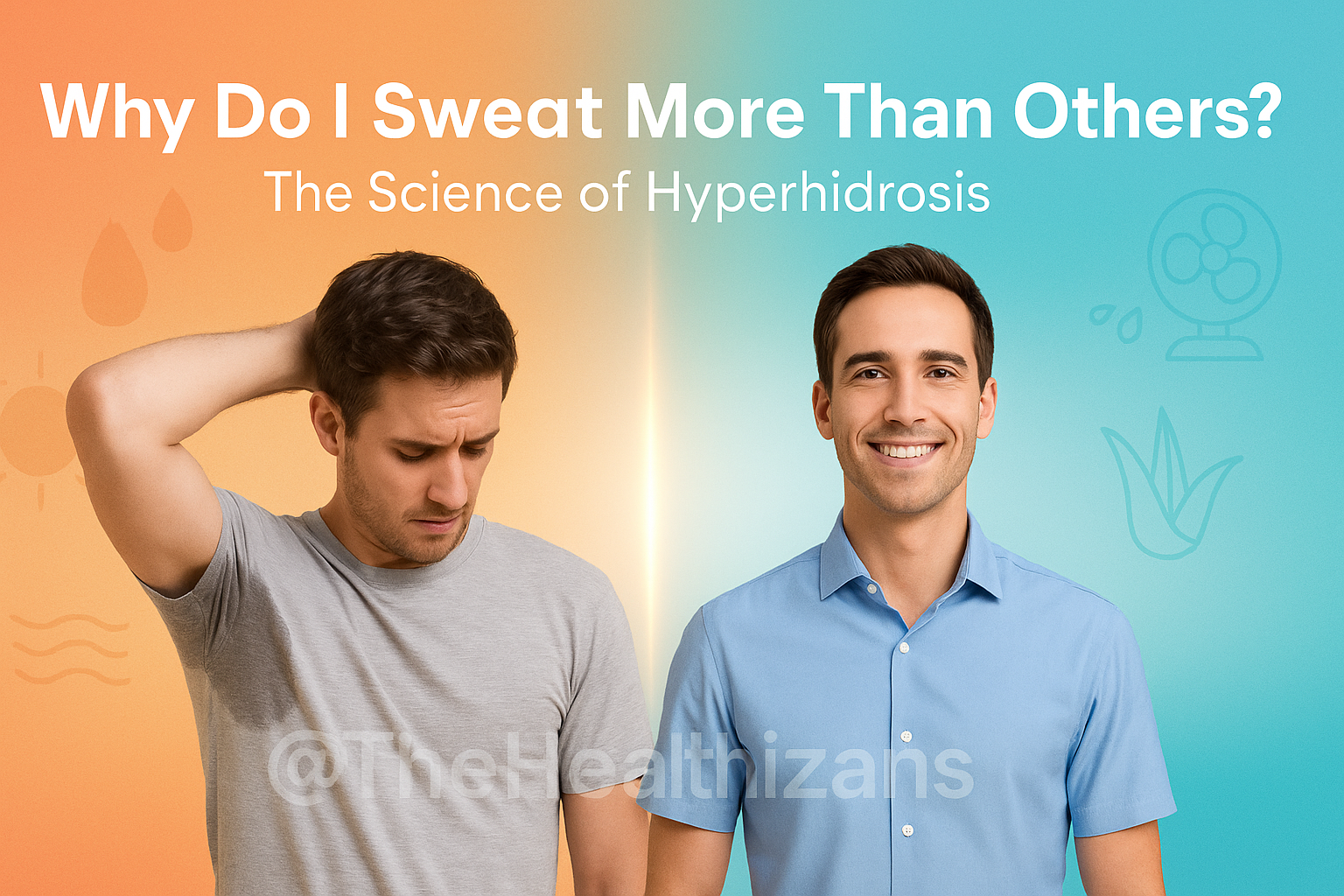
We’ve all had sweaty moments — a hot commute, a nerve-wracking presentation, or a tough workout. However, the real question is why do some people sweat more than others, even when it isn’t hot? For some, sweat appears at the worst times and in much larger amounts. Imagine sitting in an air-conditioned office yet finding your palms drenched or your shirt soaked.
This isn’t just “sweating a lot.” For around 5% of people worldwide, it’s a recognised medical condition called hyperhidrosis. And while it can be frustrating and embarrassing, it’s also manageable once you understand why it happens and what can help.
🧬 What Exactly Is Hyperhidrosis — and Why Does It Happen?
Sweating is your body’s natural cooling system. Normally, sweat evaporates to lower your temperature. But in hyperhidrosis, your sweat glands become overactive, so the body produces far more sweat than it actually needs.
Hyperhidrosis appears in two main forms:
- Primary hyperhidrosis:
This type develops because the nerves controlling sweat glands are overactive. As a result, sweat can pour out of the hands, feet, or underarms even when you’re sitting still. It usually begins in childhood or teenage years, and it often runs in families. - Secondary hyperhidrosis:
This type occurs because of another health condition or medication. For example, it may be linked to diabetes, thyroid disorders, menopause hot flushes, or even some antidepressants. Unlike primary hyperhidrosis, it often starts later in life.
😓 Everyday Impact: Why Excessive Sweating Is More Than Inconvenient
Excessive sweating doesn’t just soak clothing — it can disrupt daily routines and affect mental wellbeing. For instance, clammy palms may make handshakes awkward, and wet patches can leave people avoiding bright-coloured clothes. In addition, hyperhidrosis can make gripping pens, tools, or sports equipment difficult.
Over time, this constant dampness can also increase the risk of skin infections. Therefore, hyperhidrosis isn’t just a cosmetic issue — it’s a real quality-of-life challenge.
🧴 Treatments That Can Help You Manage Excessive Sweating
Although hyperhidrosis can feel overwhelming, effective treatments exist. Options include:
- Clinical-strength antiperspirants: Stronger than regular deodorants, they block sweat glands more effectively.
- Iontophoresis: A procedure where hands or feet are placed in shallow water with a mild electric current, which reduces sweat gland activity.
- Botox injections: These block the nerves that trigger sweating and usually last four to six months.
- Prescription medications: Tablets can calm the overactive nerves, though they may have side effects like dry mouth.
- Surgery (last resort): In severe cases, surgeons may cut or clamp the nerves that overstimulate sweat glands.
Because these treatments vary in cost and side effects, it’s best to discuss them with a healthcare professional to decide which fits your needs.
🌱 Lifestyle Habits That Make a Difference
Even before medical treatments, small lifestyle shifts can help keep sweat under control. For example:
- Choose lightweight, breathable fabrics such as cotton or bamboo instead of synthetics.
- Use absorbent powders to keep feet and underarms dry.
- Carry spare socks or shirts if you’re prone to sweat patches.
- Practise stress-management techniques like slow breathing or meditation, because anxiety can trigger sweating.
- Stay hydrated. Sweating means losing fluids quickly, so replacing them helps your body function properly.
👉 For more tips on keeping your skin healthy day to day, see our article on Daily Habits That Keep Your Skin Healthy All Year Round.
⚠️ When Should You See a Doctor?
Not all sweating needs medical care, but you should speak to your GP if:
- Sweating interferes with your daily life.
- It starts suddenly in adulthood without an obvious reason.
- You also notice other symptoms like weight loss, fever, or night sweats.
In such cases, sweating might be a symptom of an underlying condition rather than hyperhidrosis alone.
✅ Key Takeaways
- Hyperhidrosis is excessive sweating unrelated to heat or exercise.
- It may be primary (genetic/nerve-related) or secondary (linked to illness or medication).
- Treatments range from strong antiperspirants to Botox injections and, rarely, surgery.
- Lifestyle habits can ease symptoms, but persistent or sudden sweating deserves medical attention.
🤝 What’s Your Take?
Do you struggle with excessive sweating, or know someone who does? Which remedies — from breathable fabrics to medical care — have made the biggest difference for you? Share your story in the comments.
📚 Sources
- NHS: Excessive Sweating (Hyperhidrosis)
- Mayo Clinic: Hyperhidrosis Symptoms and Treatments
- International Hyperhidrosis Society: Treatment Options
About the Author