A stye often appears suddenly — tender, red, and irritating — and can make something as simple as blinking uncomfortable. Although it may look worrying at first, a stye is usually a common and mild eyelid infection that settles with basic care. Understanding what a stye is, why it happens, and how to treat it properly can help reduce discomfort and prevent repeat episodes.
What Is a Stye?
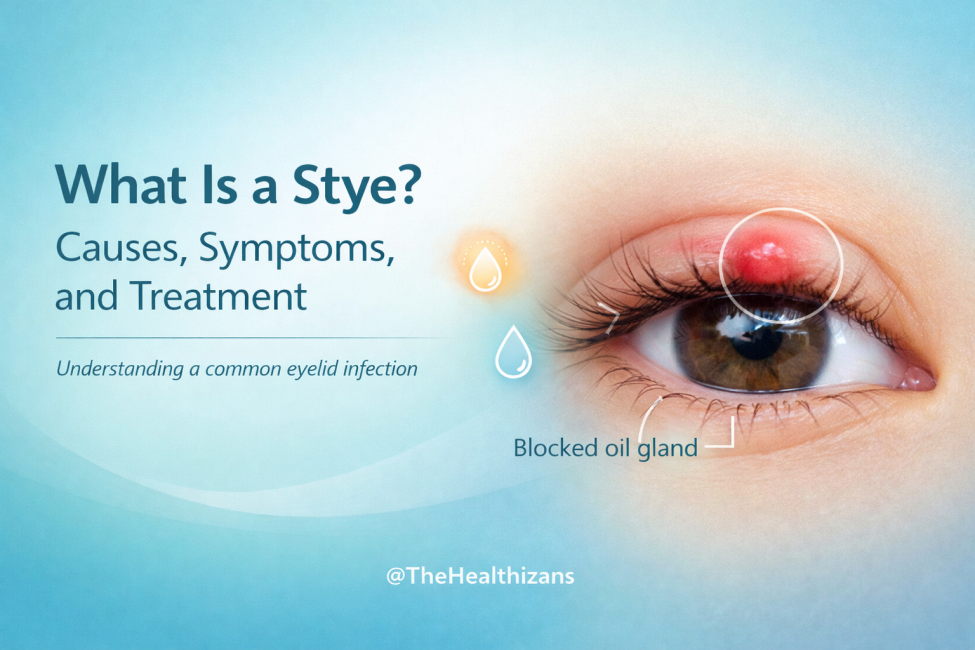
A stye, medically known as a hordeolum, is a small, painful lump on the eyelid caused by an infection in an oil gland or an eyelash follicle. It often resembles a pimple or small boil and may develop either on the outer edge of the eyelid or on the inside surface.
In most cases, a stye is harmless and temporary. However, because eyelid changes can sometimes be confusing, it’s worth noting that not all eyelid lumps are styes. For example, a painless lump that develops slowly may be something else — a distinction we explore further in our related article on stye vs chalazion.
What Causes a Stye?
Styes develop when bacteria — most commonly Staphylococcus — enter and infect a blocked oil gland in the eyelid. This often happens through everyday behaviours that allow bacteria close contact with the eyes.
For instance, touching or rubbing the eyes with unwashed hands increases risk, as does using old or contaminated eye makeup. Poor eyelid hygiene and ongoing eyelid inflammation, such as blepharitis, also play a role. If you’re interested in this link, you may find our article on early signs of eye and eyelid problems helpful for recognising issues before they worsen.
In addition, periods of stress, poor sleep, or reduced immunity can make styes more likely. People with underlying conditions such as diabetes may also notice styes recurring more frequently, which is why managing overall health matters for eye health too.
Common Symptoms
Symptoms usually develop quickly. The most noticeable sign is a red, swollen lump on the eyelid that feels sore or tender. Blinking may become uncomfortable, and the eye can feel watery or gritty.
Some people experience mild sensitivity to light or temporary blurred vision, usually due to swelling rather than a problem with the eye itself. In certain cases, a small yellow or white centre forms as pus collects. Typically, a stye affects one eye at a time.
How Long Does a Stye Last?
In most cases, a stye begins to improve within a few days and clears completely within 7 to 10 days. It may burst and drain naturally, which often brings rapid relief.
If the lump lasts longer than one to two weeks, or if swelling continues to worsen, it may no longer be a simple stye. At that point, medical advice is recommended to rule out other eyelid conditions.
Treatment: What Actually Helps
The most effective first-line treatment for a stye is the use of warm compresses. Gentle heat helps unblock the affected oil gland and encourages natural drainage.
To do this, soak a clean cloth in warm (not hot) water, wring it out, and place it over the closed eyelid for 10 to 15 minutes. This can be repeated three to four times a day. Gentle eyelid massage afterwards may help, as long as it isn’t painful.
At the same time, it’s important to keep the eye area clean and avoid eye makeup or contact lenses until the stye has healed. Good hygiene practices like these are part of broader preventive health habits, which we also highlight in our guides on everyday infection prevention.
What to Avoid
Although it may be tempting, a stye should never be squeezed or popped, as this can spread infection and worsen inflammation. Similarly, popular home remedies such as toothpaste, garlic, or harsh substances should be avoided, as they can irritate the eye and cause injury.
Do You Need Medication?
Most styes clear without medication, and antibiotics are not routinely needed. Warm compresses and good hygiene are usually enough.
That said, a healthcare professional may prescribe antibiotic drops or ointment if the infection spreads or if swelling becomes severe. In rare cases, a persistent stye may need to be drained under medical supervision.
When Should You See a Doctor?
You should seek medical advice if the stye does not improve after about a week, if swelling spreads across the eyelid or face, or if vision becomes affected. Recurrent styes may also need further assessment, as they can sometimes signal underlying eyelid inflammation or wider health issues.
Can Styes Be Prevented?
In many cases, yes. Simple daily habits can significantly reduce risk. Washing hands regularly, removing eye makeup before sleep, and replacing eye cosmetics every three to six months all help limit bacterial build-up.
For people prone to eyelid irritation, gentle eyelid cleansing and managing stress and sleep can also make a meaningful difference. These steps align closely with broader preventive and early-symptom awareness principles we encourage across The Healthizans platform.
Key Takeaway
A stye may be uncomfortable, but it is usually minor, short-lived, and treatable. With timely care, good hygiene, and a little patience, most people recover quickly without complications.
What’s Your Take?
Have you ever had a stye, and did anything in particular help it heal faster? Share your experience in the comments — it may help others too.
Sources
- NHS. Stye (hordeolum)
- American Academy of Ophthalmology. Styes and Chalazia
- Mayo Clinic. Stye: Symptoms and causes
About the Author