Pelvic pain, bloating, heavy periods, or discomfort during your cycle can be worrying — especially when you’re told you have either uterine fibroids or ovarian cysts. Although these conditions are often mentioned together, they are not the same, and confusing them can lead to unnecessary anxiety or delayed care.
Both are common, usually non-cancerous, and linked to hormonal changes. However, they affect different organs, behave differently over time, and are managed in distinct ways. Understanding the difference can help you make sense of symptoms, scans, and treatment recommendations.
This article breaks down the key differences between uterine fibroids and ovarian cysts using evidence-based guidance aligned with the NHS and international women’s health standards.
Understanding the Basics
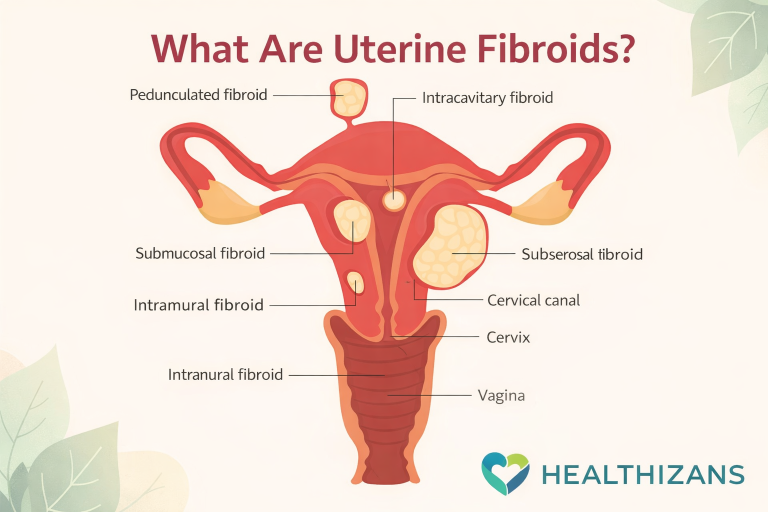
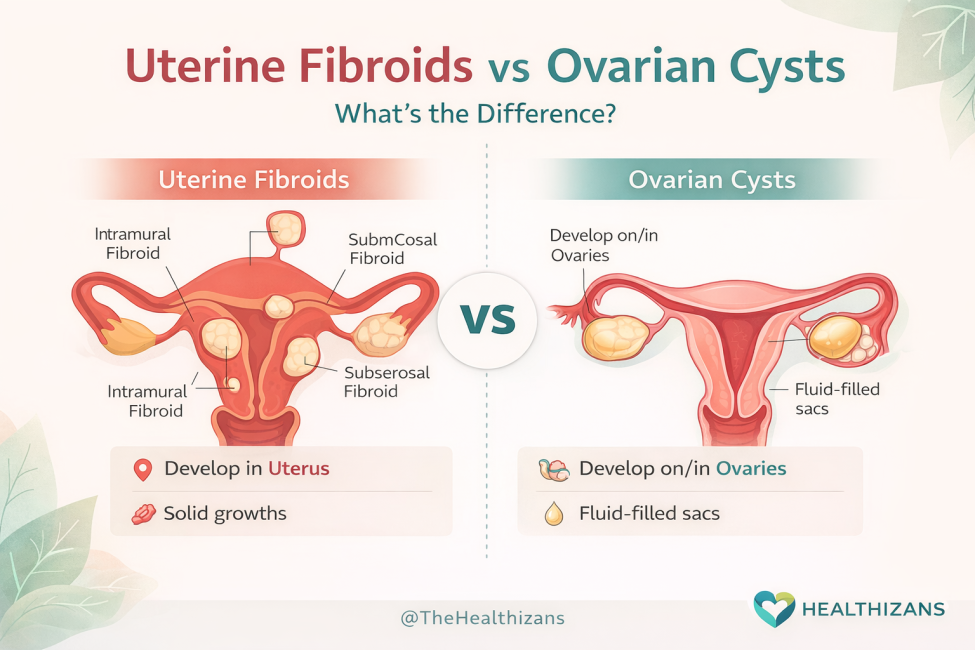
Uterine fibroids are solid, non-cancerous growths made of muscle and fibrous tissue that develop in or around the uterus (womb). Their size can range from tiny, undetectable nodules to larger masses that change the shape of the uterus. Many women have fibroids without symptoms, while others experience heavy bleeding, pressure, or pain. If you’re new to the topic, our detailed guide on what uterine fibroids are, their causes, symptoms, and treatment options explains this condition in depth.
Ovarian cysts, on the other hand, are fluid-filled sacs that form on or inside the ovaries. They are extremely common and often develop as part of the normal menstrual cycle. In many cases, cysts cause no symptoms and resolve on their own within a few months without treatment.
Why Location Makes a Difference
One of the clearest distinctions between fibroids and cysts is where they grow.
Because fibroids develop in the uterus, they are more likely to affect menstrual bleeding, the size of the womb, and pregnancy-related factors. Ovarian cysts form in the ovaries, which means their symptoms often relate more to ovulation, one-sided pelvic pain, or hormonal fluctuations.
This difference in location explains why two women with similar symptoms may receive very different diagnoses and care plans.
How Symptoms Typically Differ
Although symptoms can overlap, certain patterns are more strongly linked to each condition.
Fibroids are commonly associated with heavy or prolonged periods, passing blood clots, pelvic pressure, lower back pain, and abdominal bloating. Over time, heavy bleeding may lead to iron-deficiency anaemia, contributing to fatigue and breathlessness. If this sounds familiar, you may also find it helpful to read our article on heavy periods and when bleeding is no longer normal.
Ovarian cysts are more likely to cause intermittent or sudden pelvic pain, often on one side. Pain may be noticeable during ovulation, exercise, or sex. In some cases, a cyst can rupture or twist, causing sharp pain that requires urgent medical assessment.
It’s also possible to have both fibroids and cysts at the same time, which can make symptoms harder to interpret.
Causes and Hormonal Links
Both conditions are influenced by hormones, but in different ways.
Fibroids are sensitive to oestrogen and progesterone, which helps explain why they tend to grow during reproductive years and may shrink after menopause. Genetics and family history also play a role.
Ovarian cysts are often linked to ovulation and hormonal imbalance. Some are part of normal cycle changes, while others are associated with conditions such as polycystic ovary syndrome. We explore this further in our article on PCOS, hormones, and menstrual health, where cyst-related symptoms are discussed in context.
Diagnosis: How Doctors Tell Them Apart
Pelvic ultrasound is usually the first step in diagnosing both fibroids and ovarian cysts.
On imaging, fibroids typically appear as solid masses, while cysts usually look fluid-filled. In some cases, further scans such as MRI may be used to map fibroids in detail, especially when treatment is being considered. Ovarian cysts are often monitored with repeat scans to see whether they resolve on their own.
Accurate diagnosis is essential, as management strategies differ significantly.
Do They Always Need Treatment?
Not necessarily.
Many fibroids and ovarian cysts cause no symptoms and require only monitoring. Treatment decisions are usually based on how much symptoms affect daily life, fertility plans, and whether complications are present.
Fibroid treatment may involve medication to control bleeding, non-surgical procedures, or surgery in more severe cases. Ovarian cysts often resolve without intervention, although persistent or painful cysts may need treatment or, rarely, surgery.
In both cases, shared decision-making with a healthcare professional is key.
When Should You Seek Medical Advice?
It’s important to speak to a healthcare professional if you experience:
- Heavy or worsening menstrual bleeding
- Persistent pelvic pain or pressure
- Sudden, severe abdominal pain
- Bloating that doesn’t improve
- Difficulty conceiving
Early assessment can provide reassurance and prevent symptoms from escalating unnecessarily.
The Bottom Line
While uterine fibroids and ovarian cysts are often discussed together, they are distinct conditions affecting different parts of the reproductive system. Most are benign, manageable, and far more common than many people realise.
Understanding the difference helps you ask informed questions, interpret scan results more confidently, and take an active role in decisions about your health.
What’s Your Take?
Have you ever been told you had a “fibroid” or “cyst” without much explanation?
Did this comparison help clarify things for you?
Your question or experience might shape our next Women’s Health article
Sources
- NHS – Fibroids
- NHS – Ovarian Cyst
- Mayo Clinic – Ovarian cysts and uterine fibroids
- American College of Obstetricians and Gynecologists (ACOG)
About the Author