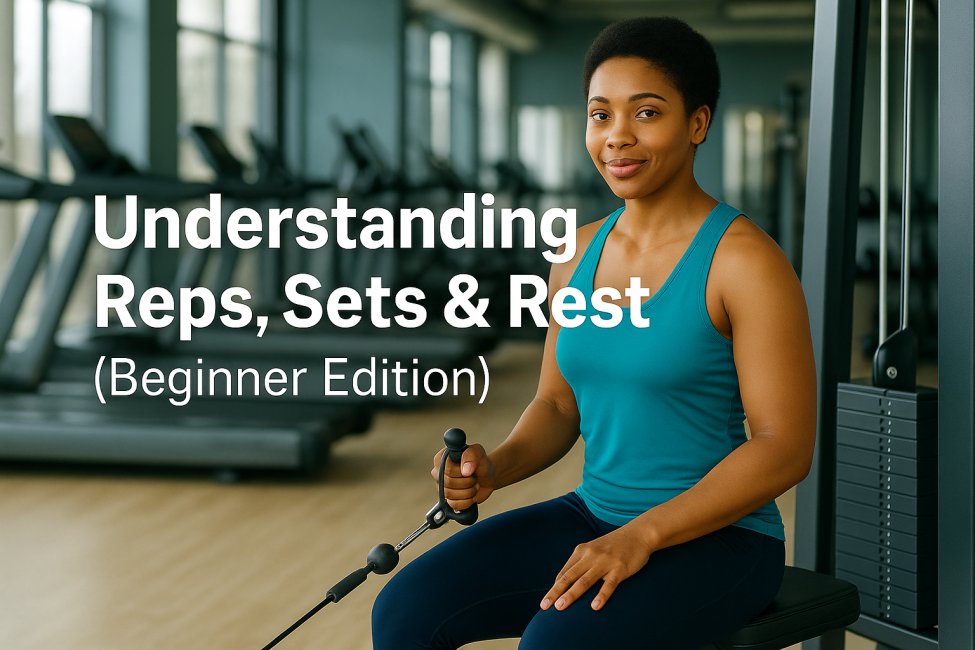
When you first step into the world of exercise, even the language can feel unfamiliar. Words like reps, sets, and rest get used everywhere, yet most beginners aren’t really taught what they mean or how to use them effectively. The good news? These concepts are far simpler than they seem — and once you understand them, your workouts become more structured, safer, and far more rewarding.
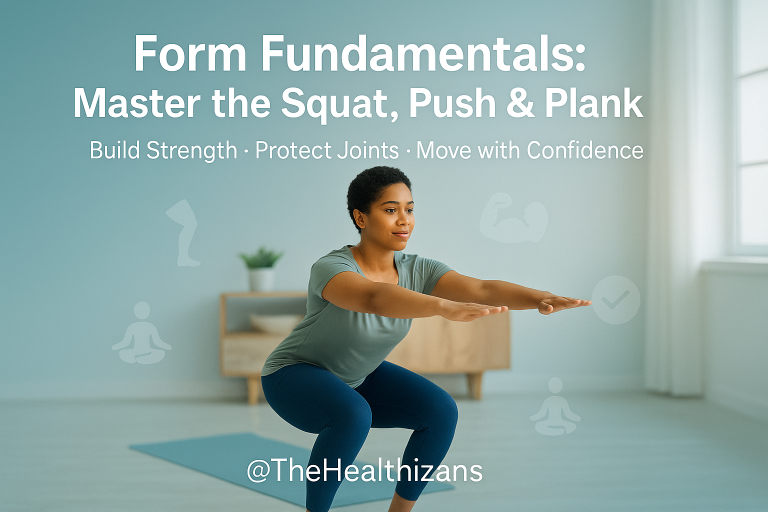
This guide breaks everything down in a clear, straightforward way so you can move with confidence, whether you’re following Your First 14 Days of Fitness or practising the foundational movement patterns from our Form Fundamentals series.
What Are Reps?
A rep (short for repetition) is one complete movement of an exercise.
If you lower into a squat and stand back up again, that’s one rep. The same goes for one push-up, one lunge, or one glute bridge.
Reps matter because they control the amount of work your muscles are doing.
As a beginner, a good starting point is usually between 8 and 12 reps for most exercises. This range helps you build early strength without overwhelming your joints or technique.
What Are Sets?
A set is a group of reps performed together before you take a break.
If you do 10 squats, pause, then do another 10, you’ve done two sets.
Sets give your workout structure. Instead of doing random movements until you feel tired, you’re training with intention — and your progress becomes easier to track. Most beginners do well with 2–3 sets per exercise, which offers enough challenge without pushing too hard too soon.
Why Rest Matters
Rest might sound like the easy part, but it’s often the most misunderstood.
Rest refers to the pause you take between sets and between exercises, allowing your muscles and nervous system to recover enough for the next round.
For beginners, resting for 60–90 seconds between sets is ideal. If an exercise feels especially demanding, taking a little longer is perfectly fine. Rest is not a sign of weakness; it’s what helps you maintain good form and reduces the risk of injury.
And beyond your workout, rest days matter too. Your muscles repair and strengthen after your session, not during it. Skipping recovery — something we covered in Common Fitness Mistakes Beginners Make — often leads to soreness, burnout, or stalled progress.
How Reps, Sets and Rest Work Together
Think of these three elements as a recipe.
Reps decide how many times you perform an exercise, sets tell you how many rounds you’ll complete, and rest gives your body the time it needs to do each round well.
A simple beginner-friendly structure might look like this:
- Squats: 10 reps × 2 sets, 60 seconds rest
- Wall or incline push-ups: 8 reps × 2 sets, 60–90 seconds rest
- Hip bridges: 12 reps × 2 sets, 60 seconds rest
- Plank (on knees or full): 20 seconds × 2 sets, 60 seconds rest
This routine takes less than 10 minutes yet helps you build strength, stability, and confidence — all without equipment.
When and How to Progress
As your movements become more comfortable and controlled, you’ll naturally want to challenge yourself. The safest way to progress is gradual and structured. Generally:
- Increase reps first
- Then add an extra set
- Reduce rest time slightly if appropriate
- Add light resistance last (bands or small weights)
If your form stays solid and you’re not overly sore the next day, you’re progressing at the right pace.
A Simple Beginner Routine to Try
Here’s a short at-home routine based on everything we’ve covered:
- Bodyweight Squats – 10 reps, 2 sets
- Knee Push-ups or Wall Push-ups – 8 reps, 2 sets
- Glute Bridges – 12 reps, 2 sets
- Plank (on knees or full) – 20 seconds, 2 sets
Take your time, breathe through each movement, and focus on how your body feels rather than going as fast as possible.
Final Thoughts
Understanding reps, sets and rest turns a confusing workout into a clear training plan you can actually follow. Start simple, listen to your body, and focus on quality over speed. With time, you’ll build strength not just in your muscles — but in your confidence too.
What’s Your Take?
Is there a part of strength training that still feels confusing?
Share your question below — we’d love to turn it into your next Healthizans mini-lesson.
📚 Source
- NHS UK – Strength and Flex Exercises
- American Council on Exercise (ACE) – Exercise Programming Fundamentals
- World Health Organization (WHO) – Physical Activity Guidelines for Adults
- Harvard Health Publishing – Strength Training Essentials
About the Author