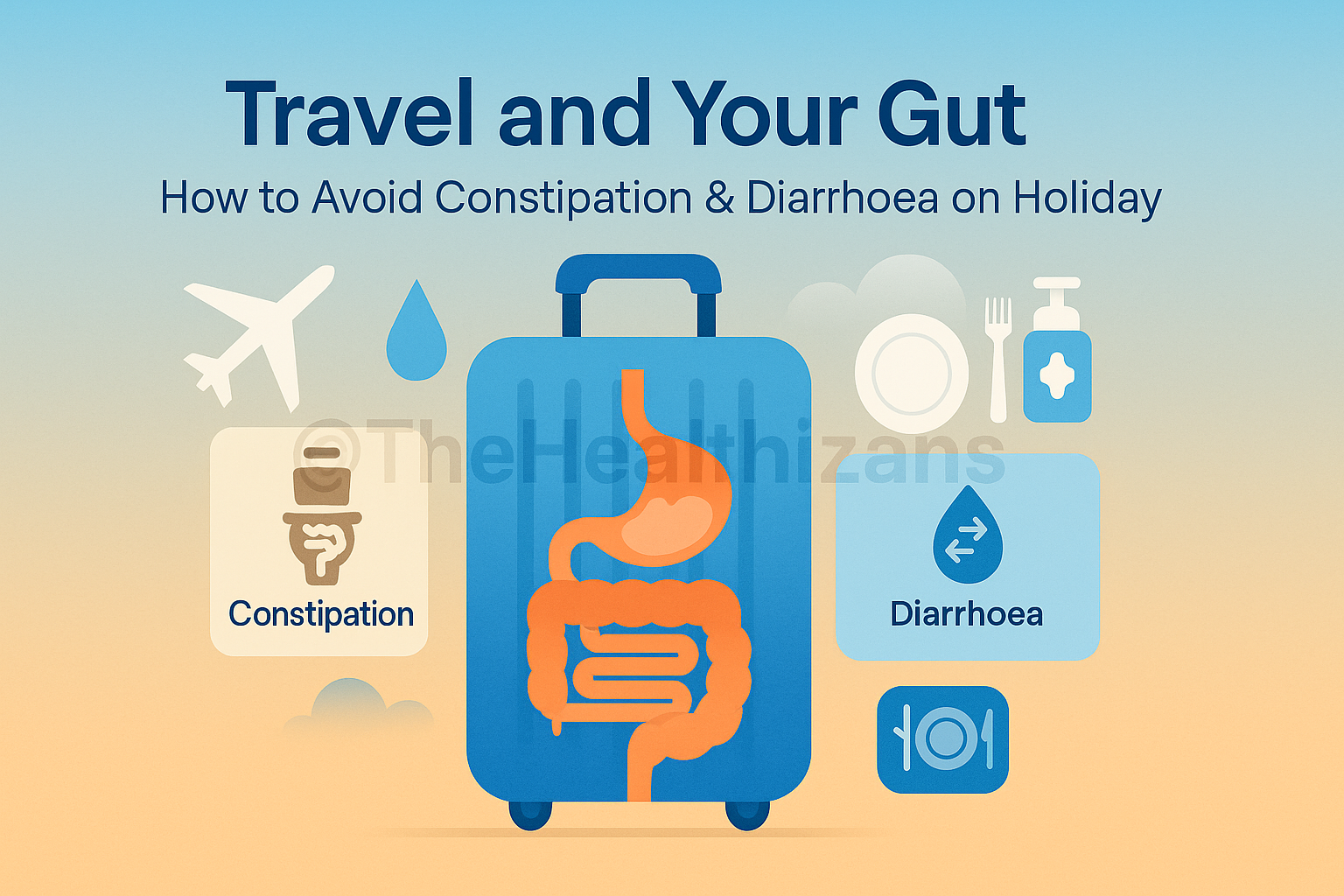
Holidays are meant for exploration, relaxation, and happy memories — not bathroom emergencies. Yet, travel and your gut don’t always get along. Many travellers experience holiday constipation from disrupted routines, while others face traveller’s diarrhoea after consuming unfamiliar foods or water. Fortunately, with the right preventive habits, you can keep your digestion happy and your adventures smooth.
🧭 Why Does Travel Affect Digestion?
Your digestive system loves consistency. However, when you travel, almost everything that supports gut balance — meal timing, sleep, hydration, and movement — changes.
✈️ Long journeys often involve hours of sitting still, which slows bowel movement.
💧 Dehydration from flights or hot climates makes stools harder and more difficult to pass.
🍽️ Irregular meals or low-fibre travel diets can further add to constipation.
Meanwhile, traveller’s diarrhoea often strikes when you encounter new bacteria, viruses, or parasites in contaminated food or water. Even minor differences in local microbes can unsettle your gut if your body isn’t accustomed to them.
If you’ve ever wondered how gut bacteria influence overall health, check out our related article on Your Gut-Brain Connection: Why Digestion Affects Your Mood for a deeper look into how your gut and mind work together.
💧 How to Prevent Holiday Constipation
Travelling doesn’t have to mean digestive discomfort. To keep things moving naturally:
- Stay hydrated — sip water consistently, especially during flights or in hot weather.
- Move whenever possible — stretch during layovers, take short walks, and avoid sitting for long hours.
- Eat fibre-rich foods — pack fruit, nuts, or wholegrain snacks to maintain regular bowel movements.
- Maintain a bathroom routine — try to go at your usual times, even while abroad.
🩺 Tip: Avoid over-relying on laxatives — your gut adjusts better when you support it through natural hydration, movement, and fibre.
🍽️ How to Reduce the Risk of Traveller’s Diarrhoea
When it comes to travel and your gut, prevention is everything. To stay on the safe side:
- Be water-wise — in high-risk regions, avoid tap water, ice, or raw salads rinsed in local water. Stick to sealed bottled or filtered water.
- Choose cooked foods — opt for meals served steaming hot rather than lukewarm buffets.
- Practise hand hygiene — wash hands before eating, or carry alcohol-based hand sanitiser.
- Introduce new foods gradually — give your gut time to adapt to local flavours and spices.
If diarrhoea does occur, stay hydrated with oral rehydration solutions (ORS) or coconut water, and rest until symptoms settle.
🚨 When to Seek Medical Help
Most travel-related constipation or diarrhoea improves within a few days. However, see a doctor if you notice:
- Severe abdominal pain
- Persistent vomiting or diarrhoea
- High fever
- Blood in stool
- Signs of dehydration (e.g., dizziness, minimal urine, extreme thirst)
Don’t wait for symptoms to worsen — timely medical care can prevent complications like electrolyte imbalance or infection.
🌍 A Global Perspective
According to the World Health Organization (WHO), traveller’s diarrhoea is most common in regions like South Asia, Africa, the Middle East, and Latin America, where water safety standards vary. In contrast, holiday constipation can affect anyone, especially when crossing time zones or switching diets drastically.
Globally, the WHO, CDC, and NHS all emphasise clean water, safe food handling, and hand hygiene as the best defences against gut upsets while travelling.
💡 Key Takeaway
Travel and your gut can coexist peacefully — it just takes awareness and preparation. By drinking enough water, moving frequently, eating mindfully, and practising proper hygiene, you can protect your digestive balance wherever you go. After all, holidays should be about new experiences — not emergency bathroom breaks.
💬 What’s Your Take?
Have you ever had your holiday spoiled by tummy troubles? What’s your go-to travel tip for keeping digestion on track? Share your experience with the @TheHealthizans community — your insight might help someone else travel better!
🔗 Sources
- NHS – Traveller’s Diarrhoea (2023)
- World Health Organization – Food Safety and Travel (2022)
- British Nutrition Foundation – Fibre and Digestion (2022)
- Centers for Disease Control and Prevention – Traveller’s Health (2023)
About the Author