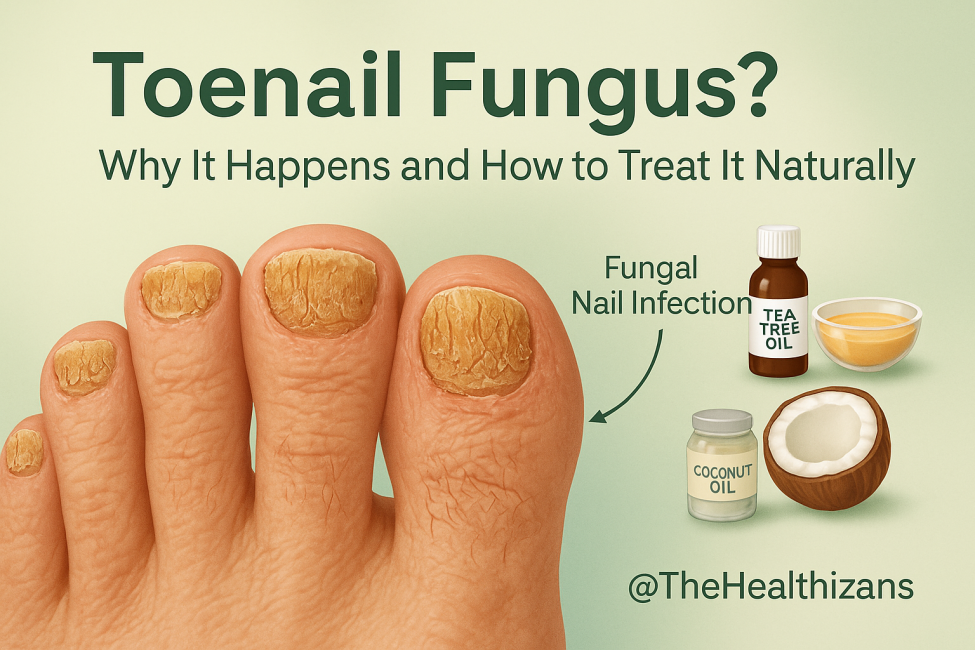
If your toenails have turned yellowish, thick, or crumbly, you might be dealing with toenail fungus — a surprisingly common infection that affects millions worldwide. 👣 While it often starts as a small discolouration, it can slowly spread, causing pain, odour, and even nail separation if ignored.
The good news? Toenail fungus is manageable, and with the right approach — including natural remedies and good hygiene — you can restore your nails’ healthy look and strength. Let’s dive into how it develops, what to look out for, and safe ways to treat and prevent it.
🧠 What Is Toenail Fungus?
Toenail fungus, medically known as onychomycosis, is a fungal infection that affects the nail plate and the skin underneath it. The fungi responsible — usually dermatophytes, yeasts, or moulds — thrive in warm, moist environments such as sweaty shoes or communal showers.
Because toenails grow slowly and are often enclosed in socks and shoes, the infection can linger and worsen over time. In some people, toenail fungus even coexists with athlete’s foot, since both infections are caused by similar types of fungi.
🔍 How Does Toenail Fungus Start?
Toenail fungus usually begins when microscopic fungal spores enter small cracks or cuts around the nail. These fungi feed on keratin — the protein that gives nails their structure — gradually breaking it down.
Several factors increase your risk:
- Wearing tight, non-breathable shoes that trap moisture.
- Walking barefoot in public showers, gyms, or swimming pools.
- Having sweaty feet or poor foot hygiene.
- Suffering from diabetes, poor circulation, or a weakened immune system.
- Previous fungal infections such as athlete’s foot (learn more in our article on Athlete’s Foot: Causes, Treatment, and Prevention Tips).
Over time, the infection can cause your nail to lift, thicken, and change colour — turning from pale yellow to brown or even black in severe cases.
⚠️ Common Signs and Symptoms
You might not notice the infection at first, as it often starts subtly. But as it progresses, you may see:
- Yellow, brown, or white discolouration of the nail.
- Thickened or brittle nail texture.
- Distorted nail shape or separation from the nail bed.
- Foul odour coming from the infected nail.
- Discomfort or pain when wearing shoes or walking.
If several nails are affected, or the infection persists despite home care, it’s important to consult a healthcare professional.
🌿 Natural Remedies That Can Help
While prescription antifungal treatments exist, many people prefer to start with natural remedies for toenail fungus, especially for mild cases. Here are some science-backed options that may help:
- Tea Tree Oil – Known for its antifungal and antibacterial properties, tea tree oil can help reduce infection when applied twice daily (diluted in a carrier oil).
- Vinegar Soaks – Soaking your feet in a 1:1 mix of warm water and apple cider vinegar for 15–20 minutes daily can help restore the skin’s pH and discourage fungal growth.
- Coconut Oil – Contains fatty acids that disrupt fungal membranes. Massage a small amount into affected nails daily.
- Baking Soda – Applying baking soda paste helps neutralise odour and reduce moisture buildup.
- Garlic Extract – Some studies suggest that allicin, a compound in garlic, has antifungal effects when applied topically or taken as a supplement.
While natural remedies may take longer to show results, consistency is key. Toenails grow slowly — so expect visible improvement only after several months of regular care.
🧴 Medical Treatments and When to Seek Help
If toenail fungus persists or worsens despite home treatment, medical options can help. Over-the-counter antifungal creams, nail lacquers, or prescription oral medications (like terbinafine or itraconazole) are effective but should be used under guidance from a healthcare provider.
In some cases, laser therapy or surgical nail removal may be recommended for severe or recurring infections. Always consult a podiatrist before starting treatment, especially if you have diabetes or circulation issues.
👣 Prevention Tips for Healthy Nails
Preventing toenail fungus is much easier than treating it. A few smart habits can protect your nails long-term:
- Keep feet clean and dry, especially between the toes.
- Trim nails straight across and disinfect tools after each use.
- Wear breathable socks and rotate shoes regularly to let them air out.
- Use antifungal foot powder or spray if your feet sweat a lot.
- Never share nail clippers, socks, or footwear.
And remember: always treat athlete’s foot promptly to avoid spreading it to your nails.
💬 Also, check out our article on Ingrown Toenails: Causes, Symptoms, and Simple Home Remedies — because nail care and infection prevention go hand in hand when it comes to keeping your feet healthy.
💡 Key Takeaway
Toenail fungus may be stubborn, but it’s not unbeatable. With early action, consistent hygiene, and natural remedies (or medical care when needed), you can restore both the health and confidence of your feet.
💬 What’s Your Take?
Have you ever tried home remedies for toenail fungus — like tea tree oil, vinegar, or coconut oil? What worked best for you? Share your experience in the comments 👇 — your tip might help someone else on their journey to healthier nails!
📚 Sources
- NHS. Fungal Nail Infection (Onychomycosis): Symptoms and Treatment.
- Mayo Clinic. Toenail Fungus: Symptoms and Treatment.
- Cleveland Clinic. Nail Fungal Infections: Causes and Prevention.
- Healthline. Home Remedies for Toenail Fungus.
About the Author