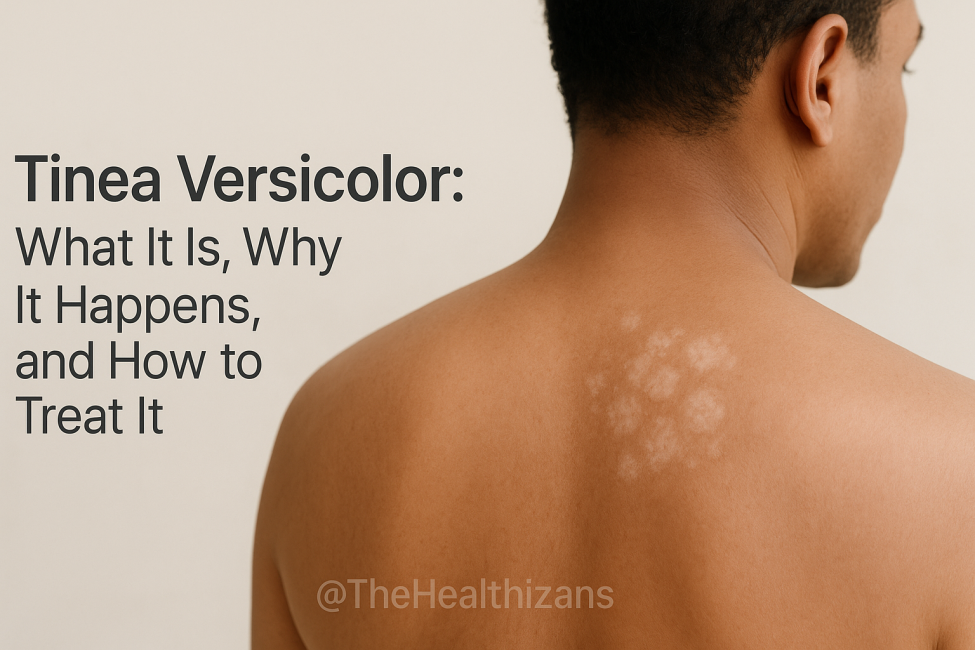
Tinea versicolor is a common fungal skin condition that causes light or dark patches to appear on the skin, often prompting people to wonder what it is and why it suddenly develops. Understanding tinea versicolor: what it is, why it happens, and how to treat it can make the condition far less confusing and help you manage it with confidence. Although harmless, the colour changes can be unsettling, especially when the patches spread or return seasonally.
What Is Tinea Versicolor?
Tinea versicolor, also known as pityriasis versicolor, happens when a naturally occurring skin yeast called Malassezia grows more actively than usual. This yeast is present on everyone’s skin, so the condition has nothing to do with poor hygiene and is not contagious. When the yeast becomes overactive, it disrupts melanin production and leads to patches that look lighter, darker, pinkish or tan. The patches can sometimes feel slightly scaly when scratched, although many people only notice the colour change.
By understanding tinea versicolor clearly, including what it is and why it occurs, people often feel more reassured about its harmless nature and its tendency to respond well to treatment.
Why Tinea Versicolor Happens
Certain environmental and personal factors make tinea versicolor more likely to appear. Warm, humid climates, regular sweating, naturally oily skin and the use of heavy lotions or sunscreens can all create conditions where Malassezia thrives. This is why the condition is so common in tropical regions or during summer months.
Some individuals also experience flare-ups during hormonal changes or periods of lower immunity. Tight or non-breathable clothing can trap sweat and heat against the skin, making the yeast more active and increasing the likelihood of patches developing.
How It Appears on Different Skin Tones
The condition looks slightly different depending on the person’s skin tone. On fair skin, the patches may appear tan or pink. On medium to deeper skin tones, they are often lighter or ash-coloured, creating noticeable contrast. This is one reason tinea versicolor is sometimes mistaken for conditions such as vitiligo. Even after successful treatment, the skin can take weeks or months to regain its usual colour because pigment recovery is slower than yeast clearance.
Is It Harmful?
Tinea versicolor is not harmful and does not cause permanent damage. Most people experience no symptoms beyond the visible skin patches. Mild itching may occur, particularly in hot weather, but the condition does not lead to scarring or long-term complications. The main challenge for most people is its tendency to recur, which can be frustrating if not understood.
How to Treat Tinea Versicolor
Treatment depends on how widespread or persistent the condition is. Mild cases usually respond well to topical antifungal options such as ketoconazole shampoo, selenium sulfide lotion or zinc pyrithione washes. These reduce yeast activity on the skin and are often used for several days in a row.
For more extensive or recurring cases, a clinician may prescribe oral antifungal medicines such as fluconazole or itraconazole. These work from within the body and are particularly effective when the condition continues to return. It is important to remember that while the yeast often clears quickly, the discolouration may linger until the skin’s pigmentation fully recovers.
Many people are surprised to learn that fungal conditions differ depending on where they appear. For example, fungal nail infections behave very differently from tinea versicolor. Our article on treating toenail fungus naturally explains why some fungal conditions are more stubborn than others, helping people better understand the broader behaviour of these infections.
Why It Comes Back Easily
Recurring tinea versicolor is extremely common. Individuals who live in warmer climates, sweat heavily or have naturally oily skin are more likely to experience repeated episodes. Preventive strategies can make a significant difference. Showering soon after sweating, choosing breathable fabrics and avoiding heavy, oily skincare products can help reduce flare-ups. Many people also benefit from using an antifungal shampoo once weekly during hotter months as part of a maintenance routine.
When to Seek Medical Advice
Although many cases can be managed at home, there are times when it is best to consult a healthcare professional. If the patches spread quickly, cover large areas or do not improve with over-the-counter treatments, a clinician can confirm the diagnosis and recommend stronger or more specific treatments. It is also helpful to seek advice when unsure whether the patches are caused by tinea versicolor or another skin condition.
Final Thoughts
Tinea versicolor may be persistent, but understanding tinea versicolor: what it is, why it happens, and how to treat it empowers you to manage it effectively. With the right combination of treatment, preventive habits and patience while the skin regains its colour, most people find they can keep it under control and reduce the frequency of flare-ups over time.
Sources
- NHS – Fungal Skin Infections
- American Academy of Dermatology – Tinea Versicolor: Causes, Symptoms and Treatment
- Mayo Clinic – Tinea Versicolor: Symptoms & Causes
- Cleveland Clinic – Tinea Versicolor
About the Author