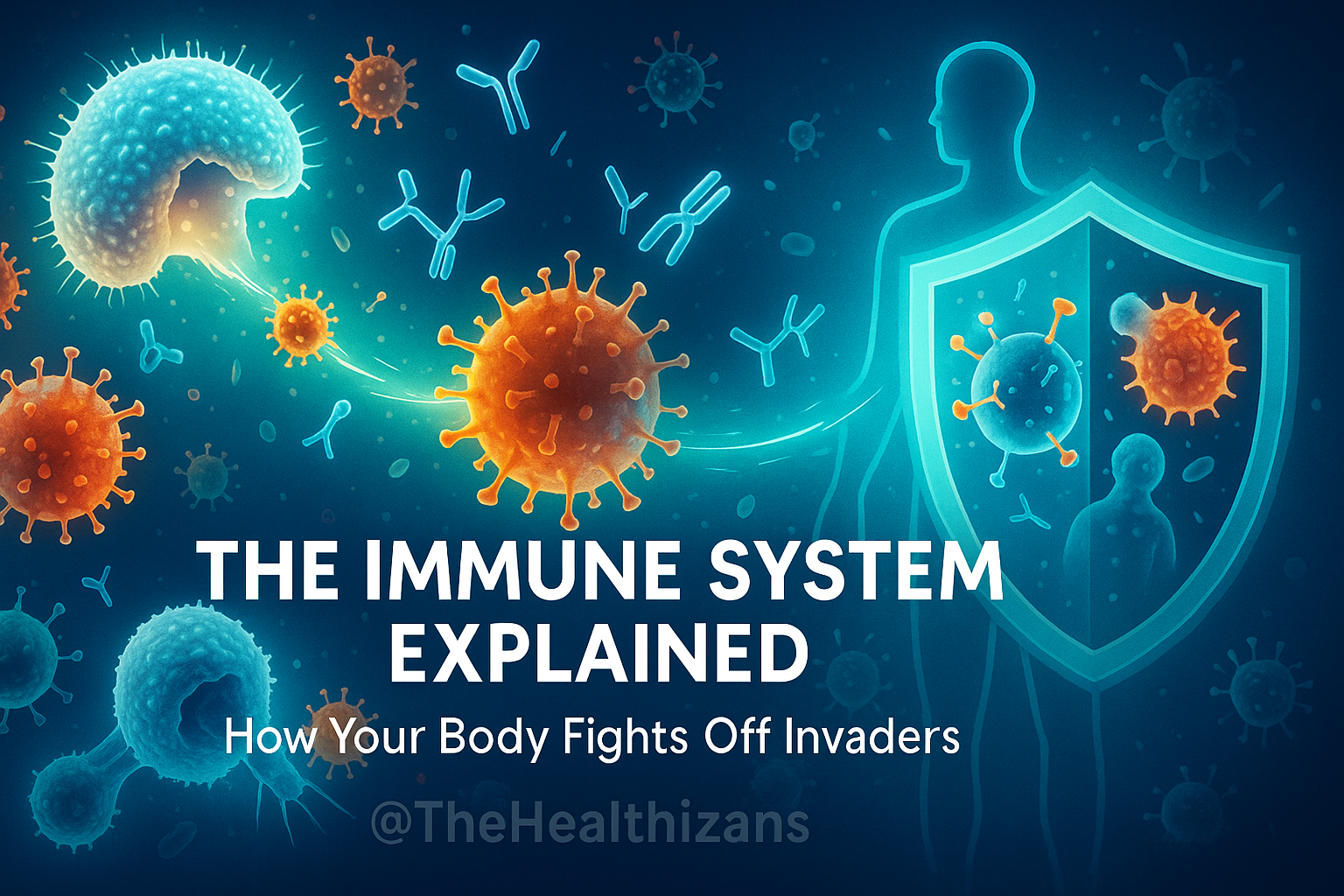
Every single day, your body fights an invisible war. Viruses, bacteria, and other microscopic intruders constantly attempt to break through your defences — yet most of the time, you stay healthy without even realising it. That’s because your immune system is quietly working 24/7 to protect you like an elite defence squad.
But here’s the good news: while your immune system is always on duty, you can actively support it through your daily choices — from diet and sleep to hygiene and vaccination. Let’s explore how this intricate system keeps you alive and well.
⚙️ The Immune System 101
At its core, your immune system is a complex network of cells, tissues, and organs designed to defend your body against harmful invaders (known as pathogens). It operates in two key stages — one fast and general, the other precise and long-lasting:
- Innate Immunity (First Line): Your rapid, non-specific defence — including skin, mucus, inflammation, and fever.
- Adaptive Immunity (Second Line): Slower but smarter — it learns to recognise and remember threats for the future.
Together, they form a seamless protection chain that keeps you healthy from head to toe.
🚪 First Line of Defence: Keeping Invaders Out
Your body’s surface barriers are its first and most critical shield against infection.
🧍♂️ Skin acts as a physical wall that blocks pathogens.
👃 Mucus and cilia in your nose and lungs trap and sweep out dust, microbes, and pollutants.
🍽️ Stomach acid destroys harmful organisms that enter through food or drink.
✅ What You Can Do
- Wash your hands regularly — one of the simplest ways to reduce exposure to microbes.
- Keep your skin healthy by moisturising and treating cuts promptly.
- Stay hydrated and avoid smoking to keep mucus and cilia functioning properly.
- Use acid-reducing medicines only when medically necessary, as they can weaken stomach defences.
⚔️ Second Line: The Rapid Responders
If an invader breaks through your outer barriers, your innate immune cells immediately leap into action.
🧪 White blood cells (phagocytes) engulf and destroy pathogens.
🔥 Inflammation signals danger, summoning immune cells to the site.
🌡️ Fever raises body temperature to slow down invading microbes.
✅ What You Can Do
- Eat foods rich in vitamin C (citrus, peppers), zinc (nuts, seeds), and protein to fuel white blood cells.
- Rest and hydrate when you have a mild fever — it’s often your body’s way of fighting back.
- Avoid unnecessary anti-inflammatory medicines unless prescribed, as they may dampen the immune response.
🎯 Adaptive Immunity: The Specialist Army
Once your body has time to study the invader, the adaptive immune system deploys highly trained specialists.
- B cells produce antibodies — proteins that tag pathogens for destruction.
- T cells directly kill infected cells or coordinate other immune defences.
- Memory cells store information about past infections, creating long-term protection.
✅ What You Can Do
- Stay up to date with vaccinations — they train your memory cells safely without full-blown infection.
- Get 7–9 hours of quality sleep to support immune cell activity.
- Ensure adequate vitamin D through sunlight, fortified foods, or supplements.
- Avoid overusing antibiotics, which can disrupt your body’s natural defences.
💡 Want to know how immunity changes with age and lifestyle? Read our related post on Can Fasting Really Regenerate the Human Immune System?.
💉 Vaccines: Training Without the Battle
Vaccines act like military drills for your immune system. By introducing harmless parts of a virus or bacteria, they allow your immune cells to practise recognising and fighting invaders — without causing the actual illness.
✅ What You Can Do
- Follow NHS or WHO vaccination schedules — including childhood jabs and adult boosters (flu, COVID-19, shingles, tetanus).
⚖️ When Immunity Misfires
A strong immune system is vital, but it must remain balanced. When it’s too weak, infections thrive. When it’s overactive, it can turn against your own tissues — leading to allergies or autoimmune diseases.
✅ What You Can Do
- Avoid excessive supplements or immune “boosters” — moderation is key.
- Manage stress through breathing exercises, mindfulness, or yoga.
- Seek medical advice to manage allergies or autoimmune symptoms effectively.
🌍 A Global Health Perspective
According to the World Health Organization (WHO), infectious diseases still rank among the top 10 causes of death worldwide. At the same time, autoimmune and allergic conditions are on the rise, especially in industrialised countries.
The global challenge is clear: we must strengthen immune health through balanced nutrition, vaccination access, clean environments, and stress reduction — both individually and collectively.
🔑 Key Takeaways
- The immune system has multiple layers of defence — barriers, rapid responders, and long-term memory.
- Nutrition, rest, stress management, and vaccination all play vital roles in keeping it strong.
- Supporting immunity isn’t about “boosting” — it’s about balance, resilience, and smart daily choices.
💬 What’s Your Take?
Do you actively do things to support your immune system — like sleeping well, eating nutrient-rich foods, or staying hydrated?
Share your daily immunity-boosting habits with the @TheHealthizans community 👇
📚 Sources
- National Institutes of Health (NIH) – Understanding the Immune System
- Abbas, A. K. & Lichtman, A. H. (2021). Cellular and Molecular Immunology. Elsevier.
- World Health Organization – Global Health Estimates
- Plotkin, S. A. (2014). History of Vaccination. PNAS.
- Akdis, C. A. (2018). The Immunological Basis of Allergies. Allergy Journal.
About the Author