Have your shoes ever felt tighter than usual at the end of the day? Occasional swollen feet and ankles are common, especially after long hours of standing, travelling, or exercising. But when swelling becomes frequent, painful, or accompanied by other symptoms, it can signal something more serious.
Let’s explore the common causes of swollen feet and ankles, when to relax, and when it’s time to see a doctor.
💧 What Exactly Is Foot or Ankle Swelling?
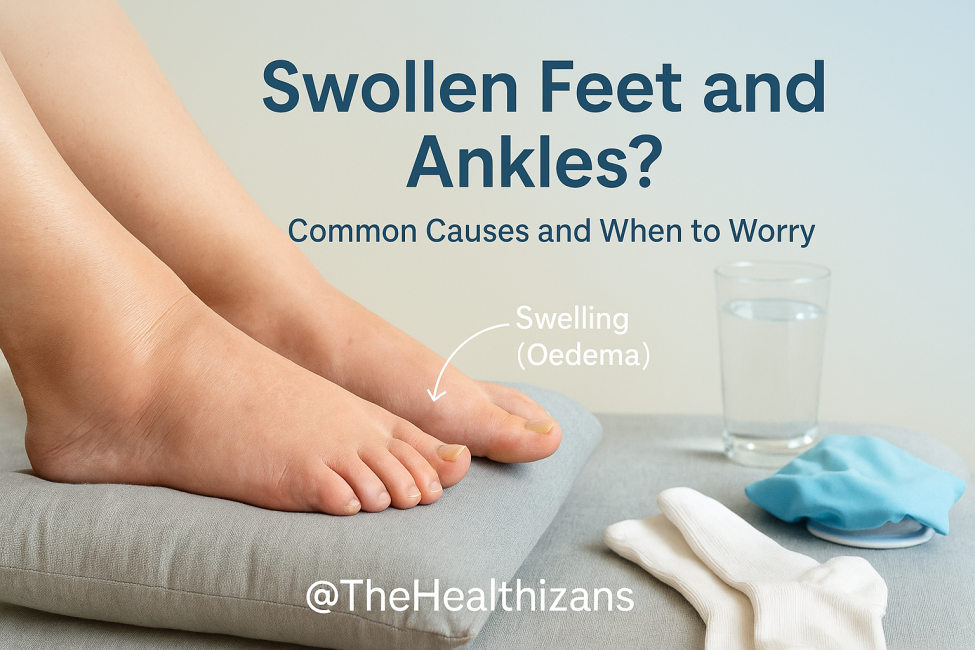
Swelling — or oedema — happens when excess fluid builds up in the tissues of your lower limbs. Gravity naturally pulls fluid downwards, which is why swelling often appears around your ankles and feet.
It can occur on one or both sides, and may feel tight, heavy, or slightly tender. Most mild cases resolve on their own, but persistent or painful swelling deserves medical attention.
🔍 Common Causes of Swollen Feet and Ankles
Swelling can result from something as simple as standing too long, or as complex as an underlying medical condition. Here are some of the most frequent causes:
1. Prolonged Standing or Sitting
When you’re on your feet or seated for too long — such as during long flights or office hours — blood and fluid tend to pool in your lower limbs. This is known as dependent oedema and usually eases once you move around or elevate your legs.
2. Heat and Humidity
Warm weather causes blood vessels to widen, making it easier for fluid to leak into surrounding tissues. That’s why you might notice puffier feet during summer.
3. Injury or Sprain
A twisted ankle or foot injury can cause localised swelling due to inflammation or tissue damage. In these cases, the swelling is usually on one side and may be accompanied by redness or bruising.
4. Pregnancy
Swelling in the feet and ankles is common during pregnancy due to hormonal changes, increased blood volume, and pressure from the growing uterus. However, if the swelling is sudden or severe — especially with headaches or vision changes — it could be a sign of preeclampsia and requires urgent medical attention.
5. Medical Conditions
Persistent or severe swelling can indicate health problems such as:
- Heart failure – when the heart can’t pump blood effectively, fluid backs up in the legs.
- Kidney disease – excess salt and fluid retention can cause generalised swelling.
- Liver disease – reduced protein levels can lead to fluid leakage into tissues.
- Venous insufficiency – weakened leg veins make it harder for blood to return to the heart, causing chronic swelling.
6. Medications
Certain medications can cause fluid retention as a side effect — including some used for blood pressure, hormones, or diabetes. Always speak with your doctor if you notice swelling after starting a new medication.
🧊 Simple Remedies for Mild Swelling
If your swollen feet and ankles are mild and not linked to a serious condition, you can try these simple fixes at home:
- Elevate your legs for 15–20 minutes several times a day to help fluid flow back toward the heart.
- Move more — gentle foot exercises, walking, or ankle circles help improve circulation.
- Reduce salt intake to prevent fluid retention.
- Wear comfortable shoes and compression socks to support blood flow.
- Cool foot soaks or applying a cold compress can ease swelling and discomfort.
If you’re pregnant, rest your feet often, stay hydrated, and avoid standing for prolonged periods.
⚠️ When to Worry and See a Doctor
While occasional swelling is harmless, seek medical help if you notice:
- Swelling in only one leg that appears suddenly (possible blood clot).
- Shortness of breath, chest pain, or fatigue (may suggest heart issues).
- Pain, warmth, or redness in the swollen area.
- Severe or persistent swelling lasting more than a few days.
- Sudden swelling during pregnancy with other symptoms.
Prompt medical assessment helps identify and manage any underlying cause early.
💬 Also, check out our related article on Cracked Heels: Causes and Home Remedies That Work — because foot comfort and care go beyond swelling to keeping every step pain-free.
💡 Key Takeaway
Occasional swelling after standing or travel is normal, but persistent or painful swollen feet and ankles can signal deeper health issues. Listen to your body — elevate, rest, and seek medical advice if symptoms don’t improve.
💬 What’s Your Take?
Do you experience swelling after long days or travel? What helps you most — leg elevation, foot soaks, or compression socks? Share your tip below — your experience might help someone else!
📚 Sources
- NHS. Swollen Ankles, Feet and Legs (Oedema): Causes and Treatment.
- Cleveland Clinic. Leg Swelling (Edema): Causes and Management.
- Mayo Clinic. Foot and Ankle Swelling: When to See a Doctor.
- American Heart Association. Edema and Heart Health.
About the Author