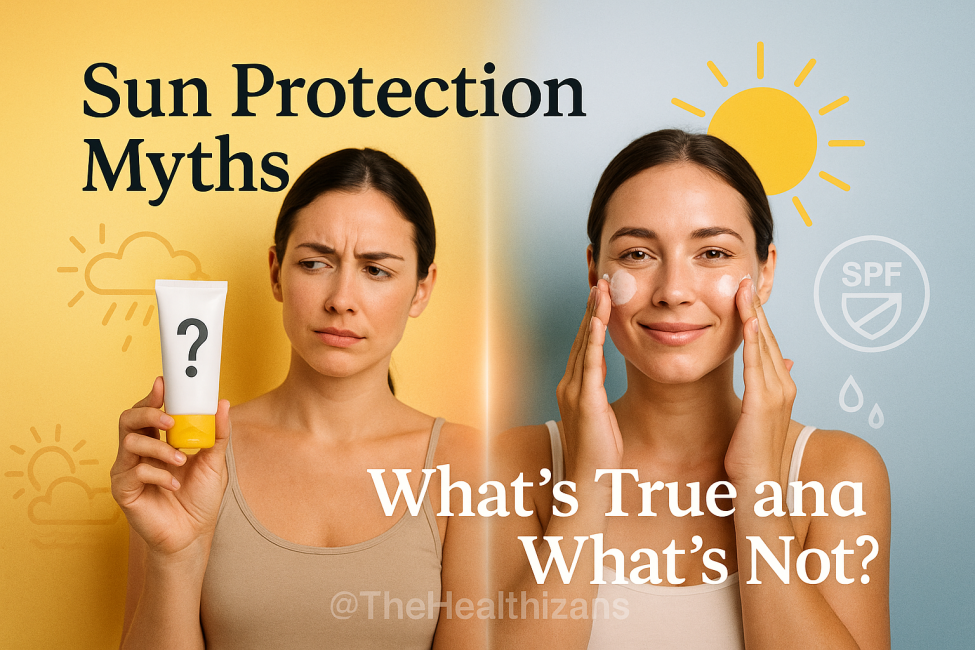
Sun protection is one of the simplest and most effective ways to reduce the risk of skin cancer and premature ageing. Yet, despite years of public health campaigns, misinformation about sun exposure continues to circulate. Some people believe darker skin does not need sunscreen. Others assume SPF is only necessary on sunny days. These misunderstandings can leave the skin vulnerable to long-term damage.
Understanding what is fact and what is fiction helps you protect your skin all year round. This guide breaks down the most common sun protection myths so you can make informed decisions that support lifelong skin health.
Myth 1: “I Don’t Need Sunscreen Because I Have Dark Skin”
Darker skin tones do contain more melanin, which provides some natural protection, but it is far from complete. While darker skin burns less easily, it can still develop sun damage, hyperpigmentation, and skin cancers such as melanoma. Because skin cancer is often diagnosed later in darker skin, outcomes can be more serious.
Regardless of skin tone, everyone benefits from daily sunscreen use.
Myth 2: “You Only Need Sunscreen on Sunny Days”
UV radiation is not limited to bright sunshine. It penetrates through clouds, meaning up to 80% of UV rays can still reach the skin on overcast days. UVA rays — the type responsible for ageing and deeper skin damage — are present year-round, even in winter.
This is why dermatologists recommend applying sunscreen daily, not just in summer or on holidays.
Myth 3: “SPF 15 Is Enough for Daily Use”
SPF measures protection against UVB rays, which cause sunburn. However, SPF 15 blocks only around 93% of UVB radiation, while SPF 30 blocks 97%. That small difference in numbers makes a meaningful difference in long-term protection.
For reliable daily protection, SPF 30 or higher is recommended. In addition, look for “broad-spectrum” formulas, which protect against both UVA and UVB rays.
Myth 4: “Makeup with SPF Works the Same as Sunscreen”
Makeup or moisturiser with SPF can offer some protection, but only if applied in the amount used during testing — which is far more product than most people use. In reality, the average person applies far too little makeup to achieve the labelled SPF.
For best results, use a dedicated sunscreen underneath makeup, then top up with SPF-containing products if preferred.
Myth 5: “You Don’t Need Sunscreen Indoors”
UVB rays do not penetrate glass, but UVA rays do — and these are the rays responsible for deep skin ageing and long-term damage. This is why people who sit near windows often notice more pigmentation on one side of their face.
If you spend long hours near windows or driving, daily sunscreen is still essential.
Myth 6: “A Base Tan Protects Your Skin”
A tan is not a sign of protection — it is a sign of skin damage. When UV rays injure skin cells, they release more melanin to defend themselves. Calling a tan “healthy” is misleading; it is simply your skin showing visible damage.
There is no safe tan, whether from the sun or tanning beds.
Myth 7: “Sunscreen Causes Vitamin D Deficiency”
Normal sunscreen use does not block vitamin D production. Even with sunscreen on, enough UVB reaches the skin to produce adequate vitamin D. In fact, most people obtain vitamin D through food or supplements rather than relying solely on sunlight.
Therefore, you can protect your skin without compromising your vitamin D levels.
Building a Safer Daily Routine
Sun protection works best when it becomes a habit. Applying sunscreen every morning, reapplying during outdoor activities, and wearing protective clothing are straightforward ways to reduce lifelong risk. If you want to strengthen your overall skincare routine, you may find our article on Daily Habits That Keep Your Skin Healthy All Year Round helpful.
When to Seek Medical Advice
If you notice new or changing moles, persistent patches of pigmentation, or skin that doesn’t heal, speak to your GP or dermatologist. Early detection of sun-related skin changes significantly improves outcomes.
Key Takeaways
Many common beliefs about sun protection are misleading. Sunscreen is essential for every skin tone, in every season, and even indoors. Broad-spectrum SPF 30 or higher offers meaningful protection against both burning and ageing. Combined with healthy daily habits, sun protection plays a powerful role in safeguarding your long-term skin health.
Sources
- World Health Organization — UV Radiation and Health
- NHS — Sunscreen and Sun Safety
- American Academy of Dermatology — Sunscreen FAQs
About the Author