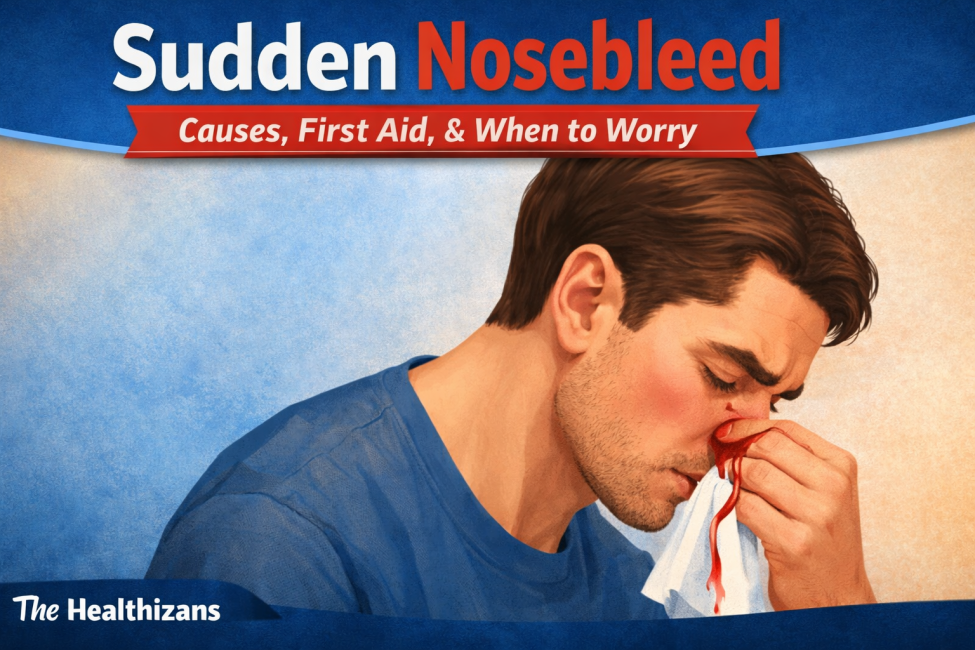
A sudden nosebleed can be unsettling. One moment everything feels normal, and the next you notice blood coming from your nose — sometimes without any clear reason. While most nosebleeds are harmless and stop on their own, some can signal underlying issues that deserve attention.
This article explains why sudden nosebleeds happen, how to stop them safely, and when a nosebleed should not be ignored.
What Is a Nosebleed?
A nosebleed, medically known as epistaxis, occurs when small blood vessels inside the nose rupture and bleed. The lining of the nose is rich in delicate blood vessels that sit very close to the surface, making them easy to irritate or damage.
Most nosebleeds come from the front part of the nose and are usually mild. Less commonly, bleeding can start deeper in the nasal cavity and may be heavier or last longer.
Why Do Nosebleeds Happen Suddenly?
In many cases, a nosebleed appears “out of the blue” because the trigger is subtle or easily overlooked. Some of the most common causes include:
1. Dry air and nasal irritation
Dry indoor heating, air-conditioning, or cold weather can dry out the nasal lining. When the lining cracks, bleeding can start with little warning.
2. Minor trauma
This includes nose picking, rubbing the nose frequently, or blowing the nose forcefully during a cold or allergy flare. Even if it feels minor, it can be enough to break fragile blood vessels.
3. Colds, allergies, and sinus infections
Inflammation inside the nose makes blood vessels more fragile and prone to bleeding, especially during repeated sneezing or nose blowing.
4. Sudden temperature changes
Moving quickly between cold outdoor air and warm indoor environments can dry and irritate the nasal passages.
5. Certain medications
Blood-thinning medicines, aspirin, and some nasal sprays can increase the likelihood of nosebleeds, especially if used regularly.
Can Stress or Blood Pressure Cause Nosebleeds?
This is a common concern. Stress and high blood pressure do not usually cause nosebleeds directly, but they can play an indirect role.
- Stress may increase blood pressure temporarily and make blood vessels more fragile.
- Long-standing high blood pressure can damage blood vessels over time, making bleeding harder to control when it occurs.
If nosebleeds happen alongside headaches, dizziness, or known blood pressure issues, it’s sensible to have your blood pressure checked — something also highlighted by organisations such as the NHS.
How to Stop a Nosebleed Properly (Step by Step)
Many people instinctively manage nosebleeds the wrong way. Here is what actually works:
- Sit upright and lean slightly forward -This prevents blood from flowing into the throat.
- Pinch the soft part of the nose – Use your thumb and index finger just below the nasal bridge.
- Hold for 10–15 minutes without checking – Releasing too early can restart the bleeding.
- Breathe through your mouth and stay calm
- Apply a cold compress – Placing something cold on the bridge of the nose may help constrict blood vessels.
Avoid tilting your head back or lying flat, as this can cause blood to be swallowed and irritate the stomach.
Sudden Nosebleeds at Night: Why They Happen
Waking up with a nosebleed is particularly alarming. Common reasons include dry air in the bedroom, mouth breathing during sleep, nasal congestion, or sleeping in a warm environment without adequate humidity.
If night-time nosebleeds are frequent, simple changes such as improving room humidity or using saline sprays may help.
When Is a Nosebleed a Red Flag?
Most nosebleeds stop within 15–20 minutes. However, you should seek medical advice if:
- Bleeding lasts longer than 20 minutes despite proper pressure
- Nosebleeds happen frequently or are becoming more severe
- Bleeding follows a head injury or facial trauma
- The nosebleed is accompanied by dizziness, weakness, or shortness of breath
- The person is very young, elderly, or on blood-thinning medication
In these situations, prompt assessment is important to rule out underlying problems.
How to Reduce the Risk of Future Nosebleeds
A few simple habits can make a big difference:
- Keep indoor air moist, especially in winter
- Use saline nasal sprays if your nose feels dry
- Avoid aggressive nose blowing
- Keep fingernails short, particularly for children
- Manage allergies and colds effectively
- Stay hydrated
You may also find it helpful to read our article on morning headaches and what they can signal, as both issues can sometimes relate to dry air, sleep quality, or blood pressure changes.
Final Thoughts
A sudden nosebleed is usually harmless, even if it looks dramatic. In most cases, it’s the result of dry air, minor irritation, or temporary inflammation inside the nose. Knowing how to stop a nosebleed properly — and recognising when it needs medical attention — can make the experience far less frightening.
If nosebleeds become frequent or severe, don’t ignore them. They can be your body’s way of asking for a closer look.
What’s Your Take?
Have you ever experienced a sudden nosebleed that caught you off guard?
What helped stop it — or did it make you worry at the time? Share your thoughts with the Healthizans community.
Sources
- NHS – Nosebleeds (Epistaxis)
- Mayo Clinic – Nosebleeds: First aid and causes
- Cleveland Clinic – Nosebleeds (Epistaxis): Causes & Treatment
- MedlinePlus – Nosebleeds
- American Academy of Otolaryngology–Head and Neck Surgery – Nosebleeds (Epistaxis)
About the Author