Retinoblastoma is a rare but serious eye cancer in children — most often diagnosed before the age of five. The good news? With early detection and prompt treatment, survival rates exceed 95% in high-income countries like the UK and US. However, in many parts of the world, delayed diagnosis still leads to preventable blindness or even death.
Understanding what retinoblastoma is, spotting the early signs, and acting quickly can make all the difference. Parents, caregivers, and healthcare professionals all play vital roles in saving children’s sight — and lives.
🧠 What Is Retinoblastoma?
Retinoblastoma is a rare cancer that begins in the retina — the light-sensitive layer at the back of the eye responsible for vision.
It occurs when a mutation develops in the RB1 gene, which normally prevents cells from growing uncontrollably. When this gene malfunctions, retinal cells can multiply too quickly, forming a tumour.
This condition may affect one or both eyes, and it can be either:
- Hereditary, passed down through family genes (often involving both eyes).
- Sporadic, developing by chance in a single eye.
Children with the hereditary form are also at higher risk of developing other types of cancer later in life, making ongoing monitoring essential.
🩺 Early Signs Parents Should Never Ignore
The first and most common sign of retinoblastoma is something parents often notice in photographs:
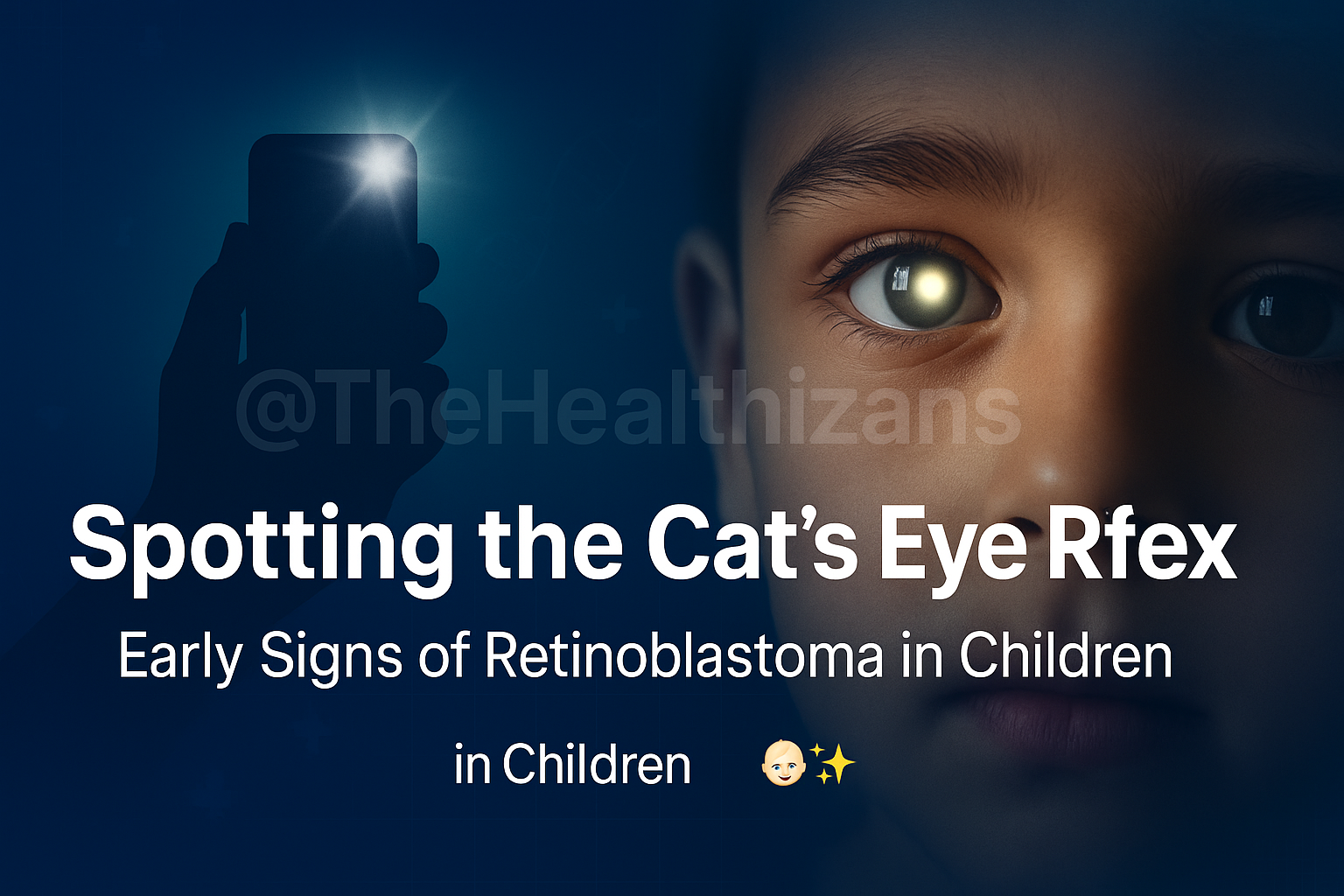
✨ Leukocoria (“cat’s-eye reflex”) – Instead of the usual “red-eye” reflection, the pupil may appear white, yellow, or silvery in certain lighting or flash photos.
Other warning signs include:
- Crossed or wandering eye (strabismus)
- Poor or deteriorating vision in one eye
- Persistent eye redness, swelling, or pain
- In advanced stages, eye enlargement
👉 Tip: Always trust your instincts. If your child’s eye looks unusual or they struggle to focus, seek medical attention right away.
For more on how early visual cues can protect long-term health, read our related post: How to Spot Vision Changes Early and Protect Your Eyes — awareness starts with observation.
🔬 Diagnosis and Treatment
When retinoblastoma is suspected, children are referred to a specialist paediatric ophthalmology and oncology team. Diagnostic tests may include:
- Eye examination under anaesthesia
- Ultrasound or MRI imaging
- Genetic testing (especially when a hereditary pattern is likely)
Treatment depends on the tumour’s size, location, and spread:
- Laser therapy or cryotherapy for small, localised tumours
- Chemotherapy — given systemically or directly into the eye to shrink tumours
- Radiotherapy — used less frequently today due to long-term side effects
- Surgery (enucleation) — removal of the affected eye in advanced or vision-threatening cases
Thanks to modern advances, most children not only survive but also retain useful vision in at least one eye.
🌍 A Global Health Gap
While survival rates for retinoblastoma in the UK approach 99%, many children in lower-income regions still present too late for effective treatment. Limited awareness, lack of screening, and delayed referrals remain major barriers.
This contrast highlights a critical need for public education, early screening, and access to specialist care worldwide — because no child should lose their sight to a preventable cancer.
🧭 What Parents and Caregivers Can Do
- Check your child’s photos: If you ever notice a white or silvery pupil reflex, consult a doctor immediately.
- Trust your instincts: Parents are often the first to spot changes others might overlook.
- Know your family history: If retinoblastoma runs in your family, ensure early and regular eye screening from infancy.
- Act early: The earlier the diagnosis, the better the outcome — both for sight and survival.
🗣️ What’s Your Take?
Have you ever noticed a white glow in a child’s eye photo and wondered about it? Do you think parents are given enough information about rare childhood cancers like retinoblastoma?
Share your thoughts with the @TheHealthizans community — your voice could raise awareness and save sight.
📚 Sources
- NHS UK – Retinoblastoma
- World Health Organization (WHO) – Childhood Cancer: Retinoblastoma Fact Sheet
- American Cancer Society – About Retinoblastoma
About the Author