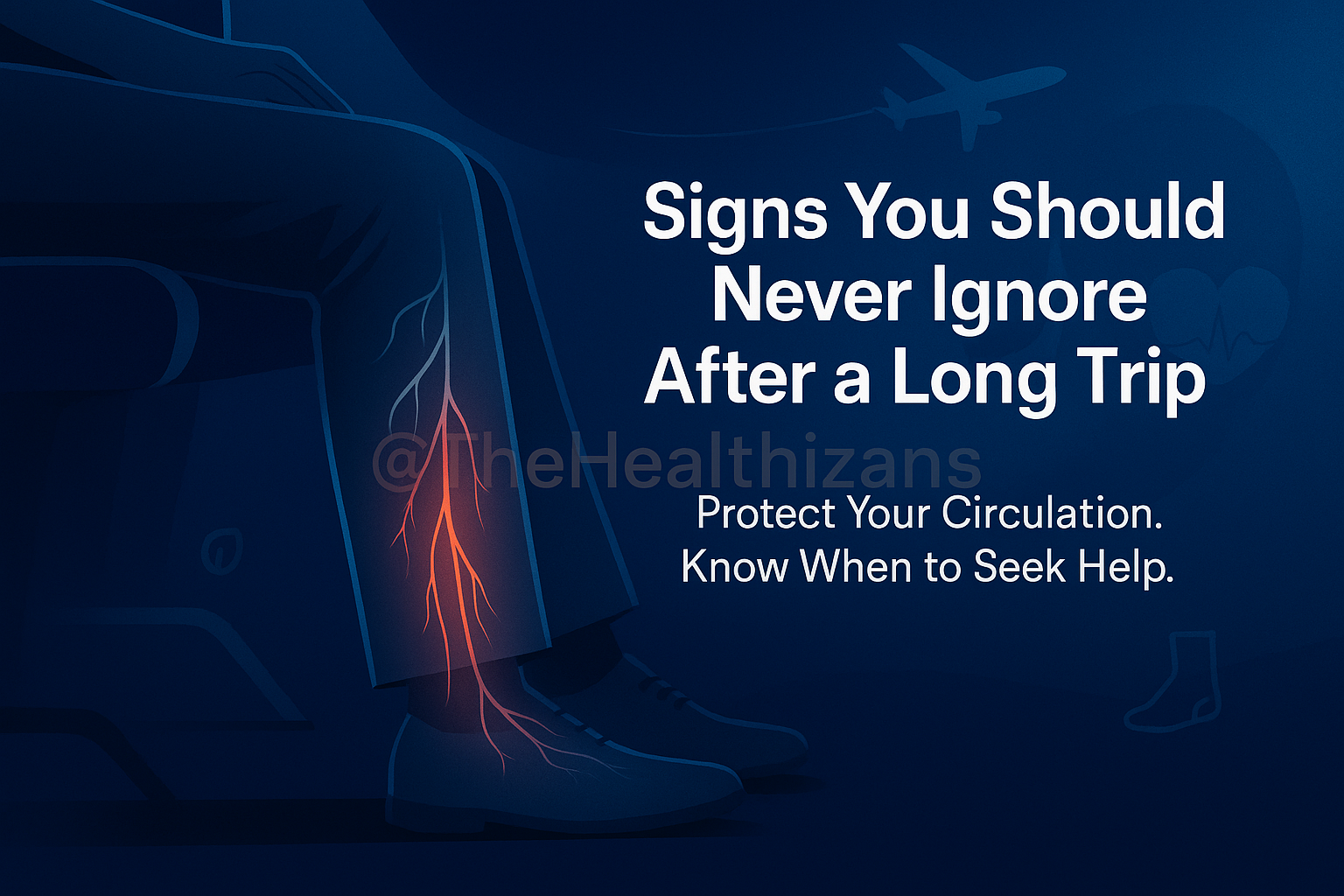
After a long trip — whether it’s a cross-country flight, a road journey, or hours spent sitting in a bus or train — most people expect to feel tired or stiff. However, there are certain warning signs you should never ignore after a long trip, especially those linked to your heart, lungs, and circulation.
Prolonged immobility can increase your risk of deep vein thrombosis (DVT) or even a pulmonary embolism, a serious condition where a blood clot travels to the lungs. Recognising these signs early can literally save your life.
Also, check out our article on Pulmonary Embolism: Causes, Symptoms, and How to Prevent It, which explains how clots form and what you can do to lower your risk before you travel.
1️⃣ Swelling or Pain in One Leg
A swollen, red, or painful calf isn’t just a sign of fatigue — it could be deep vein thrombosis. This happens when blood pools in your legs during long periods of sitting.
If you notice tenderness, warmth, or one leg looking puffier than the other, don’t brush it off. DVT can silently develop during or shortly after travel, and if left untreated, the clot can move to the lungs and become life-threatening.
2️⃣ Sudden Shortness of Breath
Finding it hard to catch your breath after a journey isn’t always about altitude changes or lack of rest. It could indicate that a blood clot has travelled to your lungs, blocking blood flow — a pulmonary embolism.
Seek medical help immediately if you experience breathlessness, dizziness, or light-headedness, especially if it comes on suddenly or feels different from your usual fatigue.
3️⃣ Chest Pain or Tightness
Chest pain is a red flag you should never ignore after travelling. While it might seem like anxiety or indigestion, a sharp or persistent chest pain could suggest a pulmonary embolism or strain on the heart.
If the discomfort worsens when you breathe deeply, cough, or lie down, treat it as an emergency and get checked straight away.
4️⃣ Coughing Up Blood or Feeling Faint
A cough that produces blood-tinged sputum, combined with weakness or fainting spells, is another serious warning sign. These can occur when oxygen levels drop because of a clot blocking blood supply to the lungs.
Even mild cases of PE require prompt diagnosis and treatment to prevent complications.
5️⃣ Persistent Headache, Confusion, or Vision Changes
Though less common, dehydration and poor circulation during long trips can also affect the brain. Severe headache, blurred vision, or confusion may indicate reduced oxygen flow or even a stroke — particularly if other symptoms like arm weakness or facial drooping appear.
🛡️ How to Protect Yourself on Long Trips
Fortunately, there are several ways to reduce your risk of developing clots or other travel-related complications:
- Move often: Walk around the cabin, stretch your legs, or stop for short breaks on road trips.
- Stay hydrated: Drink plenty of water and avoid excess caffeine or alcohol.
- Wear compression stockings: They help improve blood circulation in your legs.
- Maintain a healthy lifestyle: Regular exercise and weight management go a long way in preventing circulatory issues.
- Follow your doctor’s advice: If you have a history of clots or are on anticoagulants, take your medication as prescribed before and after travel.
💬 Key Takeaway
While fatigue after a journey is normal, pain, swelling, breathlessness, or chest discomfort should never be ignored. These are the body’s alarm bells that something more serious may be happening.
Early action and awareness can make a difference between a safe recovery and a medical emergency. So next time you unpack your suitcase, also check in with your body.
💬 What’s Your Take?
Have you ever experienced unusual symptoms after a long flight or road trip? What steps do you take to stay active and safe while travelling? Share your experience — your story might help others stay healthy on the go!
🔗 Sources
- NHS. Deep Vein Thrombosis (DVT) and Pulmonary Embolism (PE) — https://www.nhs.uk/conditions/deep-vein-thrombosis-dvt/
- World Health Organization. Healthy Travel Tips — https://www.who.int/travel-advice
- American Heart Association. Travel and Blood Clots: What You Need to Know — https://www.heart.org
About the Author