Pregnancy brings excitement and hope, but sometimes unexpected challenges arise. One such challenge is a short cervix — a condition that increases the risk of preterm birth. Understanding what it is, how it’s detected, and the treatments available can make all the difference in protecting both mother and baby.
🌱 What Is a Short Cervix?
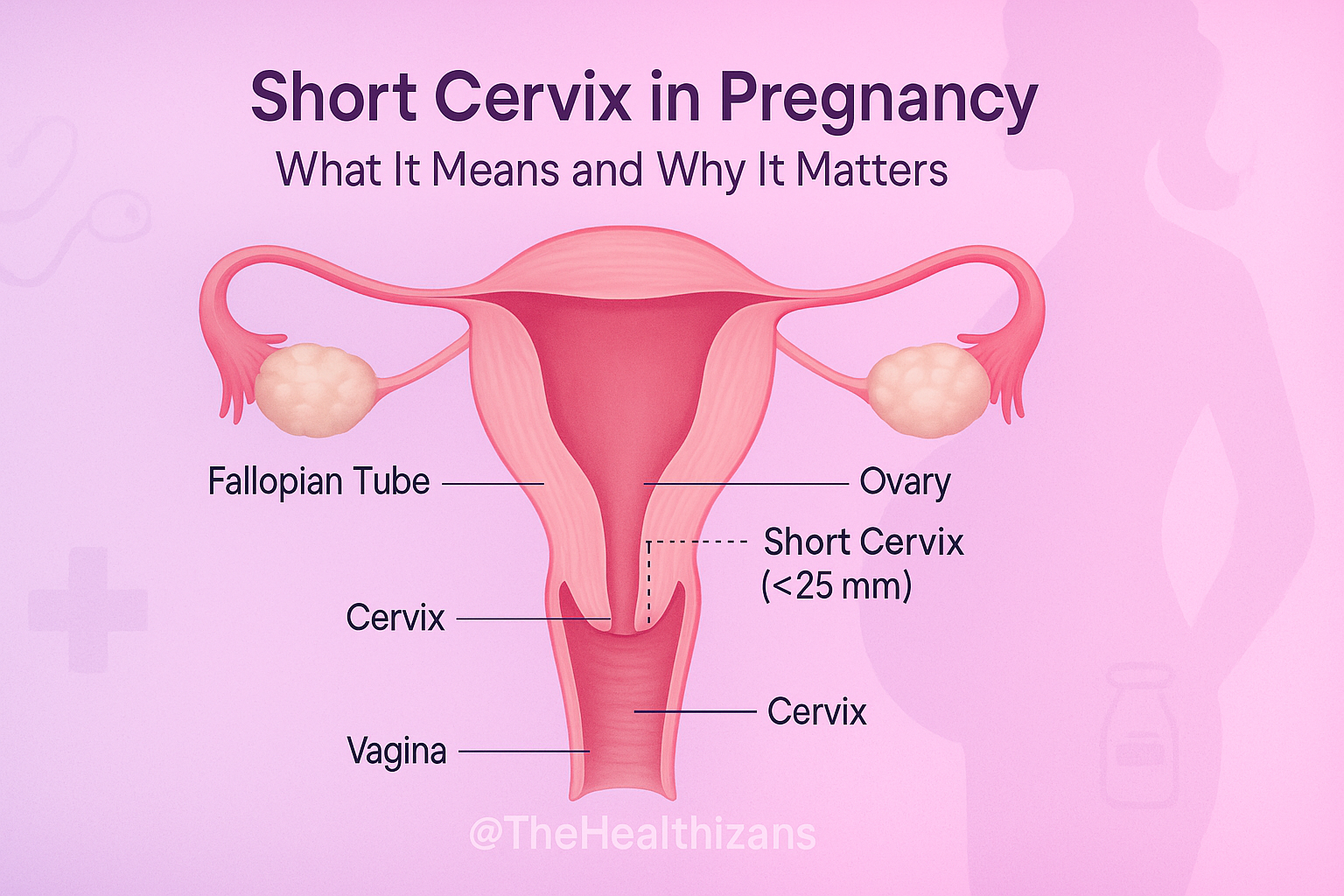
The cervix is the lower part of the uterus that opens into the vagina. During pregnancy, it acts like a gatekeeper, staying firm and closed until labour begins.
A short cervix means the cervical length is less than normal for that stage of pregnancy. Doctors usually define a cervix as “short” if it measures less than 25 mm before 24 weeks of pregnancy.
Why this matters: a shorter cervix may open too early, leading to preterm labour (birth before 37 weeks).
⚠️ Short Cervix and Preterm Birth: The Connection
Globally, preterm birth is the leading cause of newborn illness and death (WHO, 2023). A short cervix is one of the strongest predictors of this risk.
How it happens:
- A short cervix may not withstand the growing weight of the pregnancy.
- It can soften, open, or dilate too soon.
- This can trigger premature contractions or rupture of membranes.
But the good news is — with early diagnosis, many pregnancies can still be carried safely to term.
🔎 How Do Doctors Detect It?
Cervical length is usually checked during a mid-pregnancy ultrasound scan (around 18–24 weeks).
- Transvaginal ultrasound is the most accurate method.
- Some women may be monitored more closely if they are at higher risk.
Doctors may recommend extra scans if:
- You’ve had a previous preterm birth.
- You’ve had cervical surgery (e.g., cone biopsy, LLETZ).
- You’re carrying twins or multiples.
- You have a history of recurrent miscarriage.
💊 Treatment Options: Can You Still Carry to Term?
Yes. Many women with a short cervix go on to have successful pregnancies, especially when the condition is identified early. Treatments include:
- Vaginal progesterone – A hormone treatment that can reduce the risk of preterm labour.
- Cervical cerclage – A stitch placed in the cervix to keep it closed until late pregnancy.
- Cervical pessary – A small silicone device placed around the cervix to provide support.
- Lifestyle adjustments – In some cases, reduced physical activity or pelvic rest may be advised.
Treatment is tailored to each woman’s situation and closely monitored by her care team.
❤️ Living With a Short Cervix Diagnosis
Hearing the words “short cervix” can feel frightening. But knowledge and support can ease the journey.
- Emotional wellbeing – Anxiety is common; counselling or peer support groups can help.
- Practical support – Some women may need adjustments at work or home during pregnancy.
- Hope for the future – With treatment, many women carry their babies to term. Even after an early delivery, advances in neonatal care have greatly improved outcomes.
🌍 Why Awareness Matters
Many women only hear about short cervix after complications arise. Awareness and routine scans can change that. By speaking about it openly, we empower expectant mothers to ask questions, understand their options, and feel reassured that they are not alone.
✅ Key Takeaways
- A short cervix is defined as less than 25 mm before 24 weeks.
- It is a major risk factor for preterm birth, but treatment is available.
- Ultrasound scans detect it early, giving doctors time to act.
- Progesterone, cerclage, or pessaries can help prolong pregnancy.
- With the right care, many women still carry their pregnancies safely to term.
💬 What’s Your Take?
Do you think short cervix is widely understood in maternal health discussions? Have you or someone you know faced this challenge? Share your thoughts — your story could help another mother feel less alone.
📚 Sources
- NHS. Cervical length in pregnancy. 2023.
- World Health Organization. Preterm birth. 2023.
- American College of Obstetricians and Gynecologists (ACOG). Prediction and prevention of preterm birth. 2021.
About the Author