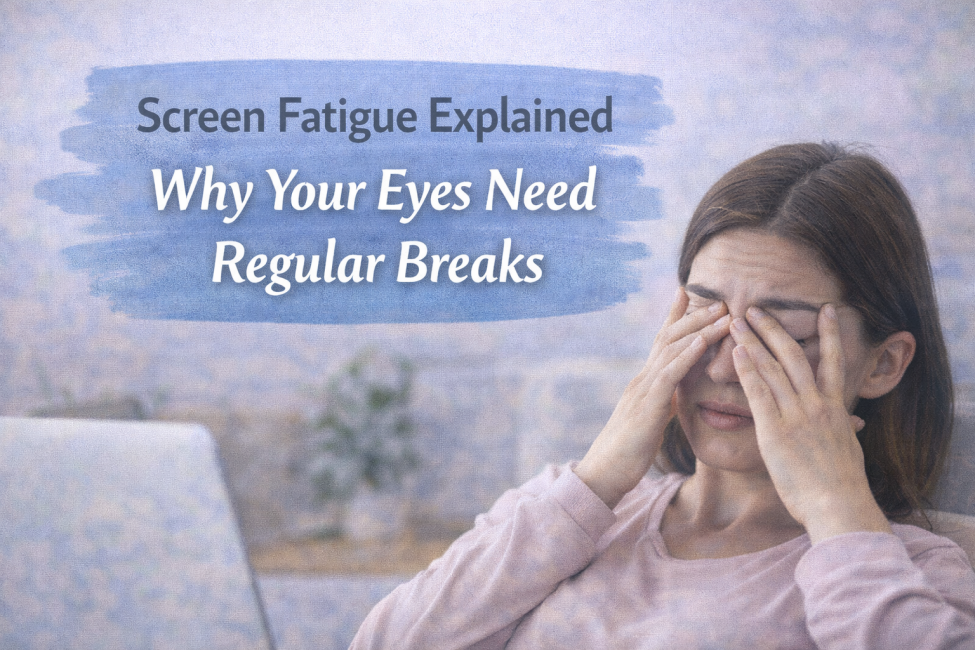
If your eyes feel tired, dry, heavy, or strained after a long day on screens, you’re not alone — and you’re not imagining it. Screen fatigue, sometimes called digital eye strain, has quietly become one of the most common modern health complaints worldwide.
From work emails and virtual meetings to social media scrolling and late-night screen use, our eyes are now under near-constant demand. Yet many people don’t realise that small, regular breaks can significantly reduce eye strain and improve comfort.
In this article, we’ll explore what screen fatigue really is, why it happens, and how simple habits — like resting your eyes for just two minutes — can help protect your vision and overall wellbeing.
What Is Screen Fatigue?
Screen fatigue refers to a collection of eye and vision symptoms linked to prolonged screen use. Unlike eye diseases, it doesn’t usually involve permanent damage — but that doesn’t make it harmless.
People experiencing screen fatigue often report eye tiredness, dryness, blurred vision, headaches, or difficulty refocusing after long periods on screens. These symptoms often build gradually, making them easy to ignore until they start affecting concentration, mood, and daily productivity.
Why Screens Are So Demanding on Your Eyes
Screens place unique demands on the visual system.
When we focus on screens, our blink rate drops significantly, which means the eyes dry out faster. At the same time, constant close-up focusing keeps eye muscles contracted for long periods without rest. Add bright light, glare, contrast, and blue light exposure — especially in poorly lit rooms — and the visual workload increases further.
Posture also plays a role. Screen use often comes with forward head position and neck tension, which can worsen eye discomfort and contribute to headaches.
Public health bodies such as the World Health Organization and the NHS have both highlighted prolonged screen use as a growing contributor to eye discomfort and digital fatigue in everyday life.
Why Regular Eye Breaks Matter
Resting your eyes isn’t about stopping work — it’s about resetting the visual system.
Short, intentional breaks allow eye muscles to relax, blinking patterns to normalise, and visual focus to recover. Over time, this can reduce dryness, headaches, and the sense of visual overload that often follows long screen sessions.
The key isn’t long breaks — it’s frequent, simple ones.
The Power of a 2-Minute Eye Rest
This is why the Daily Healthizans Challenge #17 — Rest Your Eyes for 2 Minutes is so effective.
Just two minutes can help your eyes and nervous system reset. Closing your eyes gently, or looking into the distance while breathing slowly, gives overworked eye muscles a chance to relax. When practised regularly, this small habit can significantly reduce cumulative eye strain.
If remembering feels difficult, setting a gentle reminder every 60–90 minutes during long screen sessions can help turn this into a sustainable habit.
Simple Daily Habits That Support Eye Health
Protecting your eyes doesn’t require special equipment or supplements. Small adjustments practised consistently can make a big difference.
Looking away from screens regularly, blinking consciously, adjusting screen height to eye level, reducing glare, and avoiding prolonged screen use late at night all help reduce visual stress. Evening screen exposure is especially important, as it can worsen eye strain and disrupt sleep — something we explore further in our article on how screen time affects your sleep and what you can do about it.
A Global Issue — Not Just an Office Problem
Screen fatigue isn’t limited to office workers. It affects students, healthcare professionals, drivers, remote workers, older adults, and increasingly, children.
As digital devices become central to daily life across the globe, preventive habits matter more than ever. Eye strain doesn’t need to be the price we pay for modern convenience.
How Eye Health Fits Into Whole-Body Wellness
Eye strain doesn’t exist in isolation. It’s closely linked to posture, stress levels, sleep quality, and nervous-system balance.
That’s why simple, daily practices — like eye breaks, stretching, grounding, and reducing screen overload — work best together. Combined, they create a healthier rhythm for modern living.
Key Takeaway
Screen fatigue is common, but it isn’t inevitable.
By building small habits such as resting your eyes regularly, blinking consciously, and reducing unnecessary screen exposure, you can protect your eyes, improve comfort, and support long-term wellbeing — without giving up technology.
Sometimes, two minutes is all it takes.
💬 What’s Your Take?
Have you noticed eye strain after long screen use?
Did resting your eyes for two minutes make a difference for you?
Share your experience in the comments — and don’t forget to check today’s Daily Healthizans Challenge.
📚 Sources
- World Health Organization (WHO) — Digital health and screen use guidance
- NHS — Digital eye strain and screen use advice
- American Academy of Ophthalmology — Computer vision syndrome
- Harvard Health Publishing — Screen time, blue light, and eye strain
About the Author