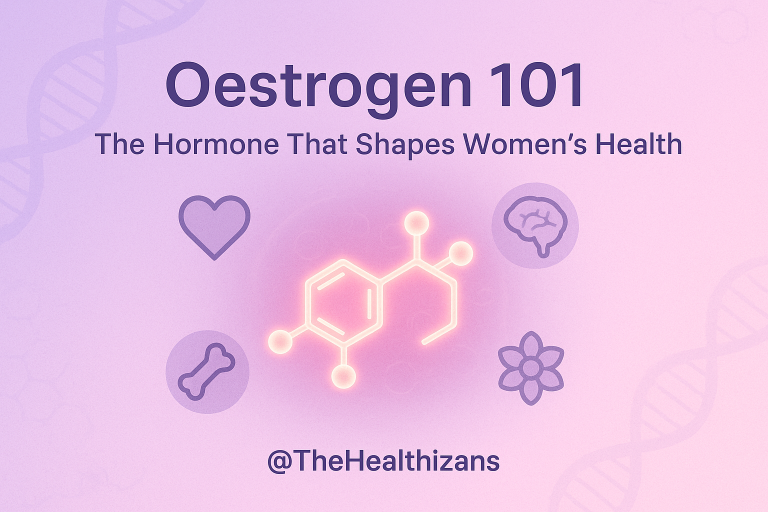
In our earlier article Oestrogen 101: The Hormone That Shapes Women’s Health, we explored what oestrogen is, what it does in the body, and what happens when its levels go out of balance. But knowledge alone isn’t enough — many of us ask: what can I actually do to support healthy oestrogen levels in daily life?
The good news is that your lifestyle choices — from the food you eat to the way you sleep and manage stress — can make a big difference. Let’s explore practical, science-backed tips you can start today.
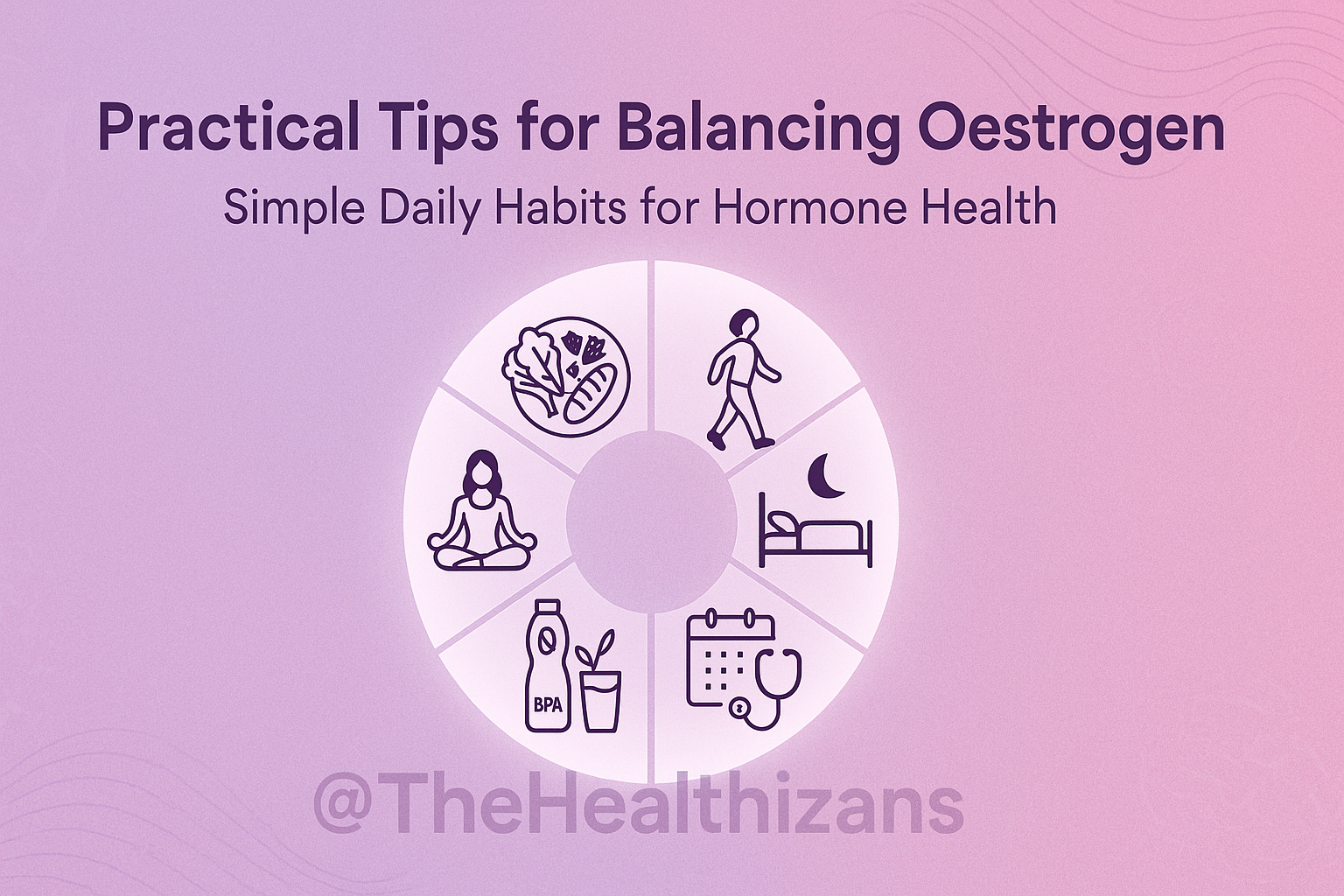
🥦 Nourish with Hormone-Friendly Foods
Your diet is one of the most powerful ways to influence hormone balance.
- High-fibre foods such as beans, whole grains, and vegetables help your body eliminate excess oestrogen through digestion.
- Cruciferous vegetables like broccoli, kale, and cauliflower contain special compounds that support oestrogen metabolism.
- Healthy fats — especially omega-3s from salmon, flaxseeds, and walnuts — help reduce inflammation and support hormonal health.
At the same time, try to limit ultra-processed foods and excess sugar, which can drive weight gain and disrupt hormone signals.
🚶 Move Your Body Daily
Exercise doesn’t just tone muscles — it helps regulate oestrogen too. Physical activity reduces stress hormones like cortisol, supports healthy weight, and lowers the risk of hormone-related conditions. A balanced mix of cardio, strength training, and flexibility exercises works best, but even a daily brisk walk can make a real difference.
🌙 Prioritise Restorative Sleep
Poor sleep disrupts many of the body’s hormone signals. Aim for 7–9 hours of quality sleep each night. Going to bed and waking up at consistent times, reducing screen time before bed, and creating a calm sleep environment can all help keep oestrogen and other hormones in balance.
🧘 Calm Stress Before It Controls You
Stress hormones compete with sex hormones like oestrogen. When stress is chronic, cortisol rises, and oestrogen balance can shift. Simple practices like mindfulness, deep breathing, yoga, or even short pauses during the day can ease stress and help restore hormonal harmony.
💧 Protect Your Liver, Protect Your Hormones
The liver is your body’s hormone-processing hub. It helps break down and remove excess oestrogen. Support it by:
- Staying hydrated
- Limiting alcohol intake
- Eating liver-friendly foods like leafy greens, beetroot, and citrus fruits
🚫 Watch Out for Hidden Disruptors
Some everyday chemicals — in plastics, pesticides, and even beauty products — can mimic oestrogen in the body. These are called endocrine disruptors. Reduce your exposure by:
- Choosing BPA-free bottles
- Washing fruit and veg thoroughly
- Opting for more natural skincare and cleaning products
🩺 Keep Up with Regular Health Checks
Healthy living is vital, but medical check-ups remain essential. NHS cervical screening, breast checks, and bone density tests are designed to catch hormone-related issues early. If you notice persistent symptoms like irregular cycles, severe hot flushes, or unexplained weight changes, speak to your GP.
✅ Key Takeaway
Balancing oestrogen isn’t about quick fixes — it’s about consistent, everyday habits that support your body’s natural rhythms. With the right diet, regular movement, quality sleep, stress management, liver care, and preventive screenings, you can help your hormones work for you, not against you.
If you missed our first piece, be sure to read Oestrogen 101: The Hormone That Shapes Women’s Health before diving into these tips — it lays the foundation for understanding why balance matters so much.
🤔 What’s Your Take?
Which of these tips feels most doable for you — adding more greens, sleeping better, or cutting hidden disruptors? Share your thoughts in the comments.
📚 Sources
- NHS. Menopause Overview. NHS, 2023. Available at: https://www.nhs.uk/conditions/menopause/
- National Institute on Aging (NIA). Hormones and Health. National Institutes of Health, 2021. Available at: https://www.nia.nih.gov/
- World Health Organization (WHO). Endocrine-Disrupting Chemicals and Health. World Health Organization, 2020. Available at: https://www.who.int/health-topics/endocrine-disrupting-chemicals
- Harvard Health Publishing. Lifestyle and Hormone Balance. Harvard Medical School, 2022. Available at: https://www.health.harvard.edu/
About the Author