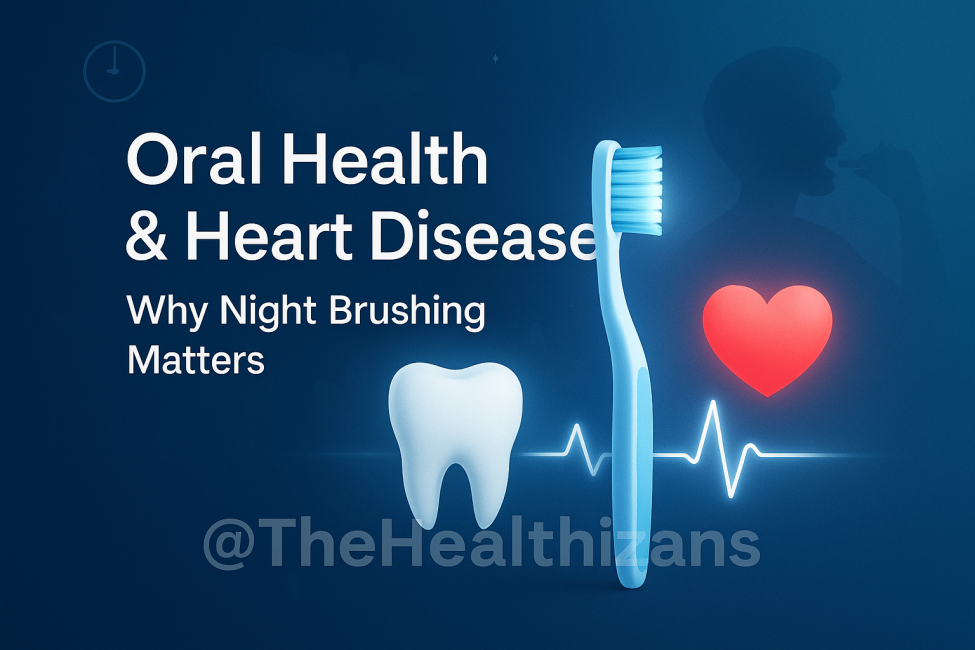
Your toothbrush might be doing more than freshening your breath — it could be protecting your heart.
Recent research has sparked renewed interest in the link between oral health and heart disease, suggesting that neglecting your nightly brushing routine may increase the risk of cardiovascular problems. But how could skipping a simple bedtime habit possibly affect something as vital as your heart? Let’s break it down.
🧩 How Your Mouth and Heart Are Connected
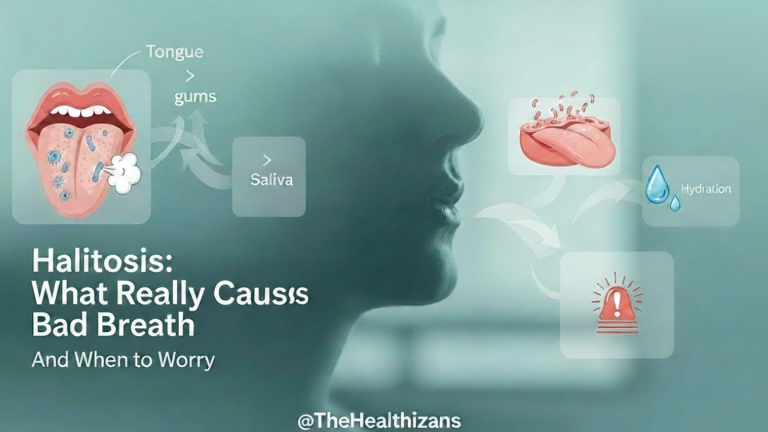
When you skip brushing, bacteria in your mouth multiply overnight, forming plaque — a sticky biofilm on teeth and gums. If left undisturbed, this can inflame your gums (gingivitis) and later lead to periodontitis, a severe gum infection.
Here’s where it gets serious: these bacteria and inflammatory molecules can enter your bloodstream through tiny breaks in the gum tissue. Once there, they may:
- Trigger systemic inflammation, which damages blood vessel walls
- Promote the formation of arterial plaques (atherosclerosis)
- Interfere with how your blood vessels dilate and repair themselves
Over time, this chronic inflammation is believed to increase the risk of heart attacks, strokes, and other cardiovascular events.
🧬 What the Science Says
A 2023 Japanese cohort study of more than 1,600 hospitalised adults found that people who brushed their teeth at night had significantly lower rates of cardiovascular events than those who didn’t. Night-time brushing, in particular, was associated with up to 45% lower risk of heart problems compared to those who brushed only in the morning or not at all [1].
Other research supports this connection:
- A systematic review (Church et al., 2024) found consistent associations between frequent toothbrushing and lower cardiometabolic risk. [2]
- Studies from Korea and Portugal also observed that people who brushed twice daily had lower inflammation levels and healthier cholesterol profiles. [3][4]
- Periodontal therapy (gum treatment) has been shown to improve blood vessel function, suggesting a reversible link between oral hygiene and cardiovascular health. [5]
While these studies can’t prove direct causation, the trend is clear: better oral hygiene is strongly linked to better heart health.
🌙 Why Night Brushing Matters Most
Night-time brushing removes the day’s buildup of food particles, sugar, and bacteria before your saliva levels drop during sleep. Saliva naturally helps neutralise acids and wash away bacteria — but when you’re asleep, this protection slows down.
Skipping your bedtime brushing allows bacteria to thrive for hours, making it easier for inflammation to take hold. So, if you can’t manage to brush twice daily, experts recommend that your evening routine should never be skipped.
🚭 Smoking: The Double Risk
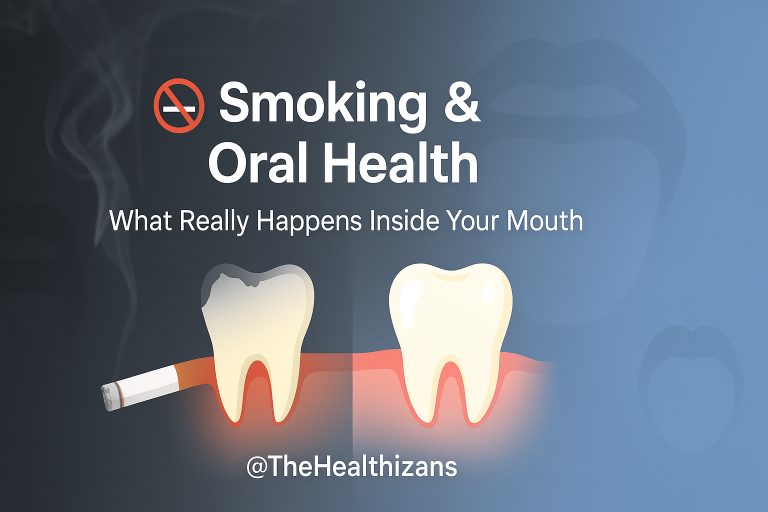
If you smoke, the risks multiply. Smoking not only damages blood vessels but also weakens gum tissue, reduces blood flow to the mouth, and impairs healing. Combined with poor oral hygiene, it creates the perfect environment for both gum disease and heart disease to thrive.
💡 Also, check out our article on Smoking & Alcohol Reduction — it explains how small lifestyle changes can protect your entire body, not just your heart.
💪 Simple Ways to Protect Both Your Mouth and Heart
✅ Brush twice daily — especially before bed, for at least 2 minutes.
✅ Floss or use interdental brushes to remove plaque between teeth.
✅ Use fluoride toothpaste to strengthen enamel and reduce decay.
✅ Quit smoking — your gums and arteries will thank you.
✅ Eat a balanced diet rich in fruits, vegetables, and whole grains.
✅ Visit your dentist regularly — early detection prevents systemic problems.
💬 The Bottom Line
Oral health and heart disease may seem worlds apart, but the evidence increasingly connects the two. Maintaining clean teeth and gums — especially through nightly brushing — is a small, powerful act of self-care that can support your cardiovascular wellbeing.
So, the next time you’re tempted to crash without brushing, remember: a two-minute brush before bed might help your heart beat stronger for years to come.
🗣️ What’s Your Take?
Do you brush before bed every night? Have you noticed changes in your gum or heart health since improving your oral care? Share your thoughts with @TheHealthizans community — we’d love to hear your routine!
📚 Sources
- Nishida, M. et al. (2023). Association between tooth brushing at night and cardiovascular disease risk in hospitalised adults. Scientific Reports. https://www.nature.com/articles/s41598-023-37738-1
- Church, L. et al. (2024). Oral hygiene behaviours and cardiometabolic health: A systematic review. International Journal of Environmental Research and Public Health, 21(10), 1319. https://www.mdpi.com/1660-4601/21/10/1319
- Shin, H. S. et al. (2023). Frequency of toothbrushing and cardiovascular risk factors. BMC Oral Health. https://bmcoralhealth.biomedcentral.com/articles/10.1186/s12903-023-03775-5
- Diniz, C. G. et al. (2022). Oral hygiene and cardiometabolic health associations in Portuguese adults. BMC Public Health.
- Tonetti, M. S. et al. (2020). Treatment of periodontitis improves endothelial function: a meta-analysis. European Heart Journal.
About the Author