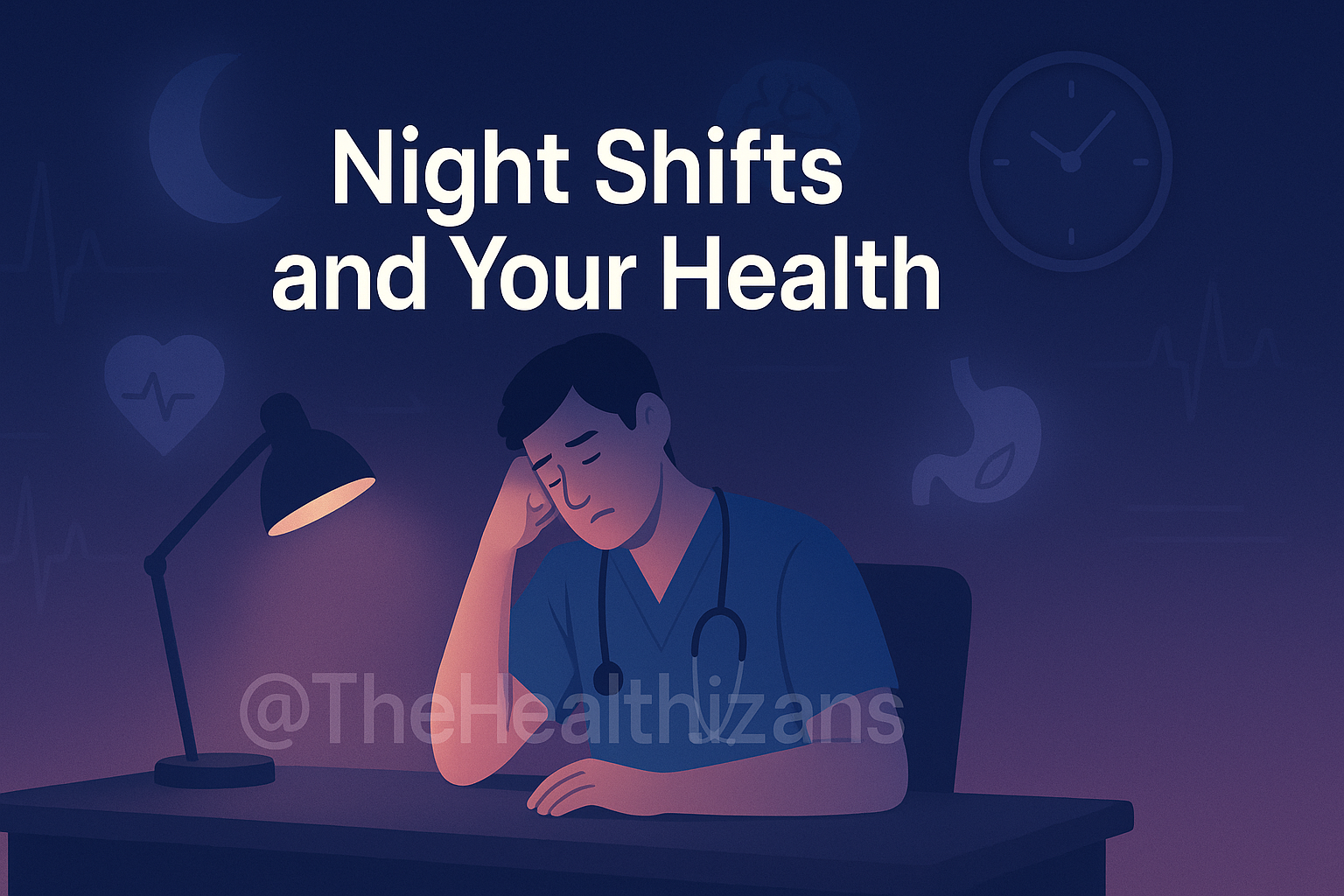
Millions of people worldwide work at night to keep our societies running — from healthcare workers to transport staff. But research shows that working against your body’s natural clock can have lasting effects on your health. Let’s explore the risks and, more importantly, what you can do to protect yourself.
🛌 The Sleep Disruption Problem
Our bodies are wired to sleep at night and stay active during the day. Night shifts flip this natural rhythm, making it harder to:
- Fall asleep during daylight ☀️
- Get deep, restorative sleep 😴
- Avoid fatigue and brain fog at work 🧠
Over time, chronic sleep deprivation adds up, increasing risks for both physical and mental health.
❤️ Health Risks Linked to Night Shifts
📍 Studies from the World Health Organization (WHO), NHS, and other research bodies highlight that long-term night shift work is associated with:
- Heart disease & high blood pressure 🫀
- Type 2 diabetes & obesity 🍔
- Digestive issues such as acid reflux or indigestion 🌿
- Mental health struggles like stress, anxiety, and depression 🧠
- Weakened immunity leading to frequent infections 🛡️
- Higher cancer risks, particularly breast and prostate cancer 🎗️
🧭 Practical Tips to Protect Your Health
Night shift work isn’t always avoidable — but here are evidence-based ways to reduce risks:
- Prioritise Consistency ⏰
Keep a regular sleep schedule, even on days off. - Create Darkness for Daytime Sleep 🌑
Use blackout curtains, an eye mask, and keep your bedroom cool. - Be Smart with Food & Drink 🍎
- Avoid heavy meals, alcohol, and caffeine before sleep.
- Choose light, balanced meals during your shift.
- Move Your Body 🏃
Regular physical activity helps manage stress, weight, and sleep quality. - Take Strategic Naps 💤
Short naps before or during shifts can restore alertness. - Schedule Health Check-ups 🩺
Monitor blood pressure, cholesterol, and blood sugar more frequently.
🌍 A Global Workforce Challenge
The International Agency for Research on Cancer (IARC) has classified long-term night shift work as a “probable carcinogen.” While more research is needed, countries like the UK and EU already recommend extra workplace protections and health monitoring for shift workers.
🙌 What’s Your Take?
Do you work night shifts, or know someone who does? How do you cope with the challenges? Share your strategies — your story could help others manage their health better.
📚 Sources
- WHO (2020). Night Shift Work and Health.
- NHS (2023). The Risks of Shift Work.
- IARC Monographs (2019). Carcinogenicity of Night Shift Work.
- American Heart Association (2022). Shift Work and Cardiovascular Health.
About the Author