Cholesterol is often spoken about as if it’s a single villain to avoid at all costs. However, the reality is more nuanced. Your body actually needs cholesterol to function properly. The problem begins when the balance between different types of cholesterol is disrupted.
Understanding the difference between LDL and HDL cholesterol — and why both matter — is one of the most practical steps you can take to protect your heart and blood vessels, no matter where you live or what you eat.
You’ve probably heard the terms “good” and “bad” cholesterol used interchangeably, often without much explanation. However, cholesterol itself isn’t harmful by default — it’s essential for hormone production, cell structure, and vitamin D synthesis. If you’re new to the topic, it may help to first understand what cholesterol actually is and why your body needs it, which we explored in our earlier article on what cholesterol is and why it matters. From there, the real story becomes clearer: it’s the balance between LDL and HDL that determines risk.
Why Cholesterol Isn’t the Enemy
Cholesterol is a waxy, fat-like substance found in every cell of your body. It plays an essential role in building cell membranes, producing hormones, and helping your body absorb fat-soluble vitamins. Most of the cholesterol you need is produced by your liver, with the rest coming from food.
However, cholesterol doesn’t travel freely in the blood. Instead, it’s carried by particles called lipoproteins — and this is where the difference between LDL and HDL becomes important.
LDL Cholesterol: When Too Much Becomes a Problem
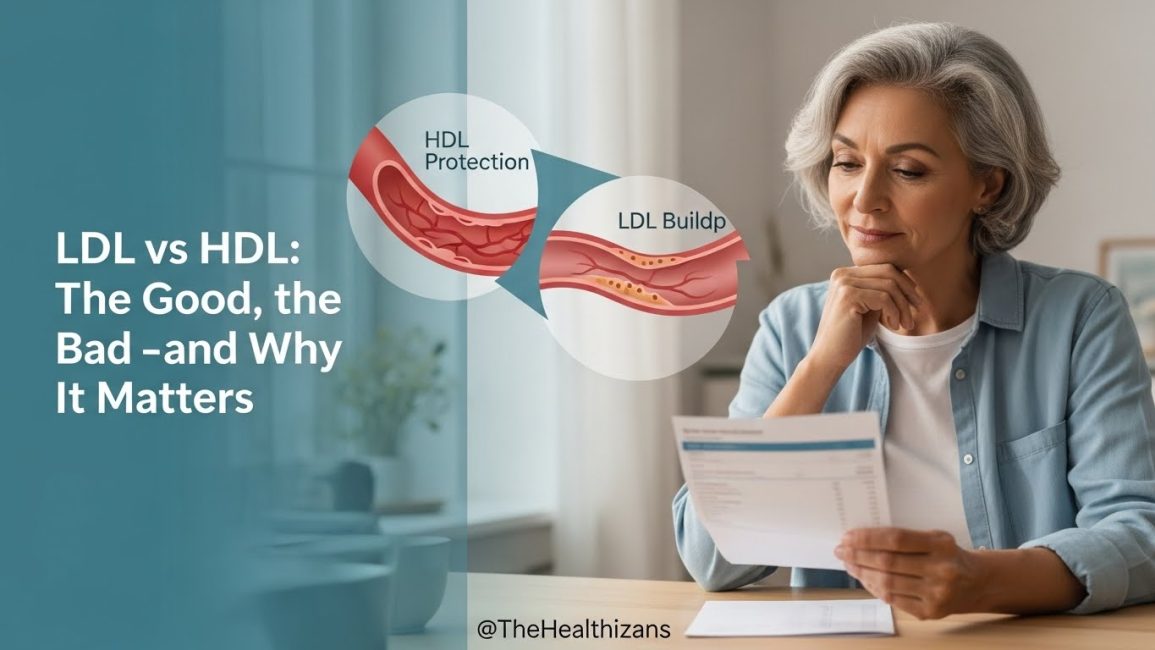
LDL, or low-density lipoprotein, is often labelled “bad cholesterol” because high levels can gradually damage your arteries. When LDL is elevated, it tends to deposit cholesterol along artery walls. Over time, these deposits form plaques, narrowing the arteries and making them less flexible — a process known as atherosclerosis.
As these plaques build up, blood flow becomes restricted. Eventually, a plaque can rupture and trigger a clot, leading to a heart attack or stroke. This process is slow and silent, often developing over many years without obvious symptoms.
LDL levels are influenced by several factors. Diets high in saturated and trans fats, physical inactivity, smoking, and genetic predisposition all play a role. This is why people with similar diets can sometimes have very different cholesterol profiles.
HDL Cholesterol: The Protective Partner
High-Density Lipoprotein (HDL), is commonly referred to as “good cholesterol” — and for good reason. HDL acts as a clean-up system, collecting excess cholesterol from the bloodstream and artery walls and transporting it back to the liver for processing and removal.
Higher HDL levels are consistently associated with a lower risk of cardiovascular disease. Unlike LDL, HDL doesn’t clog arteries; instead, it helps keep them clear.
Regular physical activity, healthy fats such as olive oil, nuts, seeds, and oily fish, maintaining a healthy weight, and avoiding smoking are all linked to healthier HDL levels.
Why Balance Matters More Than a Single Number
While many people focus only on their total cholesterol, clinicians increasingly look at the balance between LDL and HDL. This ratio gives a clearer picture of cardiovascular risk than either number alone.
A lower LDL-to-HDL ratio generally indicates better heart protection, even if total cholesterol is moderately raised. In contrast, high LDL combined with low HDL significantly increases long-term risk.
According to international guidelines, keeping LDL low while supporting healthy HDL levels is a key goal in cardiovascular prevention.
A Growing Global Concern
Raised cholesterol is no longer limited to high-income countries. The World Health Organization estimates that around 39% of adults worldwide have elevated cholesterol levels. Rapid urbanisation, reduced physical activity, and increased consumption of processed foods have contributed to rising LDL levels across Africa, Asia, and parts of Latin America.
At the same time, studies from multiple regions have shown that low HDL levels are becoming increasingly common — particularly where physical activity has declined and refined carbohydrates dominate the diet.
The Take-Home Message
You don’t need to memorise complex cholesterol terminology. What matters most is understanding the direction you’re heading:
Lower LDL by reducing saturated fats, staying active, and avoiding smoking.
Support HDL through regular movement, healthier fats, and sustainable lifestyle habits.
When LDL and HDL are in balance, your heart and arteries are better protected for the long term.
Sources
- World Health Organization (2022). Raised Cholesterol Fact Sheet
- NHS UK. Cholesterol and Heart Disease
- American Heart Association. HDL and LDL Cholesterol
- Journal of Cardiometabolic Health (2023). Urban Diets and HDL Levels in South Asia and West Africa
About the Author