That sharp, nagging pain at the edge of your toe when you walk or wear shoes? It’s more common than you think — and it could be an ingrown toenail. While it might seem like a minor nuisance, leaving it untreated can lead to infection and lasting discomfort. Let’s explore what really causes ingrown toenails and how you can treat and prevent them safely at home.
🦶 What Is an Ingrown Toenail?
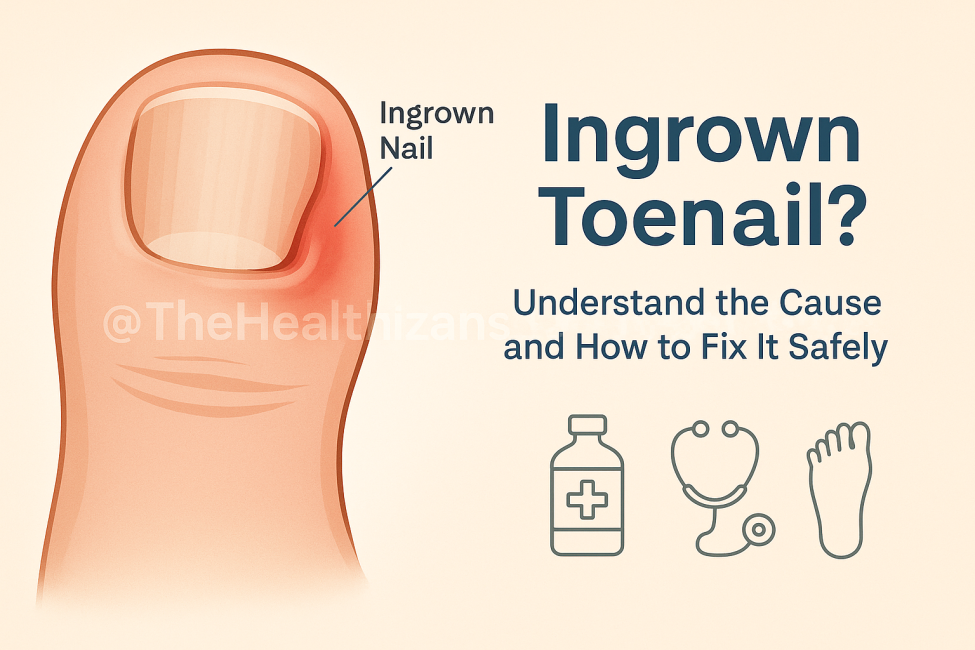
An ingrown toenail happens when the edge or corner of your toenail grows into the surrounding skin rather than over it. This causes irritation, redness, swelling, and sometimes even infection. It most often affects the big toe, though other toes can also be involved. When the nail pierces the skin, the body responds with inflammation — which is why the area becomes tender and sore.
⚠️ Why It Happens
Several everyday habits can quietly set the stage for ingrown toenails. Improper trimming, for example, is one of the biggest culprits. Cutting nails too short or rounding the corners too much encourages the nail to dig into the skin as it grows.
Another common trigger is wearing tight or narrow shoes that squeeze your toes together. Over time, this constant pressure pushes the nail edge downward into the skin. Similarly, repetitive toe injuries — such as from sports, running, or stubbing your foot — can also cause the nail to grow unevenly.
Finally, some people are simply more prone due to genetics or nail shape. Naturally curved toenails or thicker nails can increase your risk. And if your feet tend to stay moist or sweaty, it creates the perfect environment for infection once the skin barrier is broken.
🔍 How to Recognise the Symptoms
An ingrown toenail often starts with tenderness or a feeling of pressure along the nail edge. As it worsens, the area can become red, swollen, and painful to touch. You might also notice hardened skin forming around the nail or a bit of fluid if inflammation sets in.
If an infection develops, the toe may ooze pus, feel warm, or appear shiny. At this stage, medical care is essential — especially for people with diabetes or poor circulation, as even small wounds can become serious quickly.
🧴 Simple Home Remedies That Work
If your symptoms are still mild, the good news is that you can usually treat an ingrown toenail at home. Start by soaking your foot in warm water mixed with Epsom salt for about 15 to 20 minutes, two or three times daily. This softens the skin, reduces swelling, and helps the nail edge lift away from the skin.
After soaking, gently lift the corner of the nail using a clean piece of cotton or dental floss. This helps guide the nail to grow above the skin edge rather than into it. Apply an antiseptic or antibiotic ointment, then cover it lightly with a sterile bandage.
As your toe heals, make sure to wear open-toed or wide shoes to avoid further pressure. Avoid cutting the nail again until the area fully recovers — trimming too early may worsen the problem.
However, if the pain intensifies, the swelling worsens, or the toe shows signs of infection, don’t hesitate to see a healthcare professional. In some cases, a partial nail removal or a short course of antibiotics might be necessary.
🌿 How to Prevent Ingrown Toenails
Prevention is always better than cure — and it’s easier than you might think. Start by trimming your toenails straight across rather than rounding the corners. This simple habit stops the nail from digging into the skin as it grows.
Next, keep your feet clean and dry to avoid bacterial buildup. When choosing footwear, go for comfortable, breathable shoes that give your toes room to move. And if you enjoy regular pedicures, make sure your salon tools are properly disinfected to prevent infections.
Lastly, if you have diabetes, neuropathy, or circulation issues, check your feet daily. Even minor nail problems can escalate quickly if unnoticed.
💬 Also, check out our article on Muscle Cramps: Why They Happen and How to Stop Them — because good circulation and flexibility benefit not only your muscles but your feet too.
💡 Key Takeaway
Ingrown toenails are more than a small inconvenience — they’re a signal your feet need gentler care. With proper trimming, breathable footwear, and a bit of daily attention, you can prevent most cases and keep your toes healthy and pain-free.
💬 What’s Your Take?
Have you ever had an ingrown toenail? What worked best for you — warm soaks, bandaging, or professional care? Share your experience in the comments 👇 — your advice might help someone else take that first pain-free step!
📚 Sources
- NHS. Ingrown Toenail Treatment and Prevention.
- American Academy of Orthopaedic Surgeons. Ingrown Toenails: Causes and Management.
- Cleveland Clinic. Home Remedies for Ingrown Toenails.
About the Author