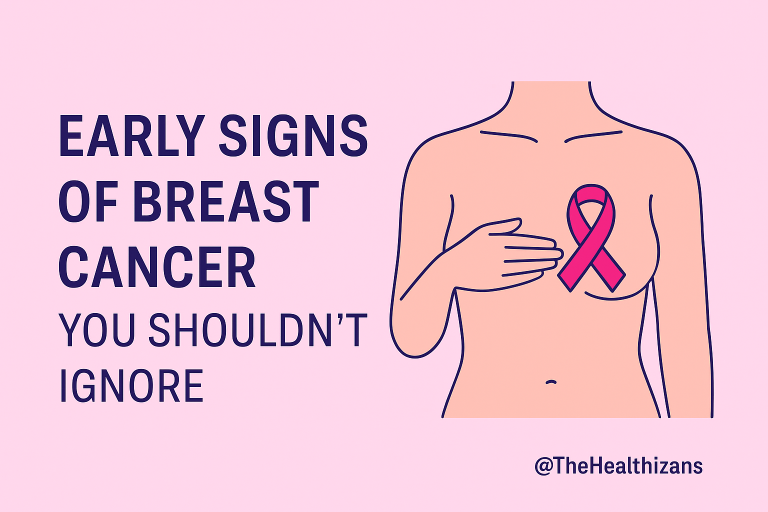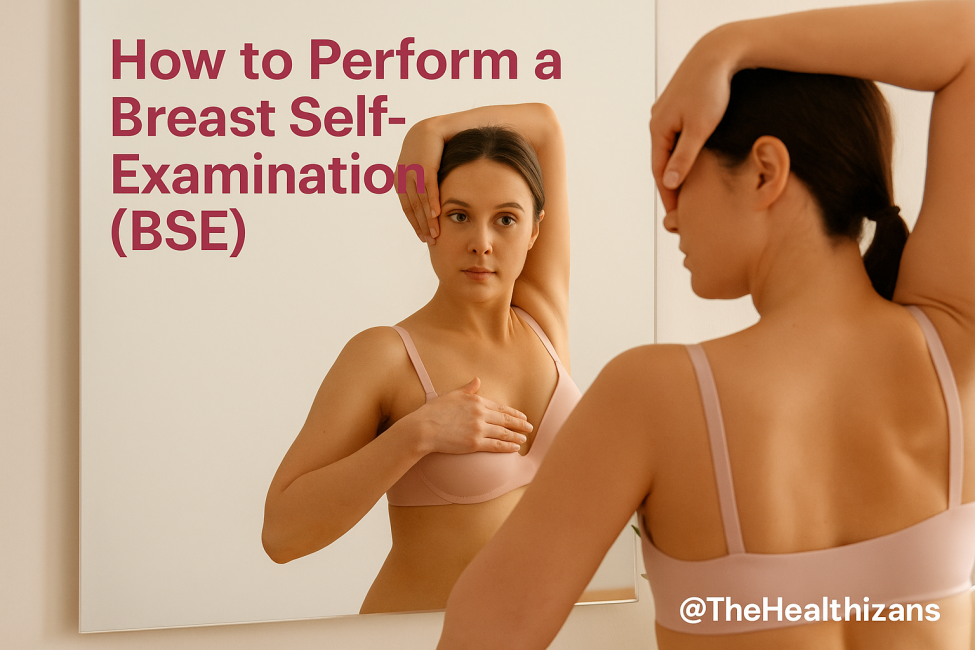
Knowing how to do a breast self-exam (BSE) is one of the simplest yet most powerful ways to take charge of your health. It helps you become familiar with how your breasts normally look and feel, so you can quickly spot anything unusual.
While self-exams don’t replace mammograms or professional screening, they play a vital role in early detection — often helping women notice changes long before a scheduled check-up.
Let’s walk through how to do it properly 👇
👁️🗨️ 1. Start with a Visual Check in the Mirror
Stand in front of a mirror with your shoulders straight and your hands on your hips. Look for:
- Any change in size, shape, or symmetry
- Dimpling, puckering, or bulging of the skin
- Inverted nipples, redness, or rashes
Raise your arms overhead and check again. A healthy breast should have smooth contours with no visible distortion or swelling.
✋ 2. Feel for Changes While Standing or Sitting
Many women find it easiest to do this in the shower, when the skin is wet and slippery.
- Use the pads of your three middle fingers and move in small circular motions.
- Cover the entire breast area — from the collarbone to the top of your abdomen, and from the armpit to the cleavage.
- Use light pressure for surface tissue, medium for the middle, and firm for deep tissue near the ribs.
🛏️ 3. Repeat the Exam Lying Down
When you lie down, breast tissue spreads out evenly, making it easier to feel any lumps or thickened areas.
- Place a small pillow under your right shoulder and your right hand behind your head.
- With your left hand, move in slow circular motions across the entire breast and armpit area.
- Switch sides and repeat.
If you notice any new lump, swelling, discharge, or skin change, book an appointment with your GP promptly.
📆 4. Best Time to Do It
- For menstruating women: perform your BSE a few days after your period ends, when breasts are least tender or swollen.
- For those in menopause: pick a fixed day each month (like the 1st or 15th) to keep it consistent.
Consistency helps you notice changes over time — not every variation means something serious, but new or persistent ones should always be checked.
💬 5. Remember: BSE Complements, Not Replaces, Screening
Breast self-exams are about awareness, not diagnosis. Even if your self-check feels normal, you still need professional screening.
👉 Also, check out our post on Routine Screenings & Check-ups to learn which tests to schedule and when.
💡 The Bottom Line
Learning how to do a breast self-exam is a lifelong habit of self-care. It takes only a few minutes each month, but it could make all the difference. Early detection saves lives — and awareness starts with you.
💬 What’s Your Take?
Do you already perform monthly breast self-exams? How do you remind yourself to keep it consistent?
Share your tips or experiences in the comments — they might help someone else stay proactive!
📚 Sources
- NHS. How to check your breasts.
- Breast Cancer Now. Checking your breasts: Step-by-step guide. https://breastcancernow.org/
- World Health Organization (WHO). Breast cancer: prevention and control.
About the Author