Your skin is remarkable — it protects you from infection, keeps fluids balanced, and even helps regulate temperature. But when it’s cut, scraped, or burned, this barrier breaks down — and your body immediately begins the intricate process of repair.
Understanding how to help your skin heal after an injury is more than just good skincare; it’s about giving your body the right conditions to repair itself efficiently. Every choice you make — from what you eat to how you sleep — can either speed up or slow down recovery.
🧬 First, Here’s What Happens Beneath the Surface
Before we talk about how to help your skin heal, it’s worth understanding the natural repair process — a series of four overlapping stages that work like a well-orchestrated relay team.
1️⃣ Haemostasis: The Immediate Stop
Within seconds of an injury, your body activates platelets to form a clot. This clot stops the bleeding and forms a temporary barrier — nature’s emergency “patch” system.
2️⃣ Inflammation: The Clean-Up Phase
Next, your immune system rushes in. White blood cells clear away bacteria and debris, making space for new tissue to grow. Redness and mild swelling are signs this defence system is working hard (also see The Immune System Explained: How Your Body Fights Off Invaders 🛡️).
3️⃣ Proliferation: The Rebuild
Fibroblasts produce collagen to rebuild structure, and new skin cells spread across the wound. You’ll notice pink tissue forming — this is healthy granulation tissue.
4️⃣ Remodelling: The Strengthening Stage
Finally, collagen is reorganised, scars form, and your skin regains flexibility and strength.
Knowing these stages helps you understand what your skin needs at each point — and what habits can help or harm that process.
🌿 How to Help Your Skin Heal After an Injury
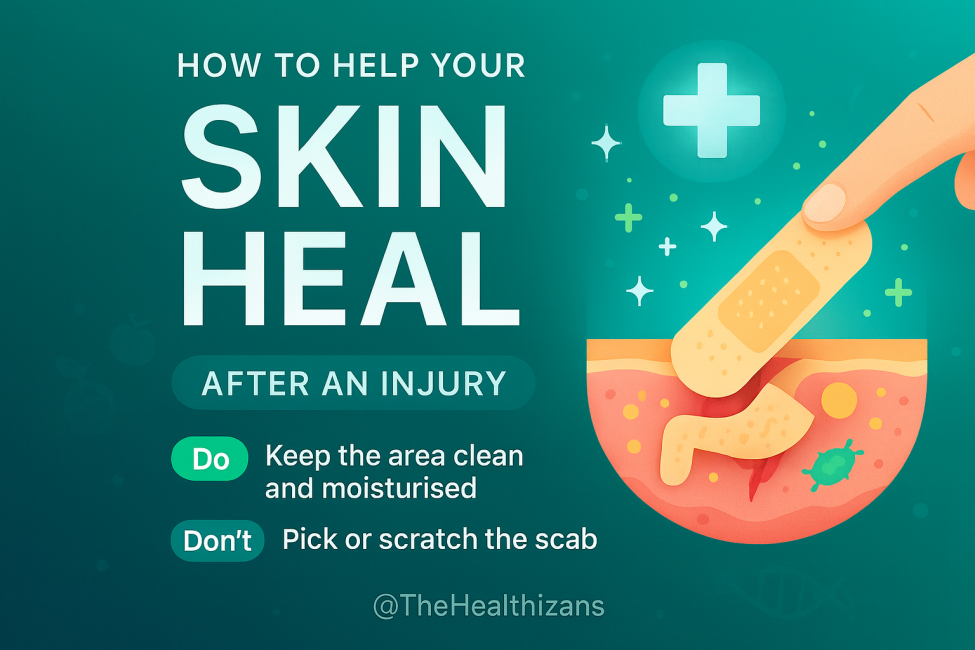
💧 1. Keep It Clean and Slightly Moist
- Wash the wound gently with mild soap and water — harsh antiseptics can damage new cells.
- Apply petroleum jelly or a sterile, non-stick dressing to keep it moist. Contrary to popular belief, dry scabs actually slow down healing.
🥦 2. Feed Your Skin from the Inside Out
Your skin cells need nutrients to rebuild effectively. Focus on:
- Protein – for tissue repair (chicken, beans, eggs, lentils).
- Vitamin C – for collagen synthesis (citrus, kiwi, peppers).
- Zinc – for immune function (nuts, seeds, seafood).
- Hydration – even mild dehydration can delay healing.
🩺 Tip: Think of your diet as part of your first-aid kit. Healing happens faster when your cells have the right building blocks.
🚫 3. Avoid Smoking and Excessive Alcohol
Nicotine narrows blood vessels, reducing oxygen delivery. Alcohol dehydrates the body and weakens immune response. Both can double recovery time.
🌙 4. Prioritise Sleep and Stress Management
When you sleep, your body releases growth hormone — a key trigger for tissue repair. Aim for 7–9 hours of rest, and try relaxation habits like breathing or meditation to keep stress hormones low. Chronic stress raises cortisol, which slows collagen production.
💤 See also: Our article on “Sleep and Immunity” to learn how rest strengthens your body’s defences.
☀️ 5. Protect Healing Skin from the Sun
Newly healed skin is fragile and prone to pigmentation. Use SPF 30+ on exposed areas or cover with clothing when outdoors.
🚿 6. Resist the Urge to Pick or Scratch
It’s tempting — but pulling at scabs or flakes disrupts new tissue and increases scarring. Let your skin shed naturally.
⚠️ Common Mistakes That Slow Healing
- Using alcohol or hydrogen peroxide on open wounds ❌
- Leaving wounds uncovered and dry ❌
- Skipping meals or under-hydrating ❌
- Ignoring signs of infection (redness, pus, or increasing pain) ❌
If you notice persistent redness, swelling, or unusual discharge, seek medical advice — your body may need a little extra support.
💡 Quick Takeaway
Your skin has an incredible ability to repair itself — but healing is a partnership between your body and your habits. When you eat well, rest properly, and protect your skin from further harm, you’re not just helping a cut or scrape close — you’re helping your body thrive.
💬 What’s Your Take?
Have you ever noticed wounds heal faster when you’re well-rested or eating healthy? Share your experience — your story might help someone else heal better too!
📚 Sources
- National Institutes of Health (NIH) – The Science of Wound Healing
- World Health Organization (WHO) – Skin Health and Wound Care Guidelines
- NHS – Caring for Cuts and Wounds
- American Academy of Dermatology – Tips for Faster Wound Healing
About the Author