Ever forgotten why you walked into a room? Or found your mind drifting during an important task? We’ve all been there.
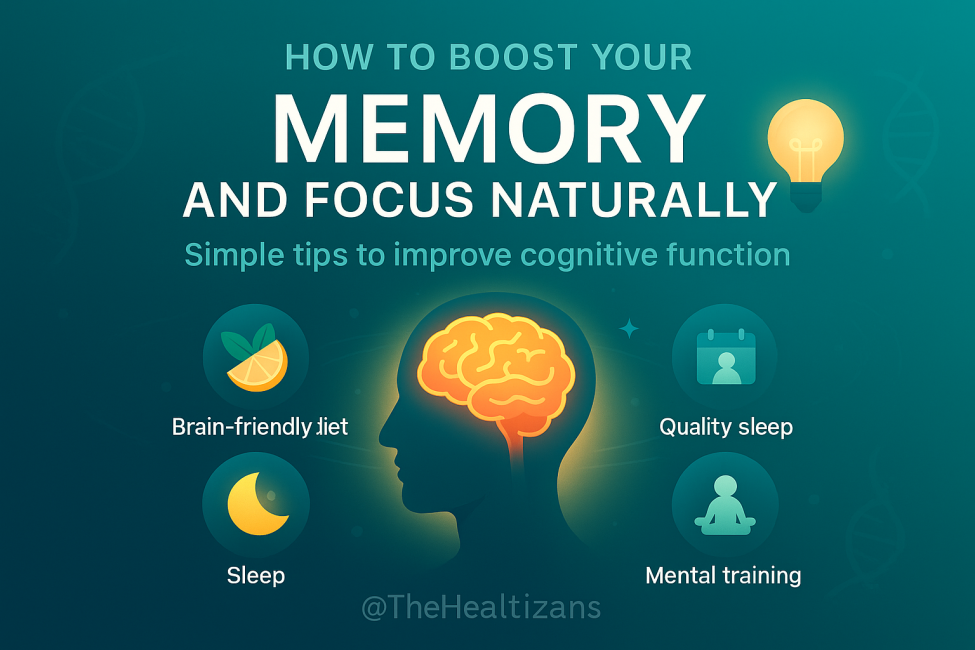
But here’s the good news — memory and focus aren’t fixed traits. Your brain is like a muscle: it can be trained, nourished, and protected.
Understanding how to boost your memory and focus naturally isn’t just about remembering more — it’s about supporting your brain’s long-term health and mental clarity.
🧩 How Your Memory Really Works
Your memory isn’t one single process — it’s a chain of systems working together.
- Short-term memory stores what you’re currently thinking about (like a phone number).
- Working memory processes that information and makes decisions.
- Long-term memory is where your experiences, knowledge, and skills are stored.
These processes rely on blood flow, oxygen, neurotransmitters, and brain connectivity — all of which can be influenced by lifestyle choices.
🥦 1. Eat Brain-Boosting Foods
Your brain consumes about 20% of your body’s energy, even at rest. The right foods provide the fuel and nutrients it needs to perform well.
Add these to your daily diet:
- Berries – packed with antioxidants that protect brain cells.
- Oily fish (salmon, sardines) – rich in omega-3 fatty acids that support learning and memory.
- Nuts and seeds – provide vitamin E, magnesium, and healthy fats.
- Leafy greens – like spinach and kale for folate and vitamin K.
- Green tea – improves alertness and focus without the caffeine crash.
🍽️ Tip: A Mediterranean-style diet is one of the most evidence-backed patterns for supporting memory and brain function.
🧘 2. Manage Stress Before It Manages You
Chronic stress floods your brain with cortisol, which interferes with memory formation and recall.
To protect your mental clarity:
- Practise deep breathing or mindfulness meditation daily.
- Take short breaks between tasks to prevent burnout.
- Try gentle movement like yoga or a short walk outdoors.
😌 Also read our article on How to Balance Your Hormones Naturally for Better Energy and Sleep — stress management plays a big role in hormone balance too.
🚶 3. Stay Physically Active
Exercise boosts blood flow to the brain and promotes growth of new neural connections — the literal building blocks of learning.
Aim for:
- 30 minutes of moderate exercise most days (brisk walking, cycling, dancing).
- A mix of cardio and strength training for long-term cognitive health.
Even light movement throughout your day improves focus, creativity, and mood.
😴 4. Prioritise Quality Sleep
When you sleep, your brain consolidates memories — turning short-term experiences into long-term knowledge.
To boost memory naturally:
- Keep a consistent bedtime.
- Avoid screens an hour before bed.
- Limit caffeine after 2 pm.
🌙 Good sleep supports both your memory and immune system — see our article on “Simple Habits to Strengthen Your Immune System Naturally.”
💧 5. Stay Hydrated and Energised
Even mild dehydration (1–2%) can cause confusion, fatigue, and difficulty concentrating.
Keep a reusable water bottle nearby and sip regularly throughout the day.
Add fruits or herbs for flavour if plain water feels boring.
📱 6. Limit Distractions and Train Focus
Your brain adapts to what you repeatedly do. Constant multitasking or phone scrolling trains it for distraction, not deep focus.
Try the Pomodoro technique — 25 minutes of focused work followed by a 5-minute break.
And consider “digital fasting” — setting screen-free hours to let your mind reset.
🧩 7. Challenge Your Brain
New mental activities build new neural pathways — helping keep your brain sharp as you age.
- Learn a new language or musical instrument.
- Do puzzles or crosswords.
- Try brain-training apps — but balance them with real-world learning.
💡 Remember: curiosity keeps your mind young.
💡 Quick Takeaway
You don’t need fancy supplements to sharpen your mind — just daily care.
Eat nutrient-rich foods, move your body, rest deeply, and give your brain new challenges.
Consistency turns small habits into lifelong clarity.
💬 What’s Your Take?
What helps you stay focused — music, exercise, or mindfulness?
Share in the comments below — your experience might inspire someone else’s brain-health journey!
📚 Sources
- Harvard Health – Foods Linked to Better Brainpower
- NHS – Sleep and Mental Wellbeing
- World Health Organization – Physical Activity and Cognitive Health
- National Institutes of Health – Stress and Memory Function
About the Author