Your food choices influence your cholesterol levels more than most people realise. While genetics and age play a role, what you put on your plate every day can either help protect your arteries or gradually increase your cardiovascular risk. And because diets vary across cultures — from Nairobi to Manchester to Manila — understanding foods that raise or lower your cholesterol helps you make smarter decisions without giving up the dishes you love.
Why Your Plate Matters
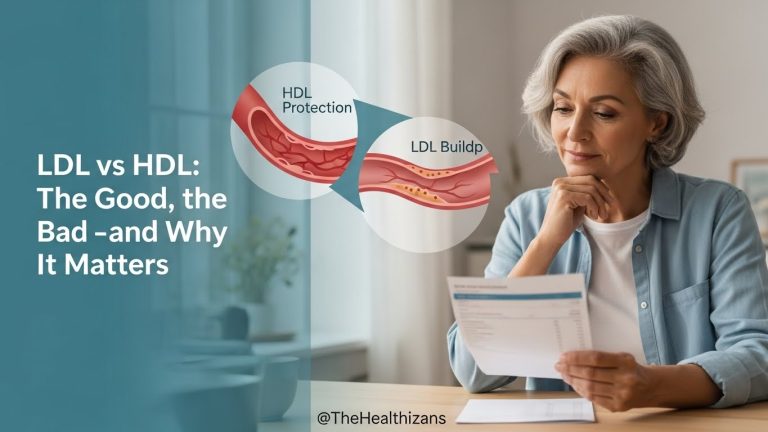
Cholesterol levels are shaped by more than one factor, but diet remains one of the most powerful tools you can control. Certain foods raise LDL — the type linked to plaque build-up in your arteries — while others help lower LDL, raise HDL, and improve overall heart health. The goal isn’t to avoid all fats or abandon cultural staples; it’s to understand which ingredients push you toward better health and which work against it.
For a deeper look at how cholesterol affects your arteries, you can explore our related article:
How Cholesterol Affects Your Heart and Arteries
Foods That Raise Cholesterol
While no single ingredient “causes” high cholesterol on its own, certain patterns of eating can gradually increase LDL and triglycerides. The biggest contributors are trans fats, excessive saturated fats, and highly processed carbohydrates.
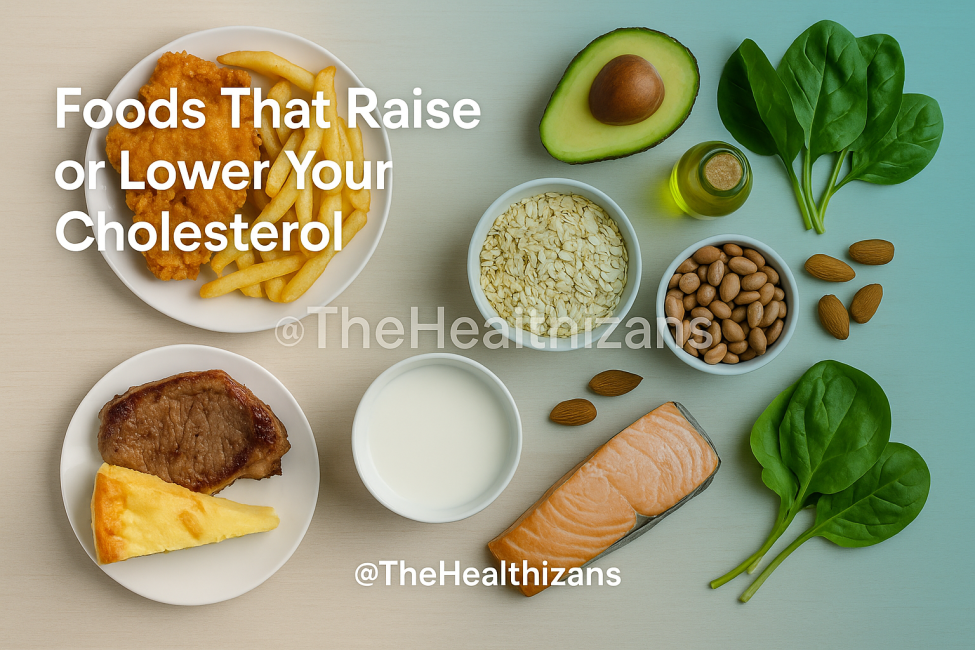
Trans fats are among the most harmful because they increase LDL while lowering HDL. They are commonly found in packaged snacks, pastries, margarine, vegetable shortening, and deep-fried fast foods. Many countries are phasing them out entirely due to strong evidence of harm.
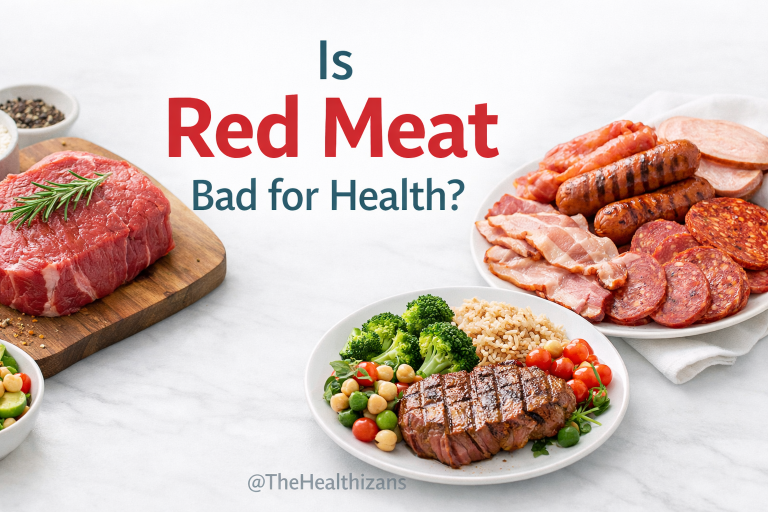
Saturated fats, when eaten in excess, can also raise LDL. They appear in fatty red meat, butter and ghee, full-fat dairy, lard, and certain oils including palm and coconut oil. You don’t have to remove them entirely — but moderating them, especially alongside healthier fats, makes a meaningful difference.
Highly processed carbohydrates such as white bread, white rice, sugary drinks, and commercial desserts don’t contain cholesterol, yet they contribute to high triglycerides. When consumed regularly, they lead to insulin surges that increase fat storage and disrupt lipid balance.
These foods are common in both traditional and modern diets, which is why understanding them — rather than fearing them — is key.
Foods That Naturally Lower Cholesterol
Just as some foods raise cholesterol, many help reduce it. Fibre-rich foods, healthier fats, legumes, whole grains, and certain plant compounds work to improve LDL, HDL, and triglycerides.
Soluble fibre is one of the most effective dietary tools. Found in oats, barley, beans, lentils, apples, pears, and many vegetables, it binds to cholesterol in the digestive tract and helps remove it from the body. Diets that include regular servings of fibre tend to show steady improvements in LDL.
Healthy fats — especially those from avocados, nuts, seeds, olive oil, and canola oil — replace saturated fats and raise protective HDL. These are staples in Mediterranean and Middle Eastern diets, but they also align well with African and Asian cooking traditions when used mindfully.
Fatty fish such as salmon, mackerel, sardines, and herring provide omega-3 fatty acids, which lower triglycerides and reduce inflammation. Even one or two servings a week can support heart health.
Plant sterols and stanols, found in fortified spreads and some yoghurt drinks, help block cholesterol absorption in the gut. They are particularly effective for people with elevated LDL.
Traditional ingredients such as green tea and garlic may offer small LDL-lowering benefits as well, and are already widely used across Asian, African, and European cuisines.
Cultural Diets Still Have Wisdom
Many traditional diets — Mediterranean, East Asian, and West African patterns — naturally encourage healthier cholesterol levels. These ways of eating prioritise vegetables, legumes, lean proteins, herbs, whole grains, and minimally processed foods. The challenge often begins when processed snacks, refined oils, and fast foods replace these staples.
Returning to more traditional cooking techniques — steaming instead of deep-frying, using fresh ingredients over packaged ones, or combining vegetables with whole grains — can improve cholesterol without losing cultural identity.
Practical Smart Swaps
Here are a few changes that make a big difference without altering your entire diet:
- Choose brown or wild rice in place of white rice when possible
- Grill, steam, or bake more often and fry less frequently
- Use avocado or hummus instead of butter on bread
- Drink water, herbal teas, or infused water instead of sugary beverages
- Cook with olive or canola oil instead of palm oil or lard when available
These small shifts are easier than most people expect — and they produce meaningful improvements over time.
Final Thought
Food is one of the most powerful tools you have to protect your heart. By understanding the foods that raise or lower your cholesterol, you can make simple choices that fit your culture, your lifestyle, and your preferences. You don’t need a perfect diet — just a balanced one. With small, steady changes, your plate becomes your first line of defence for long-term cardiovascular health.
Sources
- International Journal of Public Health Nutrition (2023).“Cultural Dietary Patterns and Lipid Profiles”
- World Health Organization. Cardiovascular Health and Nutrition
- American Heart Association. Dietary Fats and Heart Disease
- British Heart Foundation. Healthy Eating and Cholesterol
About the Author