By age 50, up to 7 in 10 women will develop fibroids — yet many don’t even know they have them. These growths can cause heavy bleeding, pain, and fertility challenges, but in some women, they remain silent. Raising awareness helps more women get timely diagnosis and treatment.
🌱 What Exactly Are Fibroids?
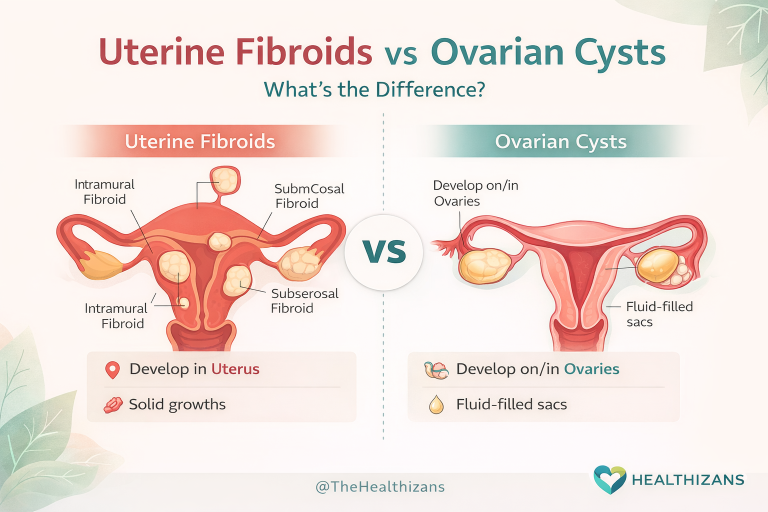
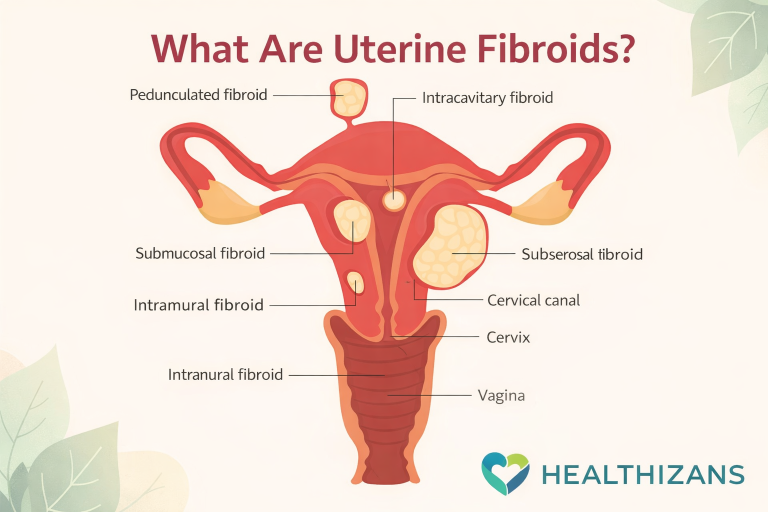
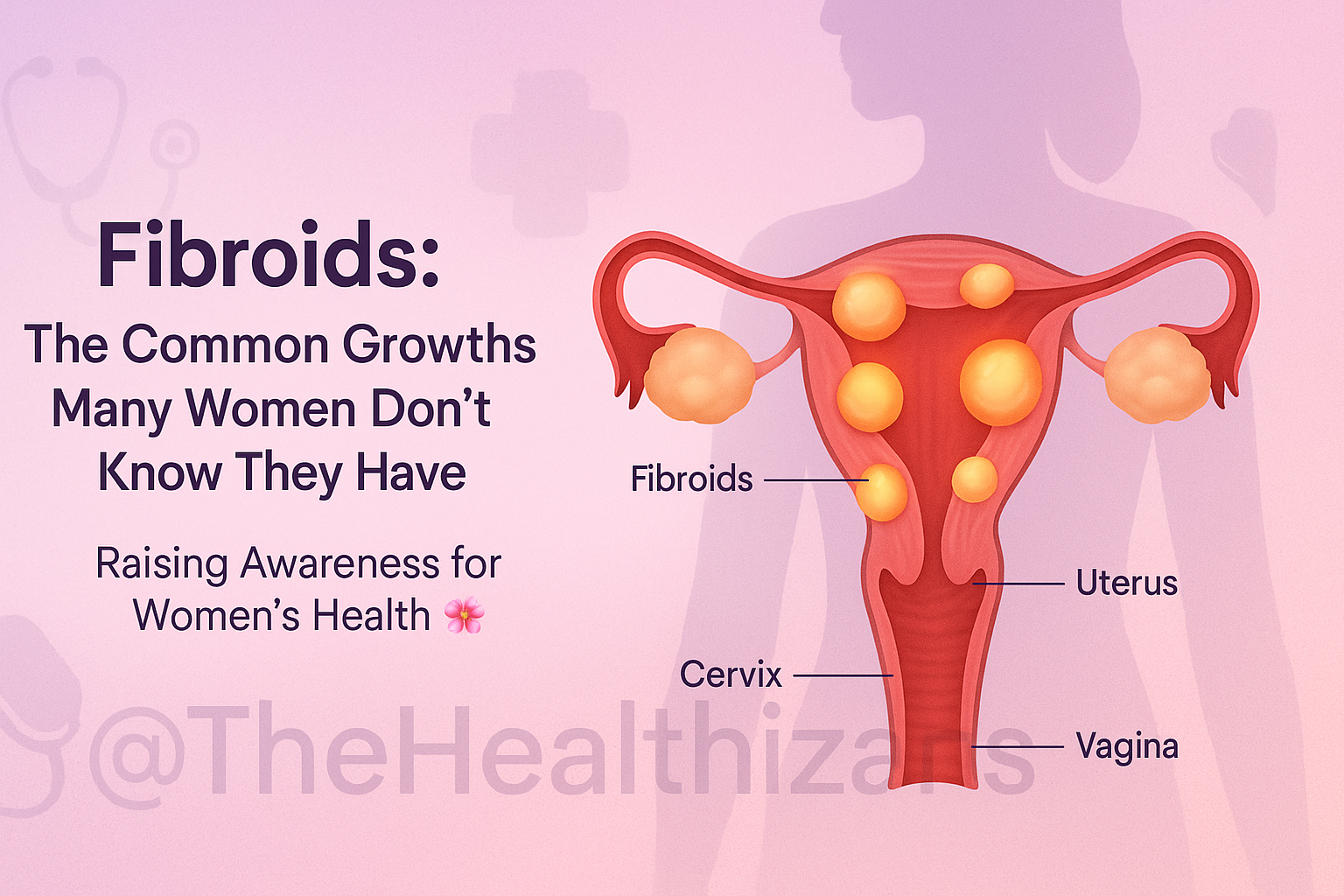
Fibroids are non-cancerous growths of the uterus (womb). They develop from muscle and connective tissue and can vary widely in size — from tiny, pea-sized lumps to large growths that distort the uterus.
- They can grow inside the uterine wall, project into the cavity, or bulge outward.
- Medical names include leiomyomas or myomas.
- They are almost always benign, meaning not cancer.
⚠️ Symptoms to Watch Out For
Not every woman with fibroids will notice symptoms. But when they do occur, they may include:
- Heavy or prolonged periods
- Pelvic pain or pressure
- Tiredness from anaemia (due to blood loss)
- Frequent urination or constipation (from pressure on nearby organs)
- Fertility or pregnancy problems
👉 Some women discover fibroids only during routine scans, especially if they’re silent.
🧬 Who Is at Risk?
Fibroids are more likely to develop if you:
- Are between 30–50 years old
- Have a family history of fibroids
- Are of African or Caribbean descent (higher prevalence and severity)
- Have higher oestrogen or progesterone levels
- Live with lifestyle factors such as obesity or low vitamin D
🔎 How Are Fibroids Diagnosed?
Fibroids are often picked up during a pelvic exam or ultrasound scan.
In some cases, doctors may recommend:
- MRI scans for detailed imaging
- Hysteroscopy (camera inside the womb) to check fibroids affecting the cavity
💊 What Are the Treatment Options?
Treatment depends on your symptoms, age, and fertility goals:
- Watchful waiting – If fibroids are small and symptom-free.
- Medication – To control bleeding or shrink fibroids (e.g., hormonal therapies, tranexamic acid).
- Minimally invasive procedures – Uterine artery embolisation (cuts off blood supply to fibroids) or MRI-guided focused ultrasound.
- Surgery –
- Myomectomy: Removes fibroids but keeps the uterus intact.
- Hysterectomy: Removes the womb entirely (an option if childbearing is complete).
❤️ Living Well With Fibroids
- Eat a balanced diet with iron-rich foods to manage anaemia.
- Stay active — exercise helps with weight and hormone balance.
- Monitor symptoms with your doctor.
- Don’t hesitate to seek emotional support — fibroids can affect self-image, relationships, and mental health.
🌍 Why Awareness Matters
Fibroids are one of the most common women’s health conditions worldwide — yet many women dismiss heavy bleeding or pain as “normal.” By sharing knowledge, we help women recognise the signs early, seek care, and protect their fertility and wellbeing.
✅ Key Takeaways
- Fibroids are very common and usually non-cancerous.
- They can cause heavy bleeding, pain, and fertility problems, but sometimes show no symptoms.
- Safe and effective treatments are available.
- Awareness and early diagnosis help women make informed choices.
💬 What’s Your Take?
Do you think fibroids are talked about enough? Have you or someone you know been affected? Share your story in the comments — your voice could help another woman recognise the signs early.
📚 Sources
- NHS. Fibroids. 2023. https://www.nhs.uk/conditions/fibroids
- World Health Organization. Uterine fibroids: Fact sheet. 2023.
- American College of Obstetricians and Gynecologists (ACOG). Uterine Fibroids. 2021.
About the Author