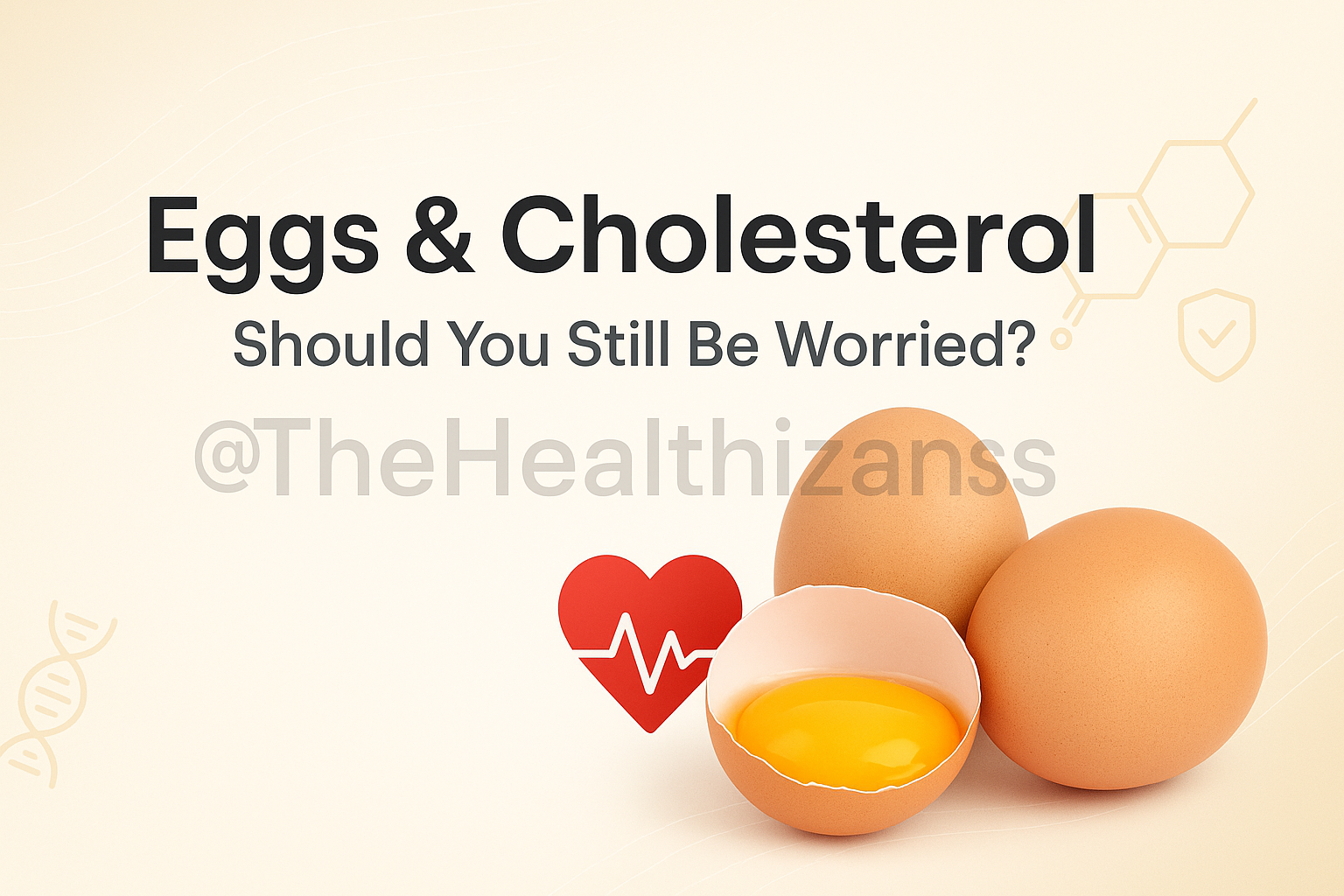
For years, eggs were painted as the “bad guys” of healthy eating — blamed for raising cholesterol and heart disease risk. But newer research tells a different story.
So, should you still worry about eating eggs? The truth is more balanced than you might think. While eggs do contain cholesterol, the way your body handles dietary cholesterol is far more complex than older nutrition myths suggested. Let’s crack open the facts.
❤️ 1. The Cholesterol Confusion: Where It All Began
Decades ago, health advice warned against eating more than two or three eggs per week, based on early studies linking high cholesterol to heart disease.
However, those studies didn’t distinguish between dietary cholesterol (from food) and blood cholesterol (in your bloodstream) — two very different things.
Modern research, including large-scale reviews from Harvard and the NHS, now shows that for most healthy people, eating eggs does not significantly raise blood cholesterol or heart disease risk.
💡 Fun fact: Your liver makes most of your body’s cholesterol — and when you eat more cholesterol from food, your liver simply makes less.
🧬 2. The Good and the “Bad” Cholesterol Explained
Let’s simplify the jargon:
- LDL (Low-Density Lipoprotein) – often called “bad cholesterol” because high levels can lead to plaque buildup in arteries.
- HDL (High-Density Lipoprotein) – known as “good cholesterol” because it helps remove excess cholesterol from the bloodstream.
Eggs can raise HDL (good cholesterol) slightly, which is beneficial. Most studies show that moderate egg consumption (1 egg per day) does not increase heart disease risk in healthy individuals.
🩺 According to the NHS Eatwell Guide: Eggs are a good source of protein, vitamins, and minerals — and can be enjoyed as part of a balanced diet.
🥦 3. Nutrient Powerhouse: More Than Just Cholesterol
Beyond the cholesterol debate, eggs are nutritional gems packed with:
- Choline – crucial for brain and liver function.
- High-quality protein – supports muscle repair and satiety.
- Lutein and zeaxanthin – antioxidants that protect your eyes.
- Vitamin D and B12 – essential for energy and bone health.
A single egg offers all nine essential amino acids your body needs — making it one of nature’s most complete foods.
⚖️ 4. How Many Eggs Are Safe to Eat?
For most people, one egg a day is perfectly safe and even beneficial.
However, those with existing heart disease, diabetes, or high LDL levels should discuss their diet with a healthcare professional.
The British Heart Foundation (BHF) states that there’s no recommended limit for eggs — as long as they’re part of a balanced, varied diet low in saturated fats.
🥓 Tip: It’s not usually the egg itself that causes problems — it’s what comes with it! (Think butter, bacon, and frying oils.)
For healthier cooking:
✅ Boil or poach instead of frying.
✅ Pair eggs with whole grains and veggies.
✅ Limit processed meats on the side.
🍽️ 5. What About People with High Cholesterol?
If you’ve been told you have high LDL cholesterol, moderation still matters.
Eggs can remain in your diet, but it’s best to:
- Avoid adding excess saturated fats (like butter or cheese).
- Focus on fibre-rich foods (like oats, beans, and fruits) to help reduce LDL.
- Monitor overall cholesterol levels with your GP.
A heart-healthy diet isn’t about cutting one food out — it’s about balancing all foods wisely.
Also, check out our post on Foods That Protect Your Heart to see which everyday ingredients can support healthy cholesterol naturally.
🌍 6. What the Science Says (At a Glance)
📊 Key findings from global research:
- Harvard’s Nurses’ Health Study (spanning 20 years) found no link between moderate egg consumption and heart disease.
- A meta-analysis in BMJ (2020) concluded that eating up to one egg per day is safe for most people.
- The NHS and WHO both support eggs as part of a balanced, protein-rich diet.
🥚 In short: Eggs aren’t villains — they’re valuable, affordable, and nutritious. It’s your overall diet pattern that makes the biggest difference.
🌟 Final Thoughts
Eggs and cholesterol don’t deserve their old bad reputation. For most people, they’re a wholesome, protein-packed part of a balanced diet — especially when combined with fruits, vegetables, and whole grains.
So, should you still be worried? Not really. Just be mindful of how you prepare and pair them.
💬 What’s Your Take?
Do you eat eggs daily or only occasionally? Have you ever tried switching from fried to boiled eggs? Share your thoughts in the comments — we’d love to hear how eggs fit into your healthy lifestyle!
📚 Sources
- NHS Eatwell Guide — Protein foods: eggs, meat and beans
- British Heart Foundation (BHF) — Eggs and cholesterol: the latest advice
- Harvard School of Public Health — Eggs and heart disease: what’s the real risk?
- Rong, Y. et al. (2020). Egg consumption and risk of cardiovascular disease: a meta-analysis. BMJ. Read Study
- World Health Organization (WHO) — Dietary patterns and cardiovascular health
About the Author