Pregnancy is often a time of joy and anticipation, but in rare cases, it can take an unexpected and dangerous turn. An ectopic pregnancy happens when a fertilised egg implants outside the womb — most commonly in one of the fallopian tubes. Because the pregnancy cannot develop normally, early diagnosis and treatment are essential to protect a woman’s health and future fertility.
What Is an Ectopic Pregnancy?
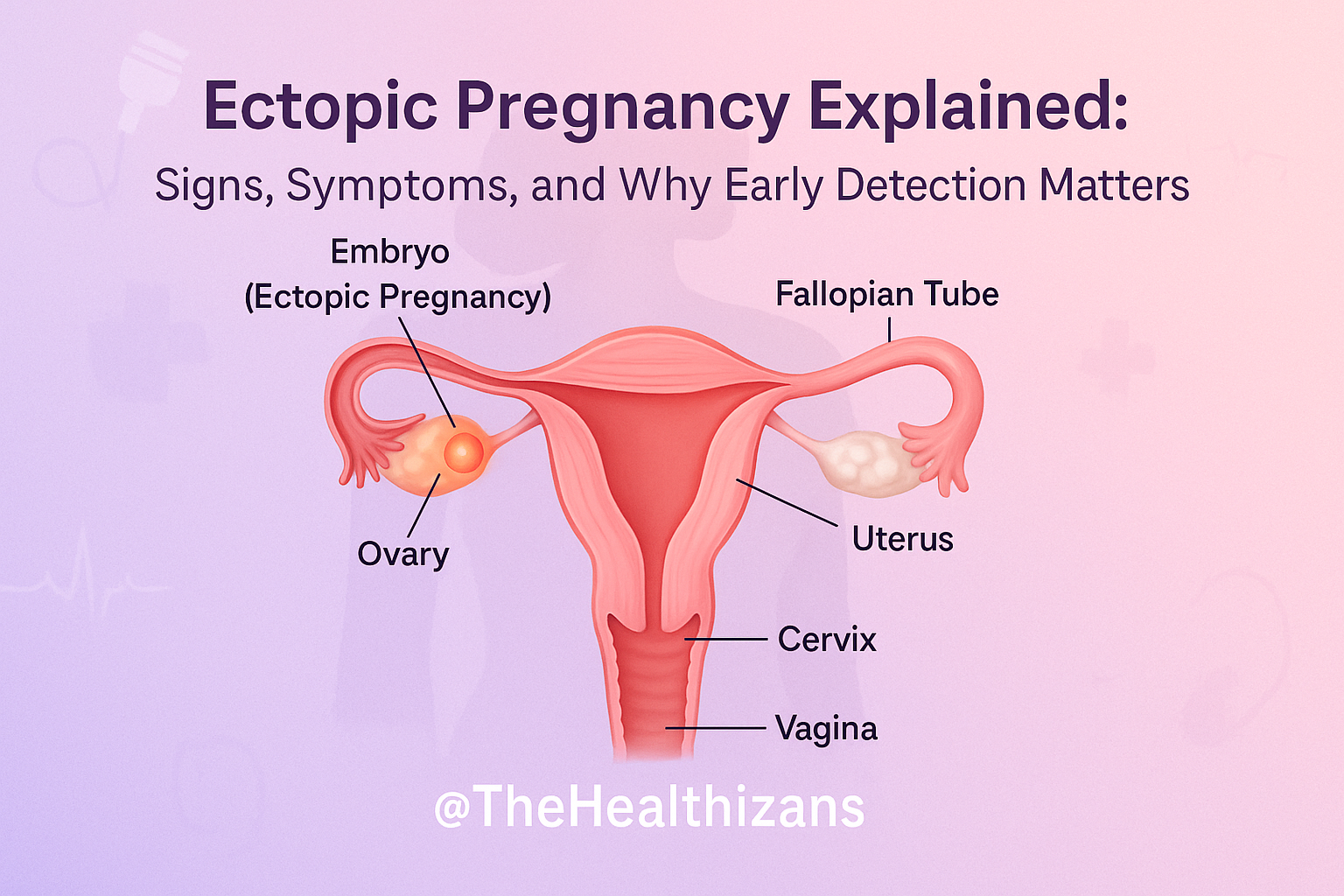
An ectopic pregnancy occurs when the embryo attaches somewhere other than the uterine lining. Around 1 in 80 pregnancies in the UK is ectopic (NHS, 2023).
- Most common site: Fallopian tubes (≈95% of cases).
- Less common sites: Ovaries, cervix, or abdominal cavity.
Sadly, an ectopic pregnancy cannot progress to a healthy birth and can become life-threatening if untreated.
Key Symptoms to Watch For
Early signs may mimic normal pregnancy or miscarriage, making awareness vital. Symptoms usually appear between the 4th and 12th week of pregnancy:
- Sharp, one-sided abdominal or pelvic pain
- Vaginal bleeding or spotting, often lighter or darker than a period
- Shoulder tip pain (caused by internal bleeding irritating the diaphragm)
- Dizziness, fainting, or collapse (a sign of rupture and emergency)
👉 If any of these occur in early pregnancy, seek urgent medical attention.
How Is It Diagnosed?
Doctors use a combination of:
- Transvaginal ultrasound to check the uterus and fallopian tubes.
- Blood tests for HCG (pregnancy hormone) — abnormal rises can indicate ectopic pregnancy.
- Clinical examination if symptoms are severe.
Treatment Options
Treatment depends on how early the ectopic is detected and the woman’s health:
- Medication (Methotrexate): Stops the pregnancy from growing; suitable in early cases with stable health.
- Keyhole surgery (Laparoscopy): Removes the ectopic tissue; sometimes requires removing the affected fallopian tube.
- Emergency surgery: Needed if the tube ruptures and internal bleeding occurs.
Life After an Ectopic Pregnancy
Experiencing an ectopic can be emotionally and physically challenging. But many women go on to have successful pregnancies in the future.
- Fertility: Even with one fallopian tube removed, chances of conceiving naturally remain good.
- Emotional wellbeing: Feelings of grief and loss are normal; support groups and counselling can help.
- Future pregnancies: Early scans are usually offered to confirm safe implantation.
Why Awareness Matters
Ectopic pregnancy remains a leading cause of maternal illness and death in the first trimester worldwide. With early recognition, prompt diagnosis, and treatment, lives can be saved, and fertility preserved. Raising awareness helps women seek care before complications occur.
Key Takeaways
- Ectopic pregnancy affects 1 in 80 pregnancies in the UK.
- It cannot be carried to term and requires early treatment.
- Warning signs include sharp abdominal pain, unusual bleeding, and shoulder-tip pain.
- With timely care, most women recover well and can have future pregnancies.
What’s Your Take?
Have you or someone you know been affected by ectopic pregnancy? Do you think awareness about the warning signs is widespread enough? Share your thoughts in the comments — your voice could help someone recognise the symptoms early.
📚 Sources
- NHS. Ectopic pregnancy. 2023. https://www.nhs.uk/conditions/ectopic-pregnancy
- Royal College of Obstetricians & Gynaecologists. Ectopic pregnancy: Information for you. 2020.
- World Health Organization (WHO). Maternal mortality fact sheet. 2023.
About the Author