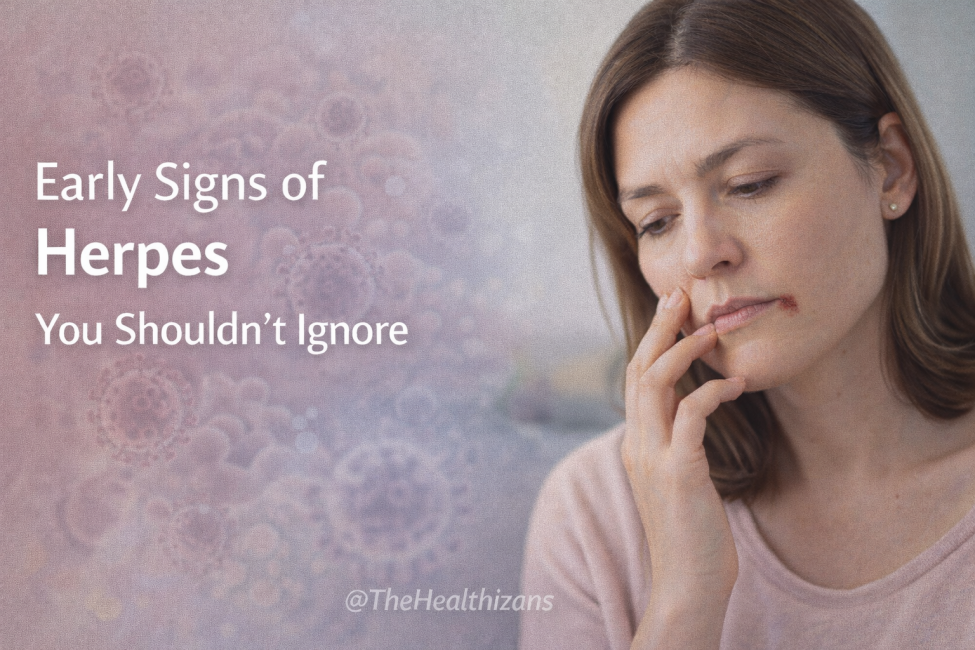
Herpes is one of the most common viral infections worldwide — yet it’s also one of the most misunderstood. Much of the fear surrounding herpes comes not from the condition itself, but from misinformation, stigma, and silence.
For many people, herpes causes mild symptoms or none at all. When symptoms do appear, they’re often subtle in the early stages and easy to overlook or misinterpret. Recognising the early signs of herpes is about awareness, not alarm — and understanding that early recognition helps reduce transmission, manage symptoms, and ease unnecessary anxiety.
What Is Herpes? (Quick Context)
Herpes is caused by the herpes simplex virus (HSV). There are two main types:
- HSV-1, commonly associated with oral herpes (cold sores), but it can also affect the genitals
- HSV-2, more commonly associated with genital herpes
Both types can infect the mouth or genitals, and both are highly prevalent globally.
Why Early Signs of Herpes Are Often Missed
Early herpes symptoms don’t always involve obvious sores. Instead, they may show up as vague sensations — tingling, irritation, or mild discomfort — that feel easy to ignore.
Because these symptoms overlap with everyday issues, many people assume they’re dealing with stress, friction, or another minor condition. This is similar to how people often overlook early signs of anaemia, where fatigue and dizziness are brushed off as “just tiredness,” or early signs of vitamin B12 deficiency, where nerve symptoms are mistaken for circulation problems.
Stigma also plays a role. Some people delay checking symptoms because they feel embarrassed or fear being judged — which only adds to uncertainty.
The Early Signs You Shouldn’t Ignore
These early signs may appear days or weeks after exposure. Not everyone experiences all of them, and severity varies widely. Some of the early signs to look out for include:
1. Tingling, Itching, or Burning Sensation
One of the earliest signs is a tingling, itching, or mild burning feeling in the area where sores may later develop — commonly around the lips, mouth, genitals, or anus. This sensation may come and go and is often subtle.
2. Redness or Skin Sensitivity
The skin may feel unusually sensitive, tender, or slightly inflamed before any visible changes appear. This can easily be dismissed as friction, shaving irritation, or an allergic reaction.
3. Small Bumps or Blisters
Early herpes lesions may begin as tiny bumps or fluid-filled blisters. These can be painless at first and may appear alone or in small clusters.
4. Mild Pain or Discomfort When Urinating
For genital herpes, irritation around the genital area can cause discomfort during urination, particularly if the skin is inflamed or sensitive — even before sores are obvious.
5. Flu-Like Symptoms (Especially During First Infection)
Some people experience general symptoms such as:
- low-grade fever
- body aches
- headache
- fatigue
- swollen lymph nodes
These are more common during a first episode and may be mistaken for a viral illness.
6. Sores That Heal and Reappear
Herpes sores often heal on their own within 1–3 weeks. Because they resolve without treatment, some people assume they were insignificant — until they return.
7. Changes Around the Mouth or Lips
Early oral herpes may show up as:
- tingling on the lip line
- redness near the mouth
- small painful cracks or sores
These may later form a cold sore.
Herpes Can Be Present Without Symptoms
It’s important to know that most people with herpes have no noticeable symptoms. This is known as asymptomatic infection. Even without visible signs, the virus can still be transmitted during periods of viral shedding.
This is why awareness, honest conversations, and testing when appropriate matter more than visible symptoms alone.
Common Conditions Mistaken for Herpes
Early herpes symptoms are often confused with:
- thrush or yeast infections
- ingrown hairs
- shaving rash
- allergic reactions
- friction or chafing
- urinary tract infections
If symptoms are recurrent or unusual for you, it’s worth getting checked.
Why Early Recognition Matters
Identifying herpes early can:
- reduce transmission to partners
- allow prompt treatment to shorten outbreaks
- reduce discomfort and complications
- ease anxiety through clarity and reassurance
Herpes is manageable, and for many people, outbreaks become less frequent and milder over time.
When to Get Tested or Seek Advice
You should consider seeing a healthcare professional if:
- you notice new sores, blisters, or persistent irritation
- symptoms recur
- you’ve had a new sexual partner and notice changes
- you’re unsure what’s causing symptoms
Testing may involve a swab of a sore or a blood test, depending on symptoms and timing.
Living With Herpes
A herpes diagnosis does not define your health, relationships, or future. Many people live full, healthy lives with herpes, often with long periods of no symptoms at all.
Education, communication, and self-care are far more important than fear or shame.
The Bottom Line
The early signs of herpes are often mild, temporary, or easy to overlook — but they’re worth paying attention to. Tingling, irritation, small blisters, or flu-like symptoms can be early clues, especially if they recur.
Herpes is common, manageable, and not a reflection of personal hygiene or character. Early awareness supports better health decisions and reduces unnecessary worry.
Sources
- NHS — Genital Herpes
- World Health Organization — Herpes Simplex Virus
- CDC — Genital Herpes
- Mayo Clinic — Genital Herpes
About the Author