Blood clots can be silent at first, but when they develop in the wrong place, they can become life-threatening within minutes or hours. That’s why the early signs of blood clots matter — they’re often the body’s only warning before a serious complication such as deep vein thrombosis (DVT) or a pulmonary embolism (PE).
Clots can form after long periods of sitting, recent illness, hormonal changes, pregnancy, surgery, dehydration, or underlying conditions that affect circulation. But many people don’t recognise the earliest symptoms until the situation becomes urgent.
Understanding these early signs can help you act quickly, seek medical attention when needed, and protect your long-term health.
Why Blood Clots Are Easy to Miss
The difficulty with blood clots is that early symptoms often mimic more common problems — a tight muscle, a bit of swelling, or shortness of breath after a busy day. But the pattern, persistence and severity matter. When a clot blocks blood flow in a vein (DVT) or travels to the lungs (PE), the symptoms escalate quickly.
This is why global health bodies like the NHS and CDC describe blood clots as a “silent danger” — easily overlooked, but highly preventable when detected early.
The Early Signs You Shouldn’t Ignore
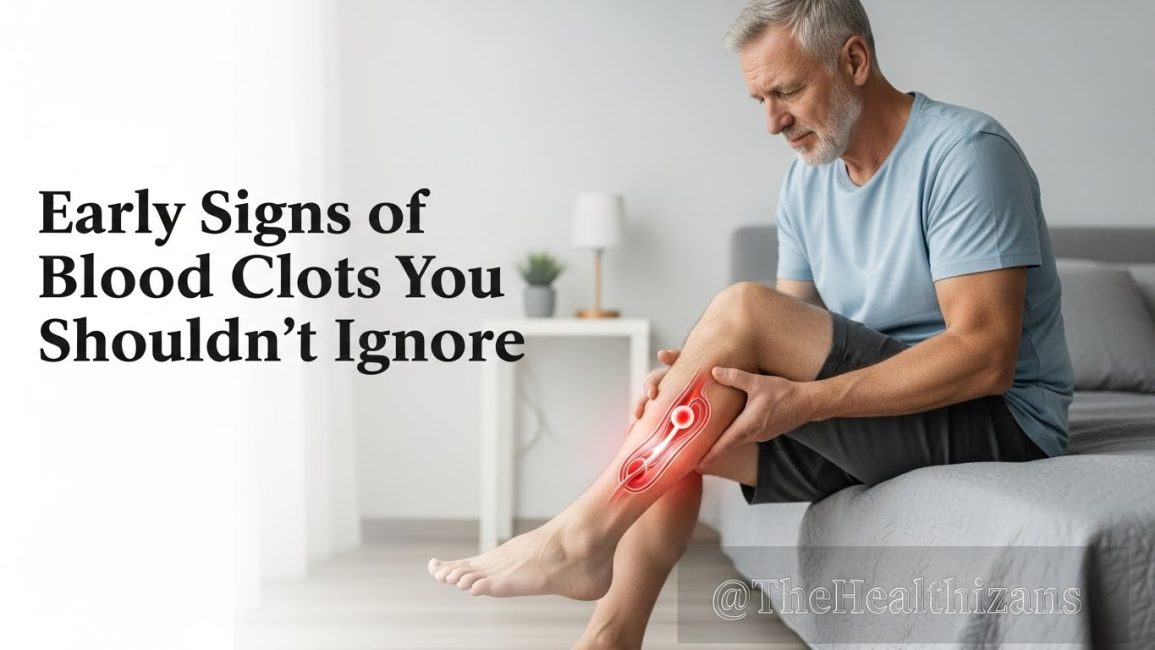
1. Sudden Pain or Tenderness in One Leg
A clot in the leg often causes a deep, cramping sensation, typically in the calf. It may feel like a pulled muscle but doesn’t improve with stretching or rest.
2. Swelling in One Leg or Arm
Unlike swelling from standing or heat, clot-related swelling usually affects only one side. The area may look visibly larger and feel tight or heavy.
3. Warmth or Redness Over the Affected Area
A clot restricts blood flow, causing heat build-up and visible skin colour changes. The area may feel noticeably warmer than the surrounding skin.
4. Unexplained Shortness of Breath
If a clot travels to the lungs (pulmonary embolism), breathing can become difficult very quickly. Even light activity may feel exhausting.
5. Sharp Chest Pain or Discomfort
Chest pain that worsens with deep breathing can be a sign of a clot in the lungs. Some people describe it as a sharp, stabbing sensation rather than pressure.
6. Rapid Heart Rate or Lightheadedness
The body responds to a blocked lung artery by increasing heart rate to compensate. Feeling faint, dizzy or suddenly unwell is a red flag that needs urgent attention.
7. Coughing — Sometimes with Blood
A sudden, persistent cough without a clear cause — especially if blood-stained — is another warning sign of pulmonary embolism.
Who Is More at Risk?
Anyone can develop a blood clot, but the risk is higher if you:
- sit for long periods (travel, desk work, recovery after illness)
- recently had surgery or hospital admission
- are pregnant or recently gave birth
- take oestrogen-based medications
- have obesity
- have a family history of blood clots
- smoke
- have heart failure
- have cancer or certain inflammatory conditions
These factors affect how easily blood clots form or how slowly blood moves through the body.
Why Early Action Matters
A clot in the leg is serious — but a clot that travels to the lungs can be fatal. Early recognition and quick treatment dramatically lower risks and prevent complications. The NHS advises urgent assessment if you experience sudden swelling, unexplained breathlessness, or chest pain.
Blood thinners, compression therapy and lifestyle changes are highly effective when treatment begins early.
How Blood Clots Are Diagnosed
Doctors may use:
- ultrasound of the leg or arm
- D-dimer blood test
- CT scan of the chest (if PE is suspected)
- ECG to rule out heart-related causes
Diagnosis is usually quick, especially in emergency departments.
The Bottom Line
The early signs of blood clots are subtle but important — and learning to recognise them can save a life. Persistent swelling, sudden leg pain, unexplained breathlessness, or sharp chest pain should never be ignored. If something feels out of the ordinary, especially on one side of the body, it’s worth getting checked immediately.
Your body rarely sends strong warnings without reason.
Sources
- NHS — Deep Vein Thrombosis (DVT)
- NHS — Pulmonary Embolism
- CDC — Blood Clots: Signs and Symptoms
- American Society of Hematology — Understanding Blood Clots
About the Author