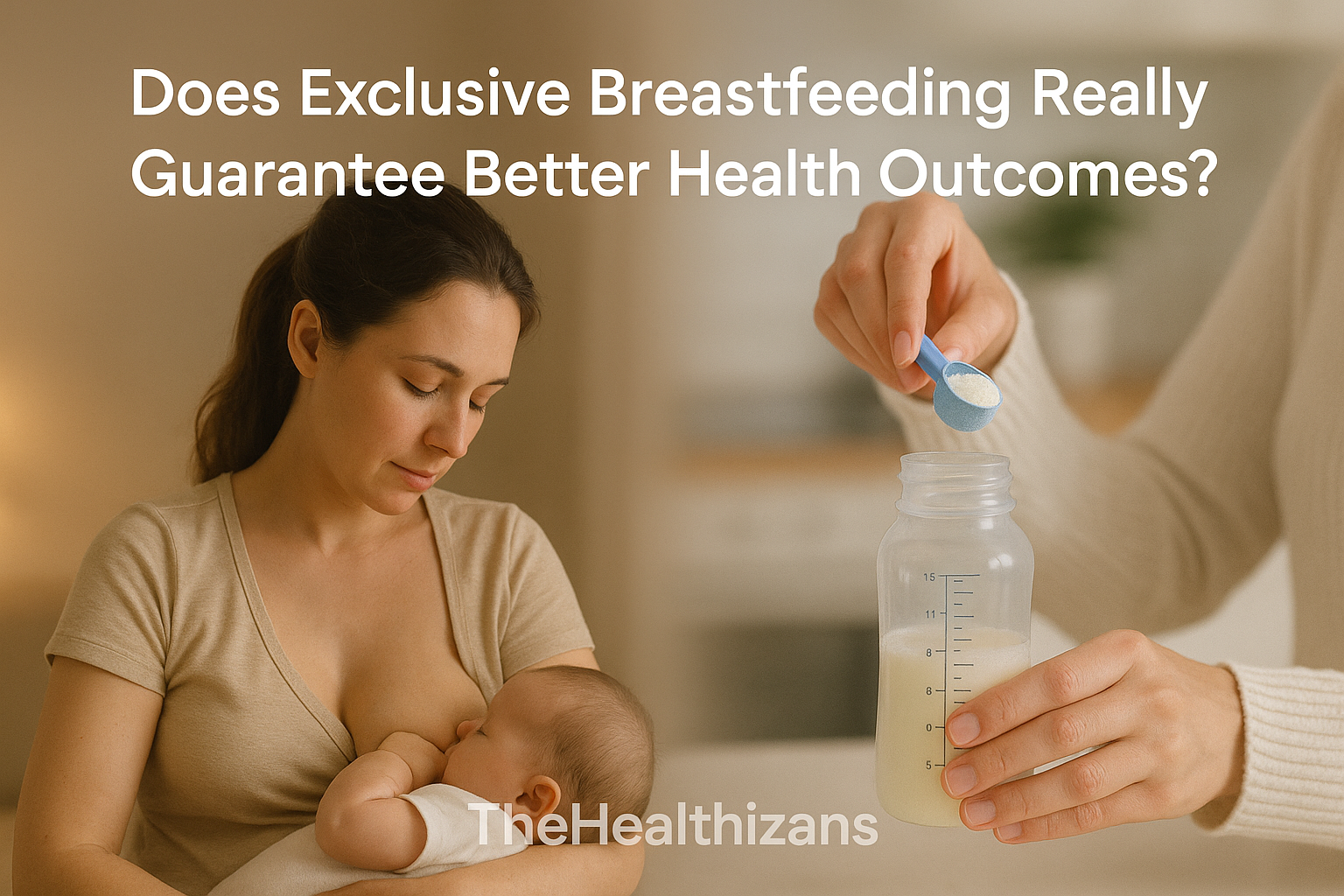
Exclusive breastfeeding (EBF) — feeding a baby only breast milk for the first six months — is recommended by the World Health Organization (WHO) and many health authorities worldwide. It’s often portrayed as the gold standard for infant feeding. But does exclusive breastfeeding really guarantee better health outcomes? Or is the story more nuanced than we think?
🌍 What the Evidence Says
Research consistently shows that breastfeeding offers important benefits:
- Immunity boost 🛡️ – Breast milk contains antibodies and live cells that help protect babies from infections like diarrhoea and respiratory illnesses.
- Nutrition designed by nature 🍶 – It adapts to a baby’s needs, providing the right balance of fat, protein, and micronutrients.
- Bonding benefits ❤️ – Skin-to-skin contact during breastfeeding supports emotional closeness.
For mothers, breastfeeding can lower the risk of breast and ovarian cancers and even type 2 diabetes.
🧪 The Limits of the Guarantee
Despite these benefits, the word “guarantee” is misleading. Health outcomes depend on many factors:
- Socioeconomic conditions 💷 – Clean water, safe housing, and healthcare access may matter as much as feeding method.
- Maternal nutrition 🥗 – Breast milk quality partly depends on the mother’s diet and health.
- Genetics & environment 🧬 – A child’s risk of allergies, obesity, or chronic disease isn’t eliminated by breastfeeding alone.
Some large studies show that while breastfeeding supports early health, differences in long-term outcomes (like intelligence or weight) often shrink once factors like income, education, and parental care are considered.
🍼 Formula Isn’t the Enemy
Modern infant formula, while not identical to breast milk, is safe, nutritionally adequate, and lifesaving where breastfeeding isn’t possible. In fact, formula-fed babies in high-income countries still grow up healthy and thriving, especially when parents have access to medical guidance and good sanitation.
🤱 The Real Takeaway
Exclusive breastfeeding is highly beneficial — but it’s not a magic bullet. It should be encouraged and supported, but without guilt or unrealistic expectations placed on mothers. Parents deserve evidence-based advice, emotional support, and the freedom to make choices that work best for their family.
💡 What’s Your Take?
Do you feel the benefits of breastfeeding are sometimes overstated, or not emphasised enough? How can we strike a balance between promoting breastfeeding and respecting parental choice? Share your thoughts in the comments 👇
📚 Sources
- World Health Organization. Exclusive breastfeeding for optimal growth, development and health of infants.
- Victora CG et al. (2016). Breastfeeding in the 21st century: epidemiology, mechanisms, and lifelong effect. The Lancet.
- American Academy of Pediatrics. Breastfeeding and the Use of Human Milk (2022 Policy Statement).
- Horta BL & Victora CG. Long-term effects of breastfeeding: a systematic review (WHO, 2013).
About the Author