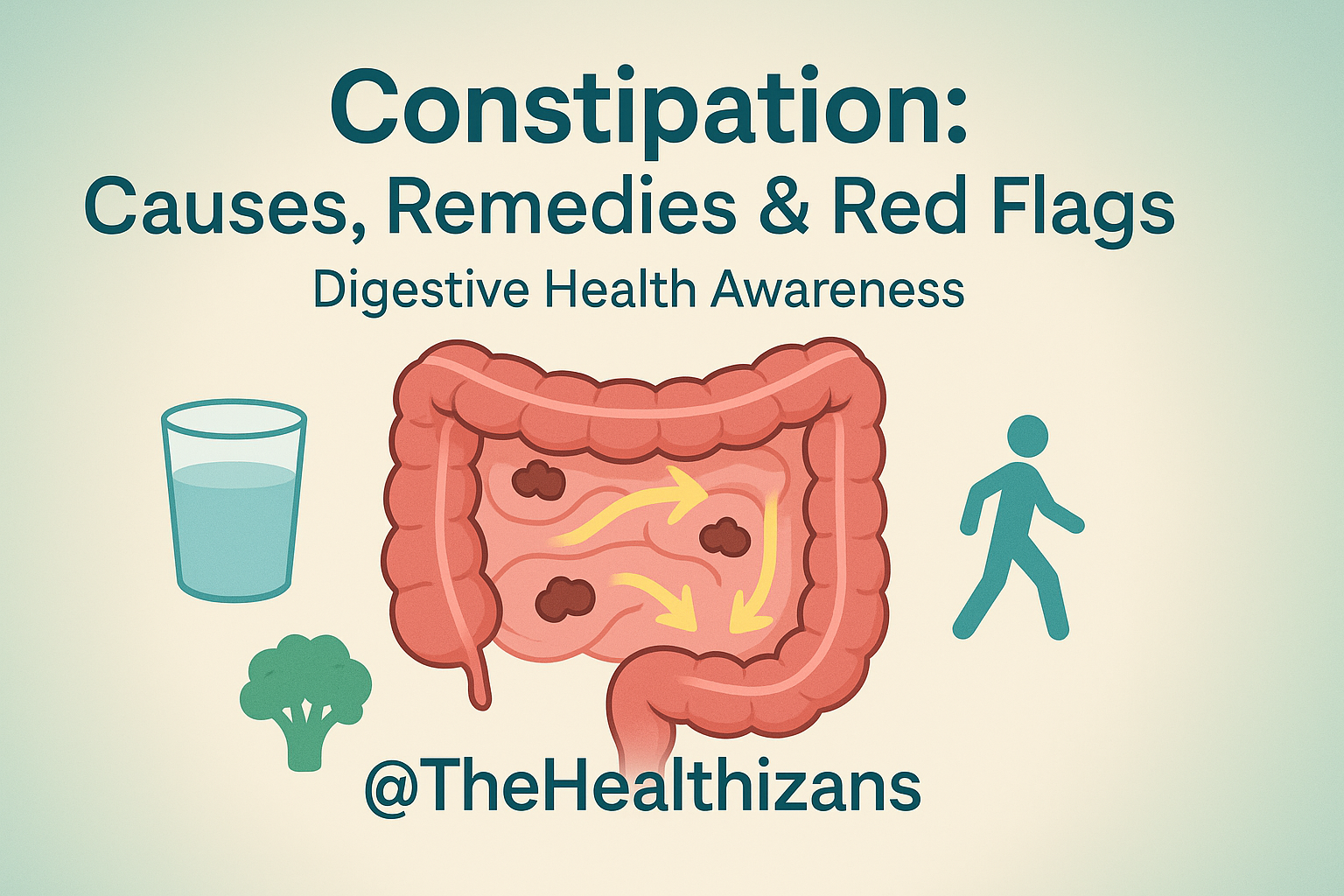
Constipation is one of the most common digestive problems worldwide. It’s estimated that about 1 in 7 adults in the UK and up to 20% of people globally experience it at some point. While it can be uncomfortable and frustrating, constipation also serves as a window into our digestive health. Understanding its causes, safe remedies, and red flags can help you know when it’s just a minor hiccup — and when it signals something more serious.
🩺 What Exactly Is Constipation?
Constipation doesn’t just mean not going to the toilet. Clinically, it’s usually defined as:
- Fewer than 3 bowel movements per week
- Hard, dry, or lumpy stools
- Straining or feeling of incomplete emptying
Occasional constipation is normal, but chronic constipation may point to underlying health issues.
🔎 Common Causes of Constipation
- Low-fibre diet
- Fibre adds bulk to stool and helps it move through the gut. Most adults in the UK only eat about 18g fibre per day, well below the recommended 30g.
- Not drinking enough fluids
- Dehydration makes stools hard and more difficult to pass.
- Lack of physical activity
- Movement stimulates bowel function. Sedentary lifestyles often worsen constipation.
- Ignoring the urge
- Regularly delaying toilet use can train the bowel to be sluggish.
- Medications
- Painkillers (especially opioids), iron supplements, some antidepressants, and antihypertensives are known culprits.
- Stress and routine changes
- The gut and brain are closely linked — travel, disrupted sleep, or emotional stress can slow bowel habits.
🌿 Natural Remedies That Work
If constipation is mild and occasional, lifestyle changes are usually enough:
- Boost fibre intake
- Aim for 30g/day from sources like wholegrains, lentils, beans, fruits, and vegetables.
- Stay hydrated
- Around 6–8 glasses of water daily (more in hot weather or with exercise).
- Get moving
- Brisk walking, yoga, or regular activity can stimulate bowel contractions.
- Try natural aids
- Prunes, pears, flaxseeds, and kiwifruit have been shown in studies to help.
- Establish a toilet routine
- Try going at the same time daily, especially after breakfast when the colon is most active.
🚨 When to Seek Medical Advice
Constipation is usually harmless, but see a doctor if you notice:
- Blood in your stools
- Unexplained weight loss
- Severe abdominal pain or bloating
- Persistent constipation not relieved by diet or lifestyle changes
- New onset of constipation after age 50
These may point to more serious conditions such as bowel obstruction or even colorectal cancer.
🌍 A Global Perspective
- In Western countries, low fibre and processed diets are leading contributors.
- In parts of Asia and Africa, traditional diets high in fibre mean constipation is less common, but medication-related constipation (e.g., from iron tablets in pregnancy) is frequent.
- The World Gastroenterology Organisation (WGO) emphasises a mix of diet, hydration, exercise, and gut-friendly habits as the safest first-line remedies before considering laxatives.
✅ Key Takeaways
- Constipation is common but often preventable with lifestyle adjustments.
- Fibre, fluids, and movement are the cornerstones of healthy digestion.
- Don’t ignore red flags — especially blood, sudden changes, or pain.
🤔 What’s Your Take?
Have you tried natural remedies like prunes, kiwifruit, or flaxseeds for constipation relief? Did they work for you? Share your experience with our @TheHealthizans community!
📚 Sources
- NHS. Constipation. Updated 2023.
- World Gastroenterology Organisation (WGO). Constipation: A Global Perspective, 2021.
- British Nutrition Foundation. Dietary Fibre Intake in the UK, 2022.
- American College of Gastroenterology. Chronic Constipation Clinical Guidelines, 2021.
About the Author