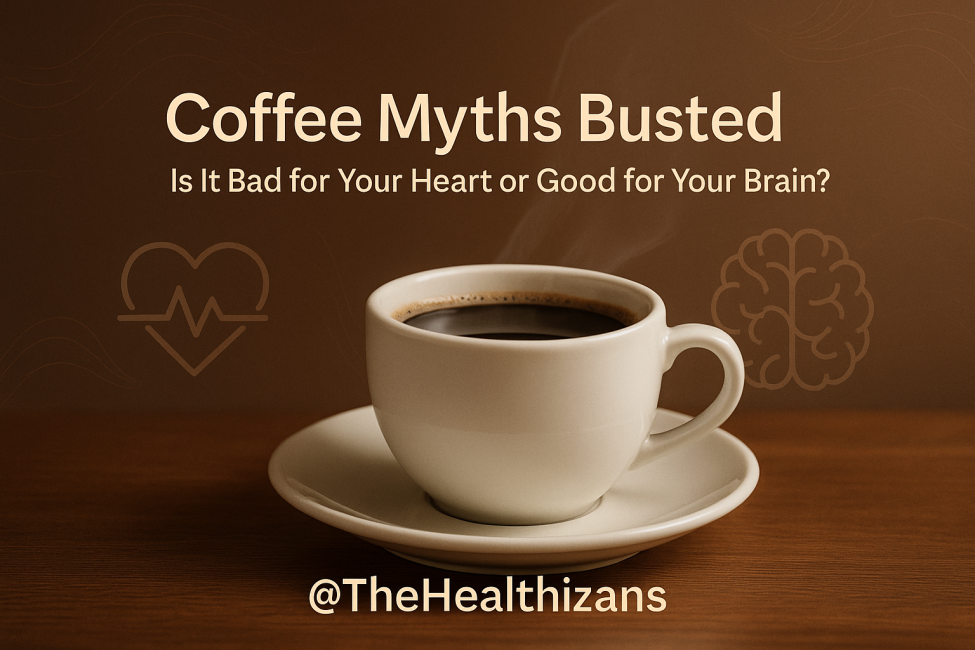
If you start your day with a steaming cup of coffee, you’re not alone — billions of people do. But questions about coffee health benefits and risks keep brewing.
For decades, coffee has been both praised and criticised — some say it protects your heart and brain, while others claim it raises blood pressure or anxiety. So, what’s the real truth? Let’s separate myth from science and see what coffee truly does for your body and mind.
❤️ 1. Coffee and Heart Health: The Real Story
When it comes to coffee health benefits and risks, heart health tops the list of public concerns. For years, experts warned that coffee might raise blood pressure or cause heart problems.
However, newer studies show that moderate coffee intake (3–4 cups daily) is actually linked to a lower risk of heart disease and stroke. Research published in the European Journal of Preventive Cardiology found that regular coffee drinkers had a reduced risk of heart failure and cardiovascular events.
🩺 Tip: If you have high blood pressure, watch your caffeine tolerance — some people are more sensitive than others.
Also, see our piece on Foods That Protect Your Heart for more ways to keep your cardiovascular system healthy.
🧠 2. Coffee and Brain Health: Focus, Memory, and Mood
One of the most fascinating coffee health benefits lies in its effect on the brain. Caffeine boosts alertness by stimulating neurotransmitters like dopamine and serotonin, helping you stay focused, motivated, and mentally sharp.
Long-term studies even show coffee may lower the risk of Alzheimer’s and Parkinson’s disease, thanks to its rich supply of antioxidants and polyphenols.
A Harvard study revealed that people who drank 2–4 cups a day had 20% lower rates of depression — likely because coffee helps modulate mood-regulating hormones.
🧩 Pro Tip: Choose plain black coffee or add milk sparingly — too much sugar can cancel out the brain-boosting benefits.
💪 3. The Antioxidant Advantage
Beyond caffeine, one of the most powerful coffee health benefits is its antioxidant content. Coffee provides more antioxidants than many fruits or vegetables in the average diet.
These compounds reduce inflammation and protect your cells from oxidative stress — key factors in preventing chronic diseases.
🌿 Healthizans Insight: It’s not just about caffeine; coffee’s benefits come from over 1,000 natural compounds working together.
⚖️ 4. Coffee Health Risks: When to Be Cautious
No discussion of coffee health benefits and risks would be complete without acknowledging when coffee can cause trouble. Too much caffeine can lead to:
- Jitters and anxiety
- Palpitations or rapid heartbeat
- Disrupted sleep patterns
To keep your coffee habit healthy:
✅ Stick to 3–4 cups per day (max 400 mg caffeine)
✅ Avoid sugary syrups and whipped toppings
✅ Stop drinking coffee 6 hours before bedtime
For more, check our post Stress and Sleep: Breaking the Cycle to see how caffeine affects rest.
🩺 5. Cholesterol and Liver Protection
Filtered coffee may support liver health and even reduce the risk of type 2 diabetes. But unfiltered coffee (like French press or Turkish) contains cafestol and kahweol — compounds that can raise LDL cholesterol.
💡 Solution: Use paper filters. They trap most cholesterol-raising oils while keeping antioxidants intact.
🌍 6. Choosing Your Brew: Decaf, Cold Brew, or Espresso
- Filtered coffee: Heart-friendly and well-balanced.
- Cold brew: Lower acidity, easier on digestion.
- Decaf: Keeps antioxidants with little caffeine — ideal for evenings.
Your choice depends on your goals — alertness, digestion, or relaxation.
🌟 Final Thoughts
When it comes to coffee health benefits and risks, balance is everything. Coffee can protect your heart, sharpen your mind, and energise your day — but moderation matters.
So, drink smart: skip the sugar, stay within your limits, and savour each cup guilt-free.
💬 What’s Your Take?
How do you like your coffee — black, iced, or milky? Do you feel more energised or anxious after drinking it? Share your thoughts — your experience might help someone else in our Healthizans community!
📚 Sources
- Harvard T.H. Chan School of Public Health — Coffee and health: What does the research say?
- European Society of Cardiology — Coffee consumption and cardiovascular health
- British Heart Foundation — How coffee affects your heart
- WHO — Healthy diet recommendations
- Harvard Health Publishing — Coffee, caffeine, and health benefits
About the Author