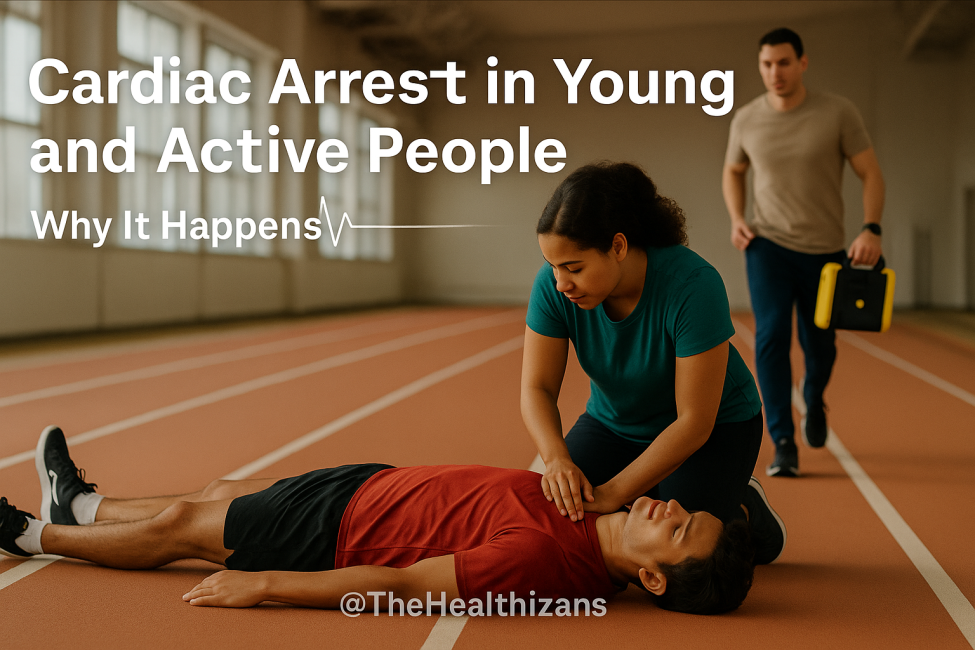
When we hear “cardiac arrest,” we often picture an older person clutching their chest — but the truth is, young and physically active people can experience it too.
From school athletes to weekend gym-goers, sudden cardiac arrest (SCA) sometimes strikes without warning — and it’s almost always a shock to family, friends, and teammates.
Let’s explore why it happens, who’s at risk, and how awareness and screening can save lives.
💓 What Is Sudden Cardiac Arrest?
Sudden cardiac arrest occurs when the heart’s electrical system malfunctions, causing it to stop beating effectively. Blood flow to the brain and organs stops, leading to collapse and loss of consciousness within seconds.
It’s different from a heart attack, which is caused by blocked blood flow (a plumbing problem). Cardiac arrest is an electrical problem — and in young people, the cause is usually hidden until tragedy strikes.
⚡ Why It Happens in Young and Active People
Even the fittest bodies can hide silent risks. Common underlying causes include:
- Hypertrophic Cardiomyopathy (HCM) — a thickened heart muscle that disrupts normal rhythm.
- Long QT Syndrome and Other Channelopathies — inherited electrical disorders that make the heart prone to dangerous arrhythmias.
- Myocarditis — heart inflammation, often after viral infections.
- Congenital Heart Defects — structural issues present from birth.
- Commotio Cordis — a blow to the chest (e.g. during sports) that triggers cardiac arrest.
- Substance or Energy-Drink Misuse — stimulants and performance enhancers can stress the heart.
💬 Even a seemingly healthy person may have a silent electrical fault — that’s why awareness and quick action matter.
🏃♀️ Who’s Most at Risk?
- Young athletes under 35
- Those with a family history of sudden death or fainting
- People recovering from recent viral infections (e.g. myocarditis risk)
- Individuals using stimulant or performance substances
- Anyone with undiagnosed heart murmurs or chest pain on exertion
In the UK, the Resuscitation Council estimates that about 12 young people each week die from sudden cardiac arrest — most with no prior symptoms.
🩺 Warning Signs You Should Never Ignore
Before a collapse, subtle clues sometimes appear:
- Fainting during or right after exercise
- Unexplained shortness of breath or chest pain
- Rapid or irregular heartbeat
- Extreme fatigue or dizziness
If any of these occur — especially in teenagers or athletes — they deserve a full cardiac check-up.
🧠 Prevention Starts With Awareness
Prevention doesn’t mean fear — it means preparation. You can:
- Know your family history — and share it with your GP.
- Get screened if you’re an athlete or have symptoms. (Charities like Cardiac Risk in the Young – CRY UK offer free heart screenings.)
- Learn CPR and AED use — survival doubles when someone acts fast.
- Live heart-healthy — eat well, manage stress, and rest after illness.
🫶 Building Safer Communities
Sports clubs, schools, and gyms can play a huge role by:
- Installing AEDs in easy-to-find places.
- Training staff and students in CPR.
- Encouraging open conversations about heart health.
💡 Being active is vital for wellbeing — but pairing activity with awareness saves lives.
💬 What’s Your Take?
Have you heard of any local initiatives offering free cardiac screening for young people? Would you support mandatory AEDs in sports venues? Share your thoughts 👇
Also, check out our post on CPR Made Simple: How You Can Save a Life to learn what to do if cardiac arrest strikes
📚 Sources
- British Heart Foundation. Sudden cardiac arrest in young people.
- Resuscitation Council UK. Cardiac arrest awareness resources.
- Cardiac Risk in the Young (CRY UK). Screening and prevention programmes.
About the Author