Carbs have become one of nutrition’s most misunderstood nutrients. From “low-carb” diets to keto trends, carbohydrates are often portrayed as the villains behind weight gain and blood sugar spikes.
But here’s the truth: carbohydrates are your body’s main source of energy — and not all carbs are created equal. The real issue isn’t carbs themselves but the kind and amount we eat. Let’s unpack the science of carbohydrate health benefits and why cutting them completely could do more harm than good.
⚡ 1. What Carbohydrates Actually Do for Your Body
Carbs are broken down into glucose, the fuel your brain, muscles, and cells rely on.
When you skip carbs entirely, your body struggles to maintain steady energy and mental clarity.
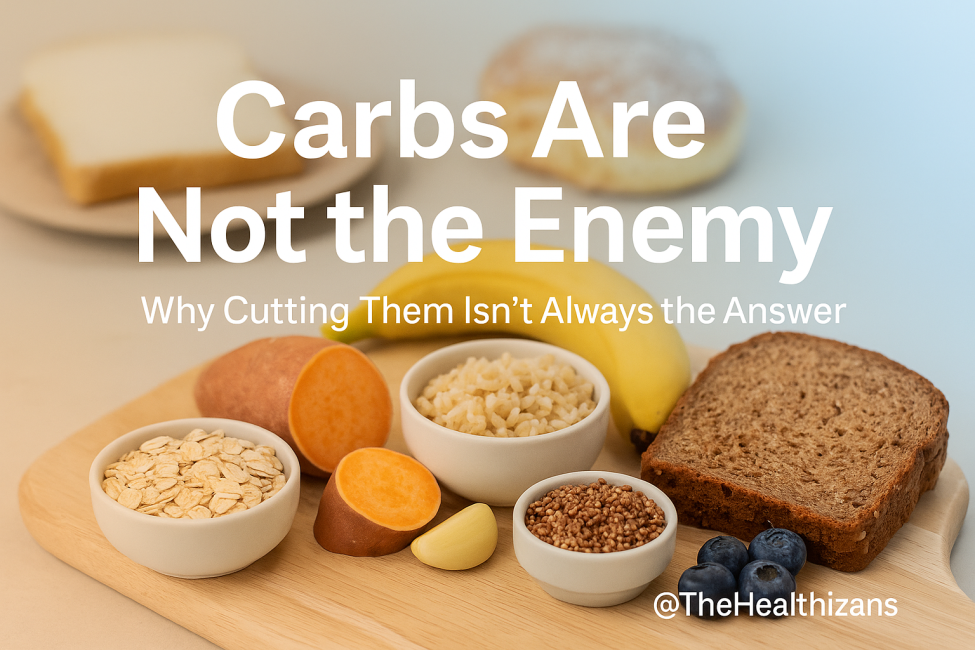
✅ Complex carbs (whole grains, legumes, fruits, and vegetables) release energy slowly and keep you fuller for longer.
❌ Refined carbs (white bread, pastries, sugary drinks) spike your blood sugar and then cause energy crashes.
💡 Healthizans Tip: Instead of cutting carbs, choose smarter carbs — the kind that come with fibre, vitamins, and minerals.
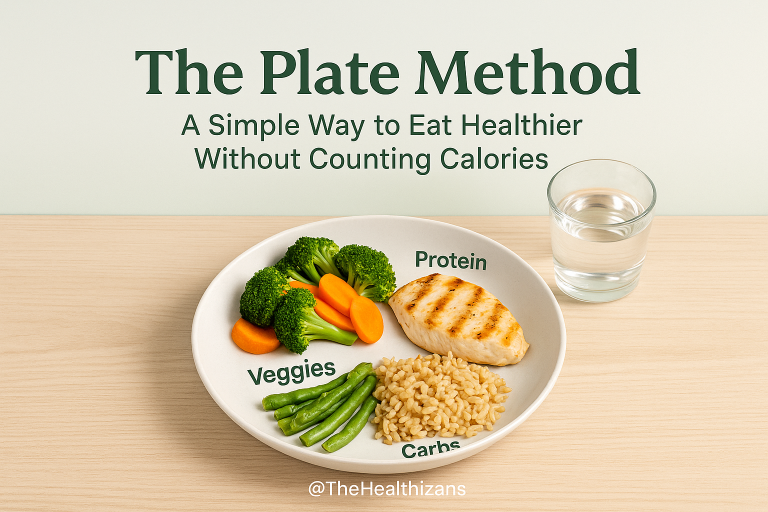
Also check out The Plate Method: A Simple Way to Eat Healthier Without Counting Calories for practical balance ideas.
🫀 2. Carbs and Heart Health: The Fibre Connection
Whole-grain carbohydrates are rich in soluble fibre, which helps lower LDL (“bad”) cholesterol and reduce heart-disease risk.
Research from the British Heart Foundation and Harvard School of Public Health shows that people who eat more whole-grain carbs have a 20–30 % lower risk of heart disease compared to those who avoid them.
🍚 Best choices: oats, brown rice, quinoa, whole-wheat pasta, and barley.
💪 3. Why Your Brain and Muscles Need Carbs
Your brain alone consumes about 20 % of your body’s energy — mostly from glucose.
That’s why ultra-low-carb diets often cause brain fog, fatigue, and irritability.
For physically active people, carbs are also essential for replenishing muscle glycogen, the storage form of energy used during workouts.
🏋️♂️ Healthizans Insight: Combining carbs with protein after exercise speeds recovery and improves performance.
🌱 4. The Weight-Loss Myth: Cutting Carbs Isn’t a Shortcut
While low-carb diets can lead to quick initial weight loss, much of it comes from water and glycogen depletion, not fat.
Over time, restrictive carb cutting can lead to nutrient deficiencies, low energy, and rebound eating. Sustainable weight management comes from portion balance, not elimination.
⚖️ Try this: Fill half your plate with veggies, a quarter with whole-grain carbs, and a quarter with lean protein.
🧬 5. Carbs and Blood Sugar: Quality Over Quantity
The glycaemic index (GI) helps you choose carbs that have a gentler effect on blood sugar.
✅ Low-GI carbs: oats, lentils, beans, apples, sweet potatoes.
❌ High-GI carbs: white bread, sugary cereals, pastries.
Pairing carbs with fibre, protein, or healthy fats slows glucose absorption — a simple trick for steady energy and blood-sugar control.
For more, see Smart Eating for Blood Sugar Balance in our Blood Sugar series.
🌍 6. Global Diet Patterns: Carbs Done Right
The world’s longest-living populations — from Japan’s Okinawans to Italy’s Sardinians — all eat diets rich in whole-food carbohydrates like rice, beans, and vegetables.
Their secret? Balance and moderation, not restriction. They treat carbs as part of a diverse, plant-forward plate rather than the main star.
🌟 Final Thoughts
Carbs aren’t the enemy — ultra-processed carbs are.
Choosing whole, complex, fibre-rich carbohydrates supports energy, heart health, and brain function. The smartest diet isn’t “low-carb” — it’s right-carb.
💬 What’s Your Take?
Have you tried cutting carbs before? How did it make you feel? Share your experience — your story might help someone rethink their plate!
📚 Sources
- Harvard T.H. Chan School of Public Health — Carbohydrates and Health
- British Heart Foundation — Whole grains and heart health
- NHS — Starchy foods and carbohydrates
- WHO — Healthy diet factsheet
- American Heart Association — The role of carbohydrates in a healthy diet
About the Author