Acid reflux is more than just occasional heartburn. For many people, it’s a persistent discomfort that affects sleep, daily activities, and overall quality of life. You may feel a burning sensation in your chest, a sour taste in your mouth, or discomfort after meals — often without realising that what you eat plays a major role.
While medication can help manage symptoms, diet and eating habits remain one of the most effective long-term tools for reducing acid reflux. The key isn’t extreme restriction, but understanding which foods tend to soothe the digestive system — and which ones are more likely to trigger symptoms.
Understanding Acid Reflux in Simple Terms
Acid reflux occurs when stomach acid flows back into the oesophagus. This happens when the lower oesophageal sphincter (the valve between the stomach and oesophagus) relaxes or weakens.
Certain foods can:
- increase acid production
- slow digestion
- relax this valve
- or increase pressure in the stomach
Over time, repeated reflux can irritate the oesophagus and lead to more persistent symptoms.
Foods That Commonly Worsen Acid Reflux
Some foods are more likely to trigger reflux because of how they affect stomach acid or digestion. This doesn’t mean everyone reacts the same way, but these are common culprits.
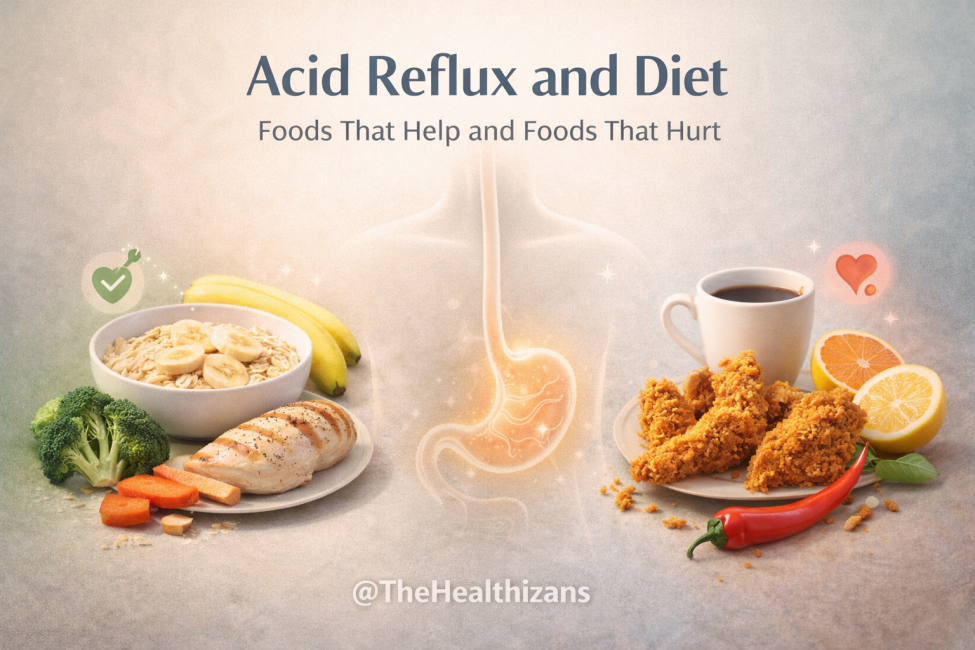
Highly fatty and fried foods tend to stay in the stomach longer, increasing pressure and the likelihood of reflux. Spicy dishes, particularly those heavy in chilli or hot sauces, can irritate the oesophageal lining.
Acidic foods such as citrus fruits, tomatoes, and tomato-based sauces can worsen symptoms for some people, especially when eaten in large amounts or on an empty stomach.
Caffeine and chocolate may also relax the oesophageal valve, allowing acid to escape more easily. Alcohol has a similar effect and can additionally increase acid production.
Carbonated drinks can cause bloating and pressure, while peppermint — although soothing for some digestive issues — may aggravate reflux symptoms in others.
Foods That May Help Reduce Reflux Symptoms
The good news is that many foods can actually help calm reflux and support digestion.
High-fibre foods such as oats, whole grains, vegetables, and legumes promote smoother digestion and reduce the risk of acid backing up. Lean proteins — including fish, chicken, eggs, tofu, and beans — are generally easier on the stomach than fatty cuts of meat.
Non-citrus fruits like bananas, melons, apples, and pears are often well tolerated and can help neutralise stomach acid. Vegetables such as broccoli, spinach, courgettes, carrots, and green beans are low in acid and gentle on the digestive system.
Healthy fats, when eaten in moderation, also matter. Small amounts of olive oil, nuts, and seeds are less likely to trigger reflux compared with fried or heavily processed fats.
How You Eat Matters as Much as What You Eat
Dietary triggers aren’t just about food choices — eating habits play a major role.
Large meals increase pressure in the stomach, making reflux more likely. Eating slowly, chewing thoroughly, and stopping when comfortably full can significantly reduce symptoms. Lying down too soon after eating increases the risk of reflux, which is why late-night meals are often problematic.
This links closely with what we discussed in Eating Late at Night: Does Timing Really Matter?, where meal timing and portion size were shown to influence digestive comfort.
Acid Reflux, Gut Health, and the Bigger Picture
Recurring reflux can sometimes signal broader digestive imbalance. Stress, disrupted gut bacteria, and irregular eating patterns may all contribute to reflux symptoms.
If you’re also experiencing bloating, irregular bowel habits, fatigue, or food sensitivities, it may be helpful to read Signs Your Gut Is Out of Balance: What Your Body May Be Telling You — as addressing gut health more broadly can improve reflux over time.
Do You Need to Cut Foods Out Completely?
Not necessarily. Acid reflux triggers are highly individual. A food that causes symptoms in one person may be harmless for another.
Rather than eliminating entire food groups, it’s often more effective to:
- keep a simple food-and-symptom diary
- notice patterns
- adjust portion sizes
- modify cooking methods (grilling, baking, steaming instead of frying)
This flexible approach is more sustainable and less stressful.
Final Thoughts
Managing acid reflux doesn’t require extreme diets or permanent food bans. By understanding how certain foods and eating habits affect your digestion, you can make small, practical changes that significantly reduce discomfort.
The goal is not perfection, but consistency and awareness — choosing foods that support digestion most of the time, while listening to your body’s signals.
What’s Your Take?
Do certain foods reliably trigger your reflux symptoms, or have eating habits like late meals made a difference for you? Share your experience — it may help someone else find relief.
Sources
- NHS — Acid Reflux and Heartburn
- American College of Gastroenterology — GERD and Diet
- Mayo Clinic — Acid Reflux and Lifestyle Changes
- Cleveland Clinic — Foods That Help and Hurt Acid Reflux
- World Gastroenterology Organisation — Reflux Disease
About the Author