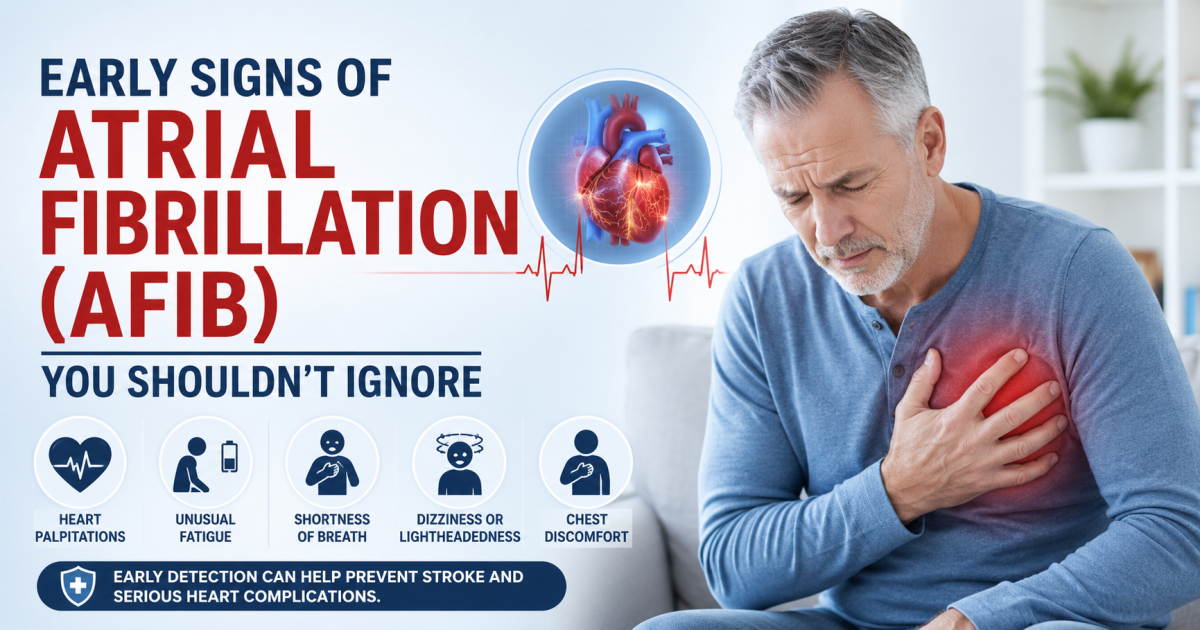
Atrial fibrillation — often shortened to AFib or AF — is one of the most common heart rhythm disorders worldwide. It happens when the heart beats irregularly and often faster than normal, disrupting the smooth flow of blood through the heart.
Some people notice symptoms immediately. Others experience only subtle changes that come and go, making them easy to dismiss as stress, tiredness, caffeine, or anxiety.
Recognising the early signs of atrial fibrillation matters because untreated AFib can increase the risk of stroke, heart failure, and other cardiovascular complications. The good news is that early diagnosis and treatment can significantly reduce these risks.
What Is Atrial Fibrillation?
In a healthy heart, electrical signals coordinate a steady, regular heartbeat. In atrial fibrillation, those signals become disorganised, causing the upper chambers of the heart (the atria) to beat irregularly.
This can make the heartbeat:
- unusually fast
- uneven or “fluttery”
- unpredictable
AFib may occur occasionally at first, with episodes lasting minutes or hours before returning to normal.
Why Early Signs of AFib Are Often Missed
AFib symptoms can be intermittent. Some people feel completely normal between episodes, while others assume symptoms are related to stress, anxiety, or ageing.
For example, palpitations and breathlessness are often confused with early signs of anxiety, while fatigue may resemble early signs of burnout or early signs of anaemia.
Because symptoms overlap with many other conditions, AFib can remain undiagnosed for months or even years.
The Early Signs You Shouldn’t Ignore
AFib symptoms vary from person to person. Some people experience only one or two subtle changes. Some of the early signs to look out for include:
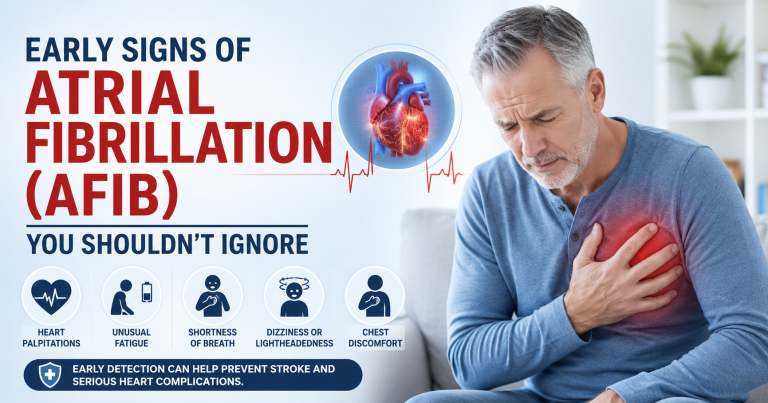
1. Heart Palpitations
One of the most common early signs is an awareness of the heartbeat.
People often describe it as:
- fluttering in the chest
- racing heartbeat
- pounding or thumping
- skipped or irregular beats
Episodes may last seconds, minutes, or longer and can occur unpredictably.
2. Unusual Fatigue
Feeling unusually tired during normal daily activities can be an early clue.
Because the heart is beating inefficiently, less oxygen-rich blood may reach the body effectively, leaving people feeling drained or weak.
This overlaps with symptoms seen in early signs of heart failure and early signs of high blood pressure.
3. Shortness of Breath
Some people notice breathlessness during activities that previously felt easy, such as climbing stairs or walking briskly.
Even mild exertion may begin to feel harder than usual.
4. Dizziness or Lightheadedness
An irregular heartbeat can temporarily reduce blood flow to the brain, causing dizziness or feeling faint.
These episodes are often brief and easy to dismiss at first.
5. Chest Discomfort or Tightness
AFib does not always cause pain, but some people experience pressure, discomfort, or tightness in the chest during episodes.
Chest symptoms should never be ignored, particularly if accompanied by breathlessness or dizziness.
6. Reduced Exercise Tolerance
You may notice that activities that once felt manageable now leave you unusually tired or breathless.
This decline is often gradual, which is why it’s frequently attributed to ageing or reduced fitness.
7. Symptoms That Come and Go
One reason AFib is difficult to spot early is that episodes may stop on their own.
People often assume that because symptoms disappeared, nothing serious is wrong. However, intermittent AFib still carries important health risks.
Who Is More at Risk?
AFib becomes more common with age, but it can affect younger adults too.
Risk is higher in people who:
- have high blood pressure
- have heart disease or diabetes
- experience obesity or metabolic syndrome
- consume excess alcohol
- have sleep apnoea
- experience chronic stress
AFib is also closely linked to the cardiometabolic conditions discussed in early signs of metabolic syndrome and early signs of insulin resistance.
Why Early Recognition Matters
Untreated AFib increases the risk of:
- stroke
- heart failure
- blood clots
- reduced quality of life
In fact, AFib is one of the leading preventable causes of stroke worldwide.
Early diagnosis allows treatment to:
- reduce stroke risk
- control heart rhythm or rate
- improve symptoms and quality of life
How AFib Is Diagnosed
Diagnosis often involves:
- pulse checks
- electrocardiogram (ECG)
- wearable heart monitors
- blood pressure and heart assessments
Because AFib can come and go, longer-term monitoring is sometimes needed to capture irregular episodes.
What Helps Reduce Risk?
Reducing AFib risk often overlaps with improving overall cardiovascular health.
Helpful steps include:
- managing blood pressure
- improving sleep quality
- reducing alcohol intake
- regular physical activity
- managing stress
- treating underlying metabolic conditions
Many of these also support conditions like early signs of high blood pressure and early signs of fatty liver disease.
When to Seek Medical Advice
You should consider medical assessment if you notice:
- repeated palpitations
- unexplained breathlessness
- dizziness or fainting
- chest discomfort
- worsening exercise tolerance
Urgent medical attention is needed for severe chest pain, collapse, or stroke symptoms.
The Bottom Line
The early signs of atrial fibrillation are often subtle, intermittent, and easy to dismiss. Palpitations, breathlessness, fatigue, dizziness, and reduced stamina may all be early clues that the heart rhythm is not functioning normally.
AFib is common, manageable, and often treatable — especially when recognised early.
Listening to these early signals and getting checked promptly can help protect long-term heart and brain health.
Sources
- NHS — Atrial Fibrillation
- British Heart Foundation — Atrial Fibrillation
- American Heart Association — What Is Atrial Fibrillation?
- Mayo Clinic — Atrial Fibrillation
About the Author