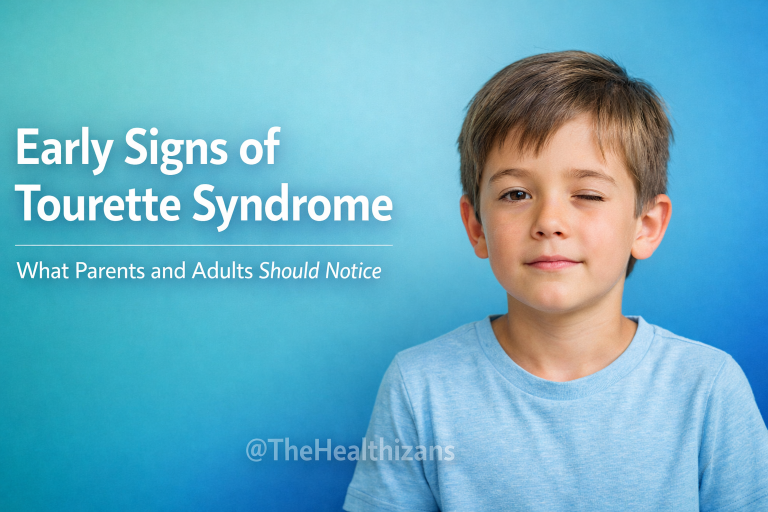
The early signs of Tourette syndrome are often quiet, subtle, and easily misunderstood.
A child may blink more than usual. Another might clear their throat repeatedly. A teenager may develop small shoulder movements that seem like habits. At first, these behaviours are commonly attributed to allergies, nerves, stress, or “just a phase.”
But when certain patterns persist or evolve over time, they may point to something neurological rather than behavioural.
In this article, we’ll explore what the early signs of Tourette syndrome look like, how they typically develop, when to seek medical advice, and why reassurance matters more than alarm.
Understanding Tourette Syndrome
Tourette syndrome is a neurological condition characterised by repeated, involuntary movements and sounds known as tics. It usually begins in childhood, most commonly between the ages of 5 and 10, and is more frequently diagnosed in boys than girls.
For a formal diagnosis:
- A person must have multiple motor tics
- At least one vocal tic
- Symptoms must persist for more than one year
- Onset must occur before age 18
Importantly, not every child with tics has Tourette syndrome. Many children experience temporary (transient) tic disorders that resolve on their own.
What Do the Early Signs of Tourette Syndrome Look Like?
In many cases, motor tics appear first. Vocal tics may follow months or even years later. The pattern is often gradual rather than sudden.
1. Repetitive Eye Blinking or Facial Movements
One of the most common early signs of Tourette syndrome is frequent blinking, squinting, nose twitching, or brief facial grimacing.
Parents often first explore:
- Eye strain
- Dryness
- Allergies
- Vision problems
If medical checks are normal and the movement continues or changes pattern, a tic may be considered.
2. Small Shoulder, Neck, or Head Movements
Motor tics may include:
- Repeated shoulder shrugging
- Quick head jerks
- Neck stretching movements
These actions are typically brief and may occur in clusters. Children often say they feel a build-up of tension beforehand.
3. Persistent Throat Clearing or Sniffing
Early vocal tics are often subtle and easily mistaken for respiratory issues.
They may sound like:
- Throat clearing
- Sniffing without a cold
- Small grunting noises
If these sounds persist beyond typical illness patterns, especially alongside motor tics, further assessment may be helpful.
4. Tics That Change Over Time
A defining feature of Tourette syndrome is that tics wax and wane.
One tic may fade while another appears. For example:
- Blinking may stop
- Shoulder movements may begin
- A vocal tic may develop later
This evolving pattern is characteristic and can sometimes confuse families who assume improvement means resolution.
5. Symptoms That Fluctuate With Emotion or Fatigue
Tics often increase:
- During stress
- With excitement
- When tired
- During illness
They may reduce when a child is deeply focused, such as while drawing, gaming, or reading.
This variability does not mean the child is controlling the behaviour — it reflects how neurological pathways respond to environmental triggers.
6. A Premonitory Sensation
Older children and adults sometimes describe a physical sensation before a tic, such as:
- A tingling
- Pressure
- An uncomfortable urge
The tic temporarily relieves this sensation. This “premonitory urge” is a well-recognised feature of Tourette syndrome.
When Should You Seek Medical Advice?
While mild, short-term tics are common in childhood, it is advisable to consult a GP if:
- Tics persist beyond a few months
- Both motor and vocal tics are present
- Symptoms last longer than one year
- Tics cause distress, bullying, or functional difficulty
- School performance or confidence is affected
Early medical input is primarily about reassurance, monitoring, and support — not immediate medication.
Conditions That May Occur Alongside Tourette Syndrome
Many individuals with Tourette syndrome also experience:
- Attention-Deficit/Hyperactivity Disorder (ADHD)
- Obsessive-Compulsive Disorder (OCD)
- Anxiety disorders
- Learning difficulties
In fact, these associated conditions often impact quality of life more than the tics themselves.
If anxiety is present alongside tics, you may also find our article on Early Signs of Anxiety helpful, as overlapping symptoms can sometimes complicate early recognition.
Addressing Common Misconceptions
It is important to clarify what Tourette syndrome is not.
Tourette syndrome:
- Is not caused by poor parenting
- Is not attention-seeking behaviour
- Is not a sign of low intelligence
- Does not always involve swearing
The well-known symptom of involuntary swearing (coprolalia) occurs in only a small minority of cases.
Reducing stigma begins with accurate information.
A Reassuring Perspective for Families
Hearing the term “Tourette syndrome” can feel overwhelming. However:
- Many children experience mild symptoms
- Tics often improve in late adolescence
- With understanding and structured support, children thrive socially and academically
Calm observation, professional guidance, and supportive school environments are far more beneficial than drawing attention to the tics themselves.
What’s Your Take?
Have you noticed repeated movements or sounds in a child that lasted longer than expected?
Did they resolve naturally, or did you seek professional advice?
Sharing experiences helps reduce stigma and build community understanding.
Sources
- NHS – Tourette syndrome overview
- Centers for Disease Control and Prevention – Signs and symptoms of Tourette syndrome
- Tourette Association of America – Understanding tics and diagnosis criteria
- American Academy of Neurology – Practice guideline for treatment of tics in people with Tourette syndrome
About the Author