Insulin resistance rarely starts with dramatic symptoms. Instead, it develops quietly as the body becomes less responsive to insulin — the hormone that helps move glucose from the bloodstream into cells for energy.
Many people live with insulin resistance for years without knowing it, feeling “mostly fine” while subtle changes build beneath the surface. Recognising the early signs of insulin resistance matters because, when caught early, it is often reversible and can significantly reduce the risk of type 2 diabetes, heart disease, and metabolic complications.
What Is Insulin Resistance?
Insulin resistance occurs when the body’s cells don’t respond effectively to insulin. To compensate, the pancreas produces more insulin to keep blood sugar levels normal.
Over time, this compensation becomes harder to maintain. Blood sugar levels begin to rise, inflammation increases, and the risk of metabolic syndrome and diabetes grows.
Insulin resistance sits at the centre of many modern health conditions — including early signs of metabolic syndrome — long before a formal diagnosis is made.
Why Insulin Resistance Is Often Missed
In the early stages, blood sugar tests may still appear “normal.” Because people don’t feel acutely unwell, symptoms are often blamed on stress, ageing, or lifestyle.
This is similar to how people overlook early signs of high blood pressure, which may cause few symptoms, or misinterpret fatigue linked to early signs of burnout or early signs of anaemia.
The Early Signs You Shouldn’t Ignore
Early insulin resistance affects energy, appetite, weight distribution, and skin — often subtly. Some of the early signs to look out for include:
1. Persistent Fatigue, Especially After Meals
Feeling unusually tired or sleepy after eating — particularly after carbohydrate-rich meals — can signal poor glucose uptake by cells. Instead of being used efficiently for energy, glucose lingers in the bloodstream.
2. Increased Hunger or Frequent Cravings
Cravings for sugary or refined foods, especially soon after eating, may reflect unstable blood sugar levels. This cycle can reinforce insulin resistance over time.
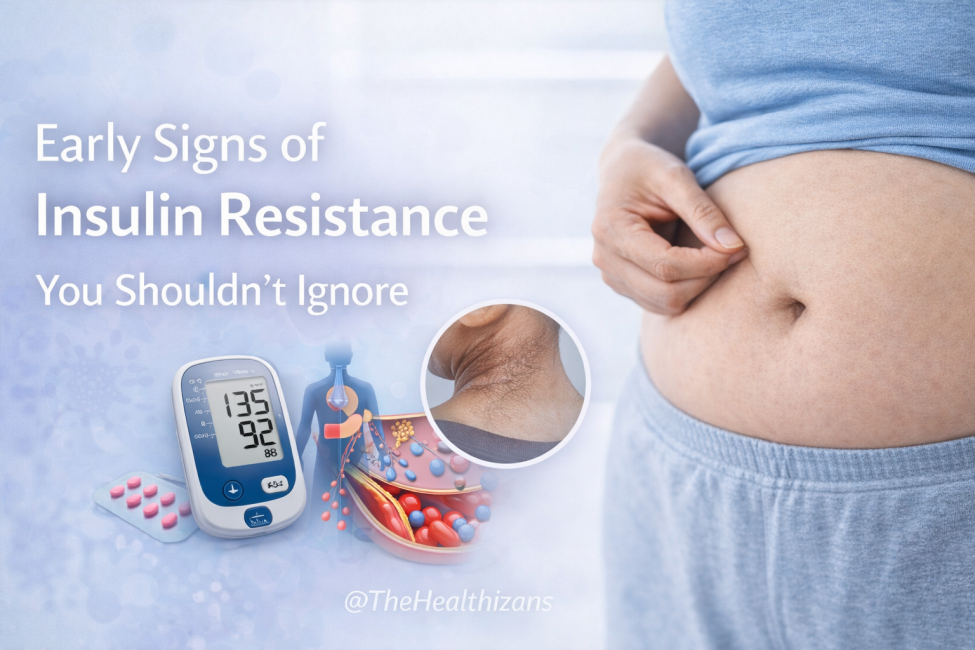
3. Weight Gain Around the Abdomen
Central weight gain — even without overall weight gain — is a key early sign. Abdominal fat is hormonally active and closely linked to insulin resistance.
This pattern often overlaps with changes seen in early signs of metabolic syndrome.
4. Difficulty Losing Weight
When insulin levels are persistently high, the body is more likely to store fat and resist fat loss. Many people notice that strategies that once worked no longer have the same effect.
5. Brain Fog or Poor Concentration
Fluctuating blood sugar levels can affect cognitive function, leading to difficulty focusing, forgetfulness, or mental sluggishness — symptoms sometimes confused with early signs of depression or nutrient deficiencies.
6. Skin Changes
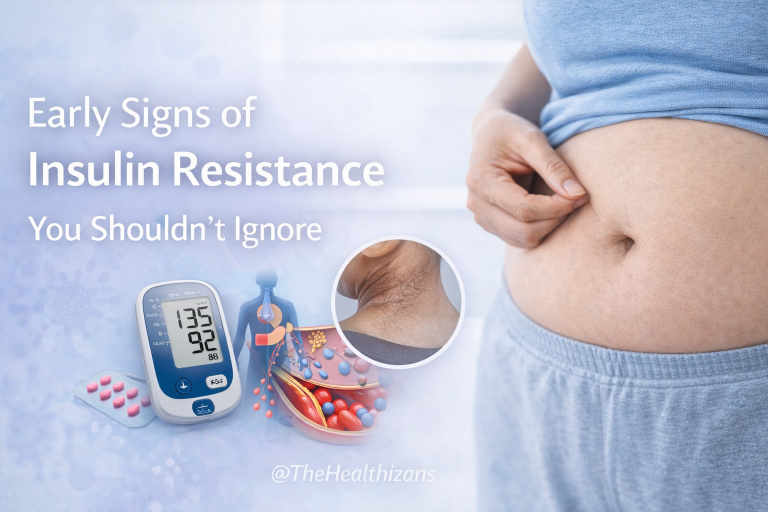
Darkened, velvety patches of skin — often around the neck, armpits, or groin — can be an early physical sign of insulin resistance (a condition known as acanthosis nigricans).
Skin tags may also appear more frequently.
7. Elevated Blood Pressure
Insulin resistance is closely linked to vascular changes and can contribute to rising blood pressure — even before hypertension is diagnosed. This overlap is why insulin resistance often coexists with early signs of high blood pressure.
8. Irregular Periods or Fertility Changes (in Women)
In women, insulin resistance can disrupt hormonal balance and ovulation, playing a role in conditions such as early signs of PCOS.
Who Is at Higher Risk?
Insulin resistance can affect people of any size, but risk is higher in those who:
- carry excess abdominal weight
- are physically inactive
- have a family history of type 2 diabetes
- experience chronic stress or poor sleep
- have PCOS or fatty liver disease
- have previously shown early signs of metabolic syndrome
Importantly, insulin resistance can occur even in people who appear outwardly healthy.
Why Early Recognition Matters
If left unaddressed, insulin resistance increases the risk of:
- type 2 diabetes
- heart disease and stroke
- fatty liver disease
- chronic inflammation
- nerve and kidney damage
The encouraging news is that early insulin resistance is often reversible with lifestyle changes and medical support.
How Insulin Resistance Is Identified
There’s no single test that definitively diagnoses insulin resistance early. Healthcare professionals may assess:
- fasting glucose or HbA1c
- fasting insulin levels
- lipid profile
- waist circumference and blood pressure
- overall metabolic risk pattern
It’s the combination of findings that matters.
What Helps in the Early Stages
Early improvements often come from:
- improving sleep and stress regulation
- increasing regular physical activity
- reducing prolonged sitting
- adjusting meal timing and composition
- addressing blood pressure and cholesterol early
Small, consistent changes made early are far more effective than drastic interventions later.
When to Seek Medical Advice
You should consider speaking with a healthcare professional if:
- fatigue or post-meal crashes are persistent
- weight gain is focused around the abdomen
- routine tests show rising blood sugar or blood pressure
- you have a family history of diabetes
Early assessment provides clarity and opens the door to prevention.
The Bottom Line
The early signs of insulin resistance are often quiet but meaningful. Fatigue after meals, central weight gain, cravings, skin changes, and subtle metabolic shifts are signals worth paying attention to.
Insulin resistance is not a personal failure — it’s a biological response shaped by genetics, environment, and modern lifestyles. Recognising it early offers one of the strongest opportunities to protect long-term metabolic and cardiovascular health.
Sources
- NHS — Type 2 Diabetes Overview
- World Health Organization — Diabetes
- American Diabetes Association — Insulin Resistance
- Mayo Clinic — Insulin Resistance
About the Author