Dark chocolate often sits in a confusing space between treat and health food. One moment it’s praised for heart health and antioxidants, the next it’s dismissed as just another sugary indulgence.
So what’s the truth?
Is dark chocolate genuinely good for you — and if so, how much is actually healthy before the benefits turn into excess?
As with many foods, the answer lies in quality, portion size, and context, not extremes.
What Makes Dark Chocolate Different?
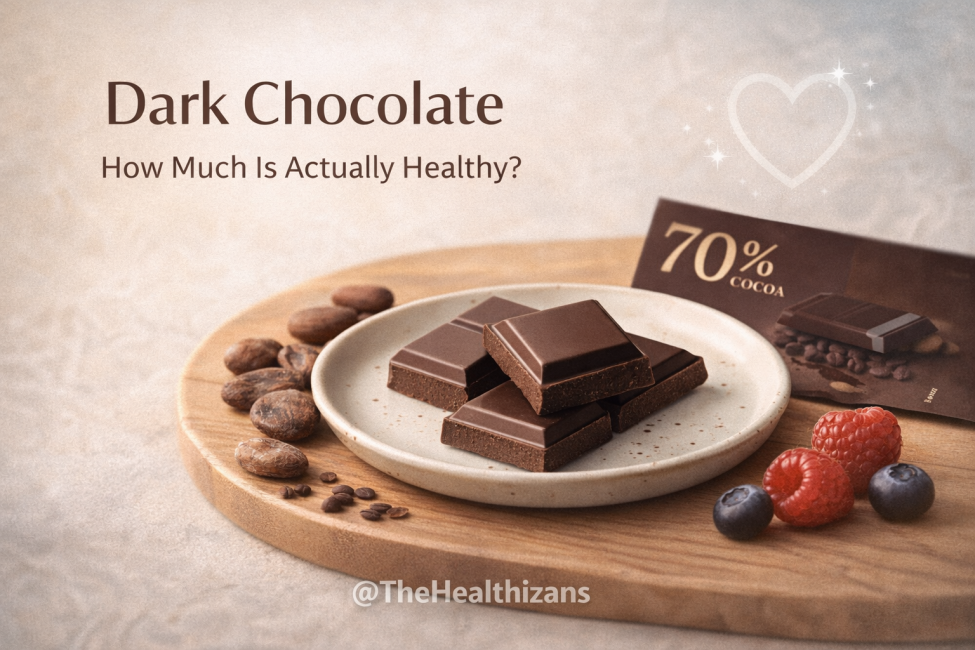
Dark chocolate is made from cocoa solids, cocoa butter, and small amounts of sugar. What sets it apart from milk or white chocolate is its higher cocoa content, which means more beneficial plant compounds and less added sugar.
Cocoa is rich in flavanols, a group of antioxidants linked to improved blood vessel function, reduced inflammation, and better cardiovascular health. The higher the cocoa percentage, the greater the flavanol content — but also the more bitter the taste.
Potential Health Benefits of Dark Chocolate
When consumed in moderation, dark chocolate may offer several benefits.
Research suggests cocoa flavanols can help improve blood flow by supporting nitric oxide production, which helps blood vessels relax. This may contribute to modest reductions in blood pressure and improved circulation.
Dark chocolate has also been associated with improved insulin sensitivity and reduced oxidative stress. These effects align with broader dietary patterns that support heart health — similar to what we explored in Antioxidant-Rich Superfoods: The Science Behind Them.
There’s also emerging evidence linking cocoa consumption to improved mood and cognitive function, likely due to its effects on blood flow and neurotransmitter activity.
So… How Much Dark Chocolate Is Actually Healthy?
This is where moderation matters.
Most health studies suggest benefits with small amounts, not large daily servings. A sensible guideline for most adults is:
- 20–30 grams (about 2–3 small squares)
- 70% cocoa or higher
- Enjoyed a few times a week, not necessarily every day
At this level, you’re more likely to benefit from flavanols without consuming excessive sugar or calories.
When Dark Chocolate Can Become Unhelpful
Despite its benefits, dark chocolate is still energy-dense and contains sugar and fat. Eating large quantities can easily tip the balance toward excess calorie intake, which may undermine weight or blood sugar goals.
Highly processed “dark” chocolates with lower cocoa content, added flavourings, or high sugar levels offer far fewer benefits — and are often closer to confectionery than functional food.
This reinforces a principle we discussed in Can You Lose Weight Without Dieting? What Science Really Says: portion awareness and food quality matter more than labels alone.
Who Should Be More Cautious?
Some people may need to be more mindful with dark chocolate intake.
Those sensitive to caffeine or theobromine (naturally present in cocoa) may notice sleep disruption, palpitations, or reflux symptoms if eaten late in the day. This links closely with what we covered in Acid Reflux and Diet: Foods That Help and Foods That Hurt.
People managing migraines or reflux may also find chocolate to be a personal trigger.
Choosing Healthier Dark Chocolate
If you’re buying dark chocolate for health rather than habit, a few simple checks help:
Look for 70–85% cocoa content, minimal ingredient lists, and lower added sugar. The first ingredient should be cocoa mass or cocoa solids — not sugar.
Enjoy it slowly, mindfully, and ideally as part of a balanced meal or snack, rather than on an empty stomach.
Final Thoughts
Dark chocolate doesn’t need to be feared — or overhyped. In modest amounts, high-quality dark chocolate can fit into a healthy diet and even offer small cardiovascular and antioxidant benefits.
The key is remembering that more is not better. A little, enjoyed intentionally, goes much further than large daily portions justified by health claims.
What’s Your Take?
Do you enjoy dark chocolate regularly, or do you avoid it because of sugar concerns? Has this changed how you think about it? Share your thoughts — your experience may help others find a healthier balance.
Sources
- British Heart Foundation — Chocolate and Heart Health
- Harvard T.H. Chan School of Public Health — Chocolate and Health
- European Journal of Clinical Nutrition — Cocoa Flavanols and Cardiovascular Health
- NHS — Understanding Food Labels and Sugar
- Mayo Clinic — Dark Chocolate: Is It Healthy?
About the Author