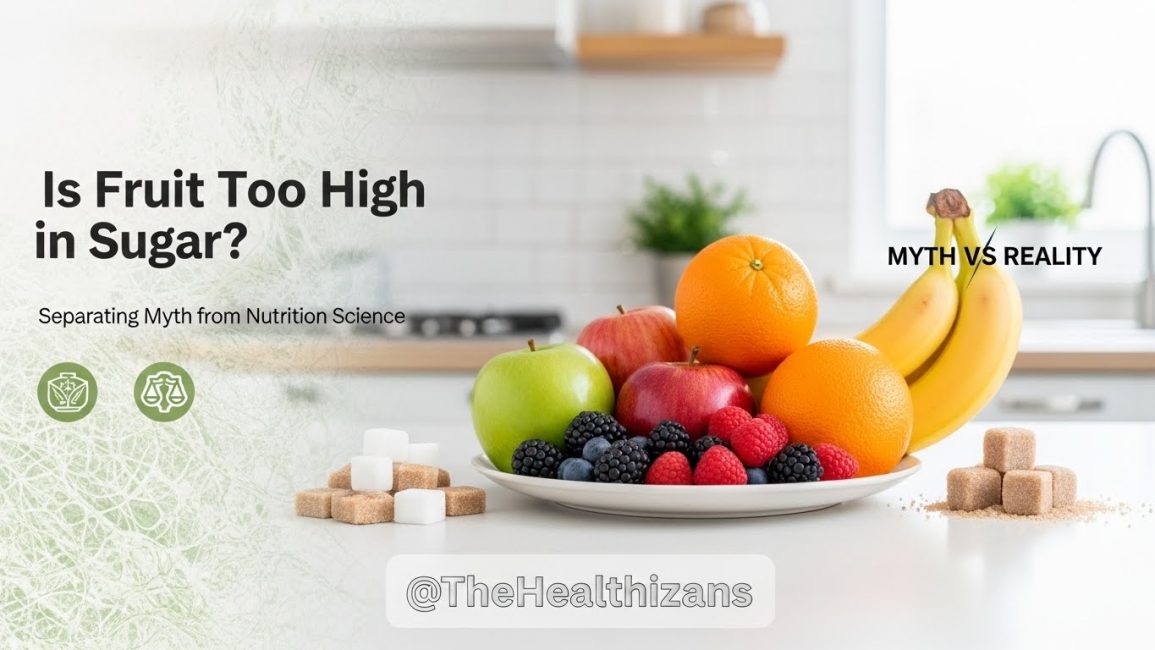
Fruit often finds itself unfairly blamed in conversations about sugar, weight gain, and blood sugar spikes. You may have heard advice to “cut back on fruit” or avoid it altogether if you’re trying to lose weight or manage blood sugar.
But is fruit really the problem — or has the sugar conversation lost its context?
To answer this properly, we need to look beyond numbers on a label and understand how sugar in fruit behaves in the body, and how it differs from the sugars we’re encouraged to limit.
Understanding the Sugar in Fruit
Fruit contains natural sugars, mainly fructose, but it also comes packaged with fibre, water, vitamins, minerals, and protective plant compounds.
This combination matters. Fibre slows digestion, reduces blood sugar spikes, and increases fullness. Water adds volume without calories. Together, they change how sugar is absorbed and used by the body.
This is very different from free sugars found in sugary drinks, sweets, cakes, and ultra-processed foods — where sugar is rapidly absorbed with little nutritional benefit.
Why Fruit Doesn’t Act Like “Sugar” in the Body
Although fruit contains sugar, it doesn’t behave like refined sugar. Whole fruit requires chewing, takes longer to digest, and triggers fullness signals that help prevent overeating.
Studies consistently show that people who eat more whole fruit tend to:
- have better weight control
- have lower risk of heart disease
- show improved metabolic health
This reinforces a key message we explored in Can You Lose Weight Without Dieting? What Science Really Says — food quality and structure matter more than sugar numbers alone.
Fruit and Blood Sugar: Should You Be Concerned?
For most people, whole fruit does not cause harmful blood sugar spikes. In fact, regular fruit intake is associated with a lower risk of developing type 2 diabetes.
However, context matters. Portion size, the type of fruit, and what it’s eaten with all influence blood sugar response.
Pairing fruit with protein, healthy fats, or fibre — such as yoghurt, nuts, or oats — can further stabilise blood sugar. This approach mirrors the balanced strategy discussed in The Plate Method: A Simple Way to Eat Healthier Without Counting Calories.
When Fruit Intake May Need Individual Adjustment
Fruit is healthy, but it’s not a free-for-all.
People who may benefit from being more mindful include those with:
- insulin resistance
- poorly controlled diabetes
- digestive sensitivities
In these cases, spacing fruit intake across the day, choosing lower-glycaemic fruits, and avoiding fruit juices can help.
It’s also worth noting that fruit juice behaves very differently from whole fruit. Juicing removes most of the fibre, allowing sugar to be absorbed rapidly — a point often overlooked in sugar debates.
Fruit, Gut Health, and the Bigger Picture
Fruit provides fermentable fibres and polyphenols that feed beneficial gut bacteria. A diverse intake of fruits supports microbial balance, which is closely linked to digestion, immunity, and even mood.
This connects directly with what we covered in Signs Your Gut Is Out of Balance: What Your Body May Be Telling You, where dietary diversity — not restriction — supports gut health.
So… Is Fruit Too High in Sugar?
For the vast majority of people, the answer is no.
Whole fruit is not the same as added sugar. It supports health rather than undermining it. The problem isn’t fruit — it’s diets overloaded with refined sugars and ultra-processed foods.
Rather than fearing fruit, the more helpful question is:
Am I eating fruit in its whole, natural form — and as part of a balanced diet?
Final Thoughts
Fruit has been part of healthy dietary patterns across cultures for centuries. Demonising it based on sugar content alone ignores how the body processes food in real life.
When eaten whole and in reasonable portions, fruit supports energy, digestion, heart health, and long-term wellbeing — without the downsides often attributed to sugar.
What’s Your Take?
Have you ever avoided fruit because of sugar concerns? Did this article change how you see it? Share your thoughts — your experience could help clear the confusion for others.
Sources
- NHS — 5 A Day and Fruit Intake
- Harvard T.H. Chan School of Public Health — Fruit and Health
- World Health Organization — Sugars Intake for Adults and Children
- American Diabetes Association — Fruit and Blood Sugar
- British Dietetic Association — Fruit, Sugar and Health
About the Author