Bad breath, medically known as halitosis, is far more common than most people realise. Yet it remains a topic many people feel uncomfortable talking about, often reaching for quick fixes rather than understanding the real cause. Importantly, halitosis is rarely about poor hygiene alone. In most cases, it is a signal from the body that something needs attention.
Understanding what causes halitosis, and knowing when it may point to a deeper issue, can make it much easier to manage confidently and effectively.
Understanding Halitosis Beyond the Myths
Halitosis refers to persistent unpleasant breath odour that does not improve with normal brushing or occasional mouthwash use. Temporary bad breath, such as morning breath or odour after certain foods, is normal. What matters is persistence.
Globally, dental research consistently shows that around 80–90% of halitosis originates in the mouth, not the stomach. This challenges one of the most common myths and helps explain why many popular remedies fail to work long term.
Where Bad Breath Really Comes From
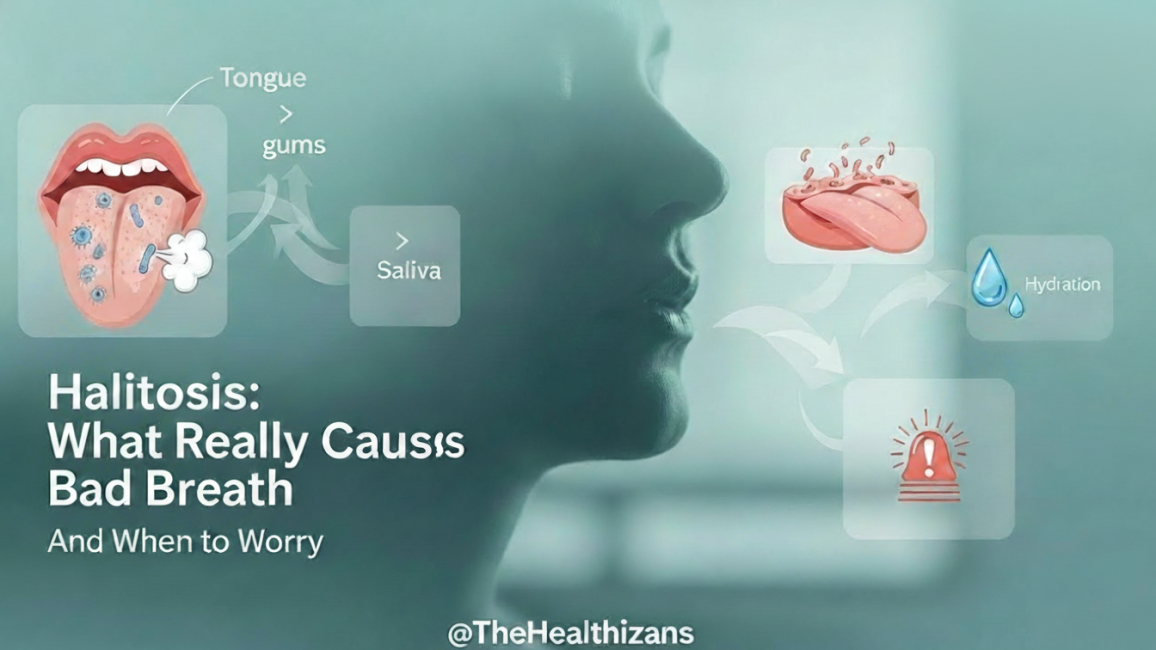
The most frequent cause of halitosis is bacterial activity in the mouth, particularly on the tongue. The tongue’s surface is not smooth; it contains grooves where food debris, dead cells, and bacteria can collect. As these bacteria break down proteins, they release chemicals known as volatile sulphur compounds, which are responsible for the characteristic unpleasant smell. This is why brushing teeth alone often does not resolve ongoing bad breath.
Gum disease is another major contributor. When plaque builds up around the gums, it creates pockets where bacteria thrive. Bleeding gums, inflammation, and untreated cavities can all worsen halitosis and may act as early warning signs of periodontal disease.
Dry mouth also plays a significant role. Saliva helps cleanse the mouth by washing away bacteria and food particles. When saliva flow is reduced, odour-causing bacteria multiply more easily. This can happen due to dehydration, mouth breathing, ageing, or the use of certain medications, including some treatments for blood pressure, allergies, or mental health conditions.
Diet and eating patterns can influence breath as well. Foods such as garlic, onions, sugary snacks, and alcohol can worsen odour, while regular hydration and fibre-rich fruits and vegetables can help support saliva production. In addition, prolonged fasting or very low-carbohydrate diets may cause “ketone breath”, which often has a sweet or metallic smell.
Not all causes of halitosis are oral. Conditions affecting the nose and throat, such as chronic sinus infections, post-nasal drip, or tonsil stones, can also lead to persistent bad breath, even when oral hygiene is good.
Can Halitosis Come from the Stomach?
Although widely believed, stomach-related causes of halitosis are relatively uncommon. Acid reflux, infection with Helicobacter pylori, or certain metabolic conditions may contribute in some people, but these account for a small proportion of cases overall. If halitosis persists despite good dental care, it may be worth discussing non-oral causes with a healthcare professional.
When Is Bad Breath a Reason to Seek Help?
Occasional bad breath is normal, but halitosis should be checked if it is persistent, unexplained, or worsening. It is especially important to seek advice if it occurs alongside bleeding gums, mouth pain, persistent dryness, digestive symptoms, unexplained weight loss, or fatigue. Early assessment by a dentist or doctor can prevent minor issues from developing into more serious problems.
What Actually Helps in the Long Term
Managing halitosis effectively means addressing its cause rather than masking the smell. Consistent oral hygiene, including cleaning the tongue, maintaining hydration, and attending regular dental check-ups, remains the most reliable approach. Alcohol-free mouthwashes may help some people, but they work best as part of a wider routine rather than as a standalone solution.
If dry mouth is a concern, improving hydration habits can make a meaningful difference. You may also find it helpful to read our related Healthizans article on why dry mouth happens and how hydration supports oral health, which explores this connection in more detail.
Key Takeaway
Halitosis is not something to be embarrassed about. In most cases, it reflects manageable issues such as tongue bacteria, gum health, or dry mouth. By understanding the real causes and responding early, persistent bad breath can usually be improved or resolved altogether.
What’s Your Take?
Have you ever noticed bad breath lingering despite regular brushing? What steps helped, or what questions do you still have? Your experiences may help others navigating the same concern.
Sources
- NHS – Oral health and gum disease guidance
- World Health Organization – Oral health factsheets
- American Dental Association – Halitosis and tongue cleaning
- Mayo Clinic – Bad breath (halitosis): causes and diagnosis
About the Author