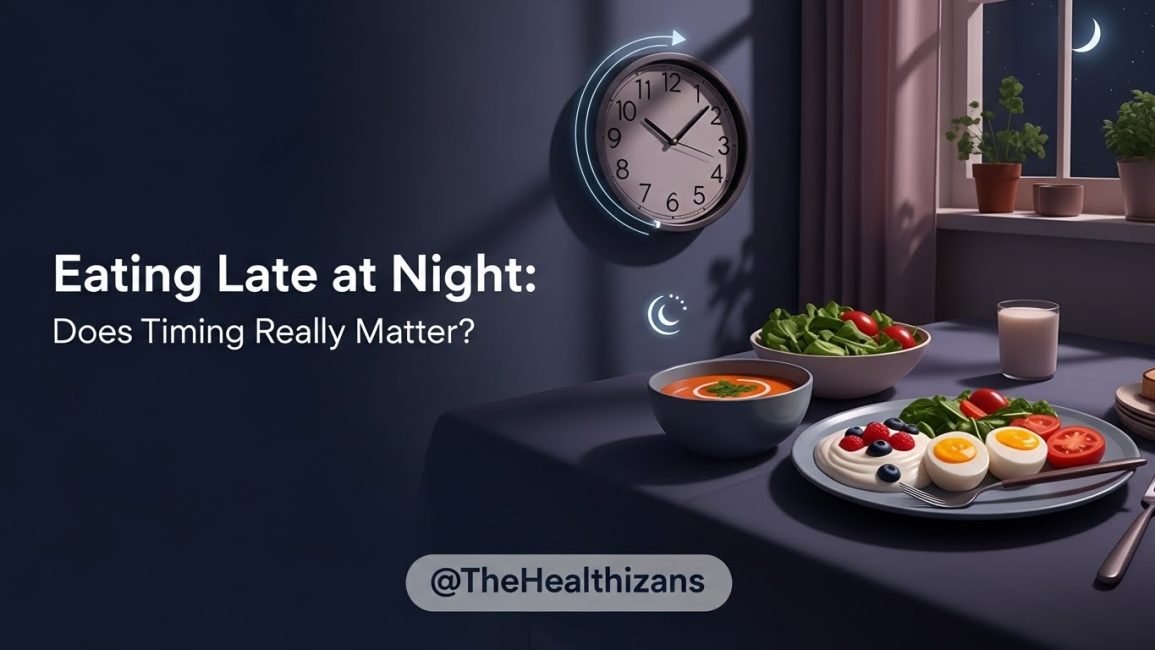
We’ve all heard the warning: “Don’t eat late at night — it’ll make you gain weight.”
But is the timing of your meals really that important, or is it just another nutrition myth that refuses to die?
Modern lifestyles don’t always allow for early dinners. Shift work, long commutes, family responsibilities, or late workouts often push meals into the evening. So the real question isn’t whether late-night eating is “bad”, but when, what, and how often it actually affects your health.
Let’s unpack what science really says about eating late at night — and whether it truly matters for weight, blood sugar, and overall wellbeing.
Why Meal Timing Became a Health Concern
The idea that eating late causes weight gain comes from how the body’s internal clock (circadian rhythm) works. Your metabolism, digestion, insulin sensitivity, and hormone release all follow a daily rhythm — generally more efficient earlier in the day.
As the evening progresses:
- Insulin sensitivity decreases
- Digestion slows slightly
- The body prepares for rest, not heavy processing
This doesn’t mean food eaten at night magically turns into fat — but it does mean your body may handle it differently.
Does Eating Late Automatically Cause Weight Gain?
Short answer: no — not by itself.
Weight gain still comes down primarily to overall calorie intake, food quality, and consistency over time. However, late-night eating is often associated with behaviours that do promote weight gain, such as:
- Mindless snacking while watching TV
- High-calorie, ultra-processed foods
- Eating due to stress or fatigue rather than hunger
- Larger portions after already meeting daily calorie needs
So it’s not the clock that’s the problem — it’s what late-night eating often looks like in real life.
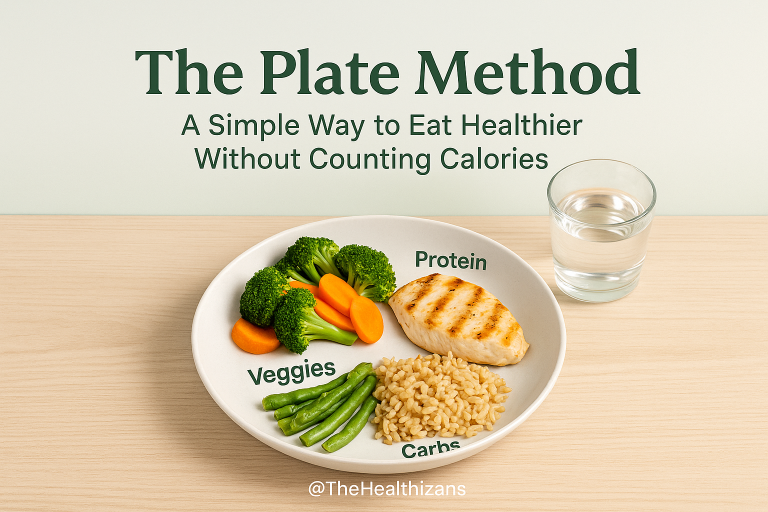
This is similar to what we discussed in The Plate Method: A Simple Way to Eat Healthier Without Counting Calories, where balance and portion awareness matter more than rigid rules.
Late-Night Eating and Blood Sugar Control
Meal timing may matter more for blood sugar regulation than for weight alone.
Research shows that eating large, carbohydrate-heavy meals late at night can:
- Increase post-meal blood sugar spikes
- Reduce insulin efficiency
- Disrupt overnight glucose regulation
This is especially relevant for people with:
- Prediabetes
- Type 2 diabetes
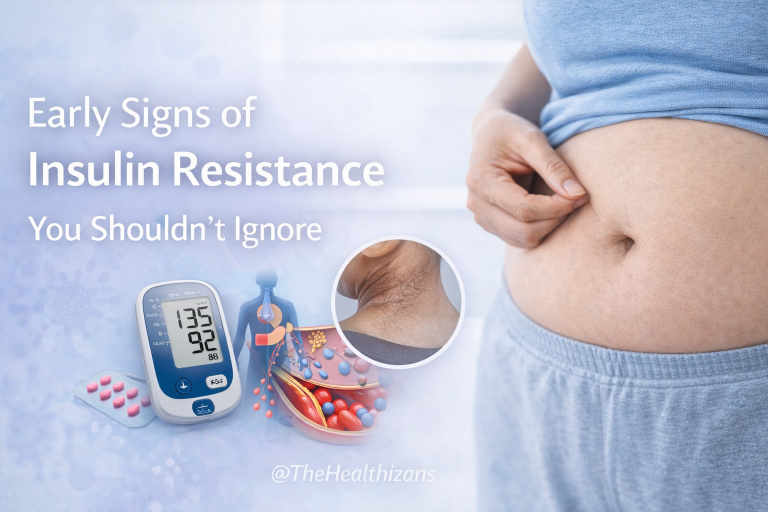
- Insulin resistance
Smaller, balanced meals earlier in the evening tend to support more stable overnight blood sugar levels.
What About Sleep and Digestion?
Eating too close to bedtime can affect sleep quality, particularly if meals are heavy, spicy, or high in fat.
Common issues include:
- Acid reflux or heartburn
- Feeling overly full or uncomfortable
- Poor sleep quality or frequent waking
Poor sleep, in turn, affects hunger hormones like ghrelin and leptin, increasing cravings the next day — creating a cycle that’s hard to break.
When Late-Night Eating May Actually Be Okay
Late eating isn’t automatically harmful in every situation.
It may be reasonable if:
- You work night shifts
- You train or exercise late in the evening
- Your overall diet is balanced
- Portions are moderate
- Food choices are nutrient-dense
In these cases, the goal is to eat smart, not skip meals.
Good late-evening options include:
- Greek yoghurt with berries
- A small portion of eggs and vegetables
- Soup with protein and fibre
- Nuts in controlled portions
Practical Tips for Healthier Evening Eating
Rather than setting strict cut-off times, focus on habits that support your body:
- Aim for your largest meals earlier in the day when possible
- Keep evening meals lighter and balanced
- Avoid ultra-processed snacks late at night
- Eat at least 2–3 hours before bedtime if you can
- Tune into hunger cues — not boredom or stress
Consistency matters more than perfection.
Final Thoughts
Eating late at night isn’t inherently harmful — but habitual late-night overeating, poor food choices, and disrupted sleep can affect weight, blood sugar, and overall health over time.
Instead of asking “What time should I stop eating?”, a better question is:
“Am I eating in a way that supports my body’s rhythm and needs?”
When quality, balance, and awareness come first, timing becomes far less stressful — and far more manageable.
What’s Your Take?
Do you find yourself eating late regularly? Is it due to schedule, hunger, or habit? Share your experience — it might help someone else rethink their routine.
Sources
- NHS — Healthy Eating and Meal Timing
- Harvard T.H. Chan School of Public Health — Meal Timing and Metabolism
- National Sleep Foundation — Eating and Sleep
- American Diabetes Association — Meal Timing and Blood Sugar
- WHO — Healthy Diet Factsheet
About the Author