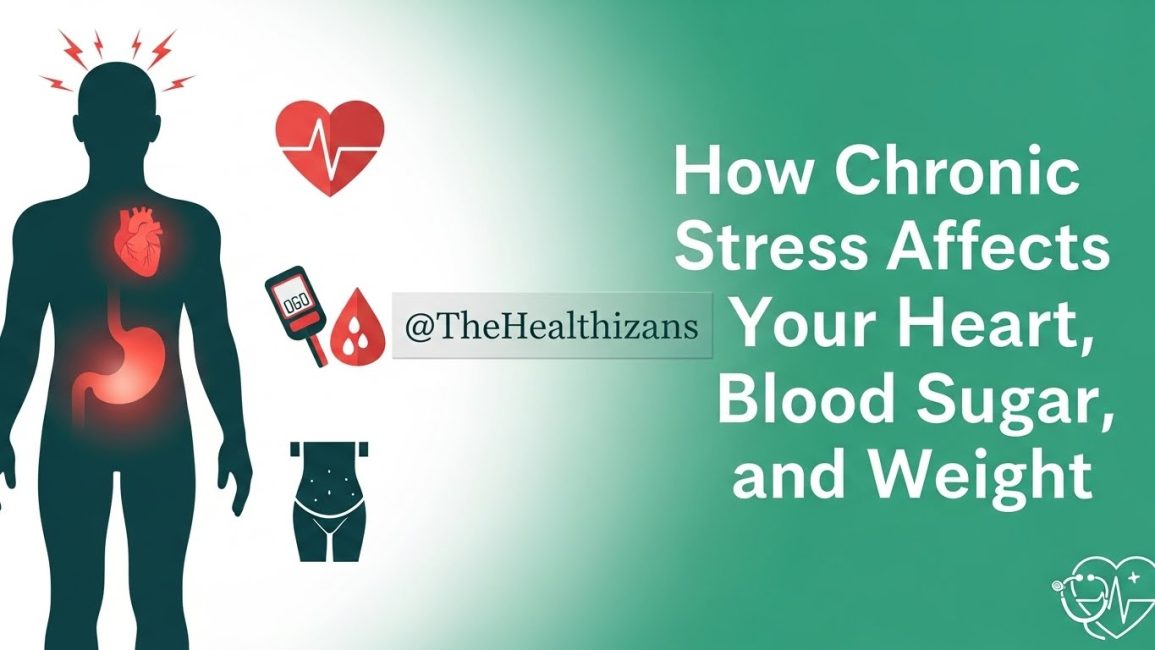
Stress is often brushed off as a mental or emotional issue. However, when stress becomes chronic, it quietly reshapes your physical health — especially your heart, blood sugar levels, and body weight.
Understanding how chronic stress affects your heart, blood sugar, and weight is crucial, because these changes often happen gradually and silently. By the time symptoms appear, damage may already be underway.
Let’s break down what’s really happening inside your body — and, importantly, what you can do about it.
First Things First: What Happens During Chronic Stress?
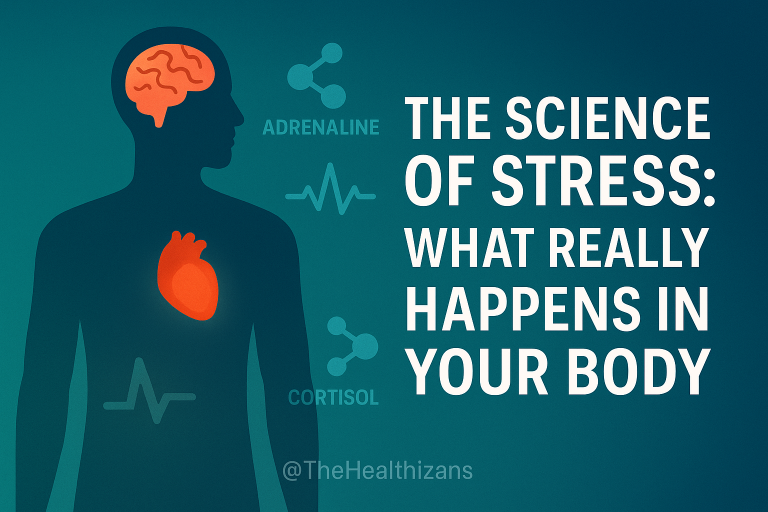
In moments of danger, stress is helpful. Your body releases adrenaline and cortisol, raising heart rate and blood sugar so you can respond quickly.
However, when stress becomes constant — from work pressure, financial worries, caregiving, or poor sleep — this response stays switched on far longer than intended.
As explained in our article The Science of Stress: What Really Happens in Your Body, long-term cortisol exposure disrupts multiple systems at once, setting the stage for chronic disease.
How Chronic Stress Strains Your Heart
Over time, chronic stress keeps your cardiovascular system under sustained pressure.
Here’s how it affects your heart health:
- Blood vessels remain more constricted, raising blood pressure
- Heart rate stays elevated, even at rest
- Inflammation increases inside artery walls
- Recovery between stress responses becomes slower
Gradually, this increases the risk of:
- High blood pressure (hypertension)
- Heart disease
- Stroke
- Irregular heart rhythms
💡 Important: Even people with “normal” blood pressure readings can still experience stress-related cardiovascular strain beneath the surface.
How Chronic Stress Disrupts Blood Sugar Control
Cortisol directly affects how your body manages glucose. During stress, cortisol signals the liver to release sugar into the bloodstream for quick energy.
When stress is ongoing:
- Blood sugar stays elevated for longer periods
- Cells become less responsive to insulin
- The pancreas works harder to keep levels stable
Over time, this pattern can lead to:
- Insulin resistance
- Prediabetes
- Type 2 diabetes
This explains why stress is increasingly recognised as a metabolic risk factor, not just an emotional one.
How Chronic Stress Influences Weight Gain
Weight gain linked to stress is not simply about overeating — hormones play a major role.
Chronic stress can:
- Increase appetite, especially for sugary or high-fat foods
- Slow metabolism through hormonal disruption
- Promote fat storage, particularly around the abdomen
- Disrupt sleep, which further alters hunger hormones
Cortisol specifically encourages visceral (belly) fat, which is strongly linked to heart disease and diabetes risk.
💡 This is why some people gain weight despite maintaining similar diets and activity levels.
Why Heart Health, Blood Sugar, and Weight Are So Closely Linked
These three systems don’t operate independently.
Chronic stress acts as a common trigger, creating a cycle:
- Stress raises blood pressure
- Blood vessel damage worsens insulin resistance
- Insulin resistance promotes fat storage
- Excess weight further strains the heart
Unless stress is addressed, this cycle quietly reinforces itself.
👉 If sleep has also been affected, our article Stress and Sleep: Breaking the Cycle explains how poor rest amplifies these same risks.
Practical Ways to Reduce Stress-Driven Health Risks
The goal isn’t to eliminate stress — that’s unrealistic. Instead, the focus is on lowering baseline stress levels and improving recovery.
Evidence-informed strategies include:
- Slow breathing practices to reduce cortisol
- Regular low-intensity movement, such as walking
- Consistent sleep and wake times
- Morning daylight exposure to stabilise hormones
- Mental unloading (journalling, reflection, planning)
💡 Small, repeatable habits are far more effective than occasional “stress fixes.”
Key Takeaway
Chronic stress doesn’t just affect how you feel — it reshapes how your heart functions, how your body handles blood sugar, and how fat is stored.
The encouraging news? When stress is managed consistently, many of these changes are reversible. Supporting your nervous system is one of the most powerful — and often overlooked — steps toward long-term health.
What’s Your Take?
Have you noticed changes in your weight, blood pressure, or energy levels during prolonged stress?
Let’s talk — share your experience below 👇
📚 Sources
- NHS – Stress and its effects on physical health
- American Heart Association – Stress and Heart Health
- Harvard Health Publishing – How stress affects blood sugar
- World Health Organization (WHO) – Stress and noncommunicable diseases
About the Author