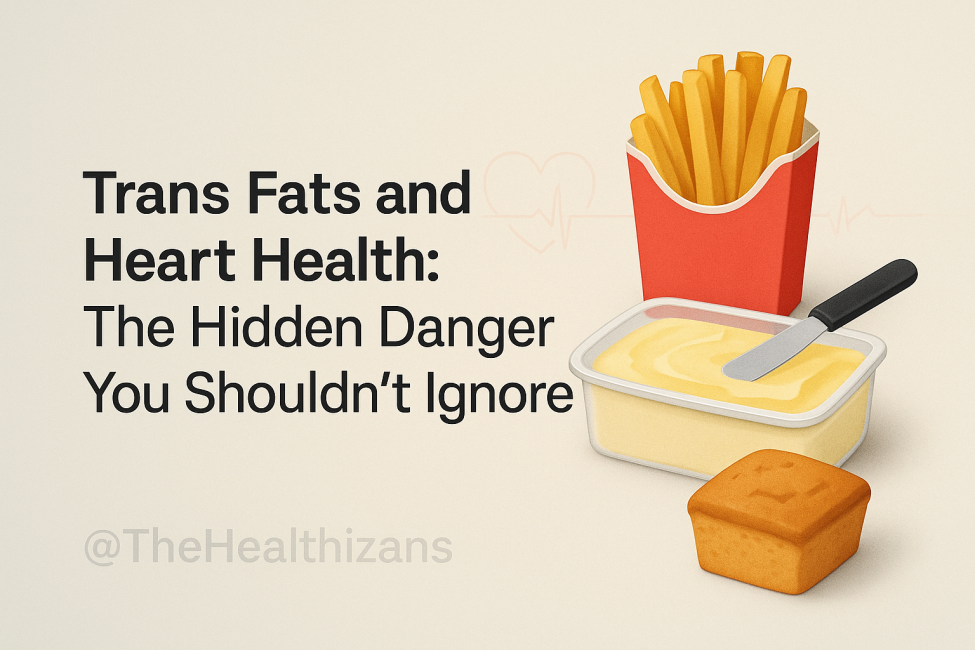
Heart health is shaped not only by the foods we choose to include, but also by the ones we should avoid. Among all dietary factors known to increase the risk of heart disease, trans fats stand out as one of the most dangerous.
These industrially produced fats were once common in margarines, frying oils and baked goods because they added flavour, texture and longer shelf life. Today, global health agencies — including the World Health Organization — strongly warn against them, with clear evidence linking even small amounts to a higher risk of heart attack, stroke and early death.
Understanding how trans fats affect the body, and recognising where they still appear in everyday foods, is essential for protecting your long-term cardiovascular health.
What Trans Fats Are — and Why They Were Used for So Long
Trans fats are created when vegetable oils are chemically hydrogenated to make them solid. This process improves texture and keeps products stable for months on supermarket shelves.
For years, they appeared in margarine, commercial pastries, doughnuts, pies, biscuits, deep-fried foods and processed snacks. While convenient for food manufacturers, these fats come with a significant cost to human health — a cost we now understand more clearly than ever.
How Trans Fats Affect the Heart
The relationship between trans fats and heart health is one of the most consistently proven findings in nutrition science. Trans fats raise LDL cholesterol, the harmful type that clogs arteries, while simultaneously lowering HDL cholesterol, the protective type that helps remove cholesterol from the bloodstream.
This alone puts strain on the cardiovascular system, but trans fats also trigger inflammation, contribute to oxidative stress, and impair normal blood vessel function. These combined effects increase the likelihood of high blood pressure, arterial stiffness and the development of coronary artery disease.
Research cited by the WHO shows that even just 2% increase of total daily energy intake from trans fats raises:
- the risk of dying from any cause by 14%, and
- the risk of heart disease by 25%.
These findings are consistent across multiple large, long-term studies.
For another example of how everyday foods influence cardiovascular wellbeing, you may also want to read our article on Pomegranate Juice: Heart-Healthy Drink or Sugar Trap?.
The Broader Health Impact Beyond Cholesterol
Trans fats do more than influence cholesterol levels. They weaken the inner lining of blood vessels, reduce the availability of nitric oxide — a compound the body uses to relax arteries — and promote hormonal and metabolic disturbances linked to inflammation.
There is emerging research exploring associations between trans fats and conditions such as type 2 diabetes, non-alcoholic fatty liver disease and cognitive decline. While these areas require further study, the trends highlight an even stronger case for avoiding trans fats altogether.
Where Trans Fats Still Hide in Everyday Foods
Although many countries have taken steps to restrict or remove industrial trans fats, they remain present in foods across regions where regulations are weaker or inconsistently enforced.
- some deep-fried fast foods
- certain margarines and shortenings
- commercially baked cakes, pastries and biscuits
- packaged snacks and crackers
- some instant noodles
- non-dairy creamers
- microwave popcorn prepared with solid fats
The most reliable way to spot them is by checking ingredient lists for “partially hydrogenated oils” — a clear sign of industrial trans fats.
How to Reduce Trans Fat Intake Without Feeling Restricted
You don’t need to avoid all fats — only the harmful ones. Replacing trans-fat-containing foods with healthier options can significantly improve cardiovascular health without compromising flavour or satisfaction.
Supportive alternatives include olive oil, rapeseed oil, avocado oil, nuts, seeds, oily fish, and whole, minimally processed foods. These healthier fats help maintain stable cholesterol levels and provide essential nutrients the body needs for energy, hormone production and cell repair.
Global Progress and Why It Matters
Countries that have eliminated industrial trans fats from their food supply — such as Denmark, Canada and the United States — have seen measurable reductions in heart-related deaths within just a few years.
The World Health Organization now aims for a worldwide phase-out of industrial trans fats, estimating that successful implementation could prevent millions of premature deaths over time. Removing trans fats from diets is considered one of the most cost-effective strategies in cardiovascular disease prevention.
Final Thoughts
Trans fats serve no nutritional purpose and carry substantial health risks. The scientific evidence is clear and consistent: avoiding them is one of the simplest and most powerful actions you can take to protect your heart.
By being aware of where trans fats hide and choosing healthier alternatives, you create a foundation for better long-term health — for yourself and your family.
What’s Your Take?
Were you already paying attention to trans fats, or did this give you new insight into everyday foods? Share your thoughts below — your experience may encourage others to make heart-healthy changes.
Sources
- World Health Organization — Eliminating Trans Fat
- Harvard T.H. Chan School of Public Health — Trans Fat and Health
- American Heart Association — Trans Fats and Cardiovascular Disease
- Mayo Clinic — Trans Fat: The Risks and How to Avoid Them
- British Heart Foundation — Fats Explained
About the Author