Heart disease remains the world’s leading cause of death, and for decades treatment has relied on familiar procedures — stents, angioplasty, and bypass surgery. These interventions save lives, but they are invasive, costly, and often require repeat procedures because plaque continues to build up in the arteries.
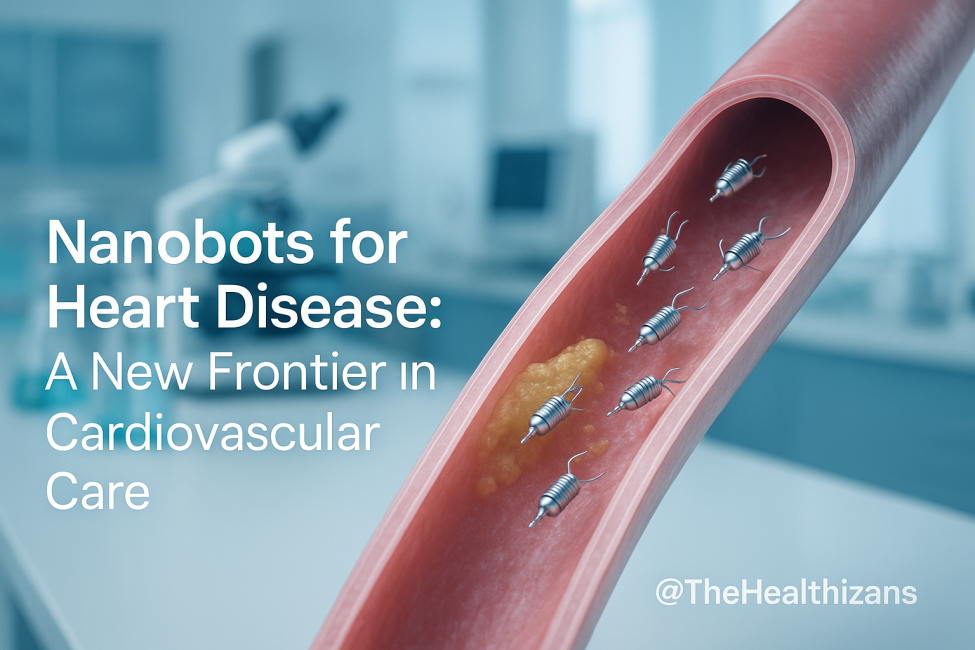
Now, a remarkable piece of research from Swedish scientists is pointing to an entirely new frontier: microscopic nanobots that could travel through the bloodstream and break down arterial plaque from within. Though still in early experimental stages, the concept is generating significant excitement for its potential to reshape cardiovascular medicine.
What Exactly Are These Nanobots?
The research team, based at the Chalmers University of Technology in Gothenburg, has been developing nanoscale machines designed to perform highly targeted tasks inside blood vessels. These nanobots are thousands of times smaller than a grain of sand and engineered using advanced materials that respond to magnetic guidance or biochemical cues.
In early laboratory experiments and simulated vascular environments, the nanobots demonstrated three key capabilities:
- The ability to move through fluid channels that mimic human arteries
- Selective attachment to plaque-like deposits
- Controlled mechanical or chemical disruption of plaque without harming nearby tissues
What makes this research powerful is its precision. Instead of pushing plaque aside (as with angioplasty) or rerouting blood flow (as in bypass surgery), these nanobots aim to remove the blockage itself — directly at the microscopic level.
Why This Matters for Heart Care
Today’s cardiovascular interventions depend on large, invasive tools because that is what technology has traditionally allowed. Nanobots introduce the possibility of treating heart disease from within the bloodstream, without major incisions, stents, or lengthy recovery periods.
If future trials succeed, this innovation could offer several important advantages:
- Much faster recovery times, potentially within hours
- Lower risks of complications, such as infection or re-narrowing of the artery
- Reduced need for repeat procedures, which many patients currently face
- More natural restoration of blood flow, since plaque is dissolved rather than displaced
From a health-system perspective, the implications are enormous. The NHS and other global healthcare systems spend billions annually treating coronary artery disease, including repeat interventions. A minimally invasive nanobot approach could significantly reduce those long-term costs.
If you’d like to learn more about early warning signs of circulation problems, you can also read our piece on how blood pressure and cholesterol together increase heart risk, which offers further context on arterial health.
How Close Are We to Using Nanobots in Hospitals?
It’s essential to be realistic: nanobots for heart disease are not yet approved for human treatment. The Swedish studies reflect early-stage engineering breakthroughs, not a ready-to-use clinical therapy.
Before nanobots could reach hospitals, several major milestones must be achieved:
1. More advanced laboratory testing
Researchers must show consistent plaque targeting and safe breakdown under controlled conditions.
2. Animal studies
These will provide crucial information on how nanobots behave in real circulatory systems, including how they navigate, dissolve plaque, and exit the body.
3. Clinical trials in humans
This stage, requiring strict regulatory oversight, would determine safety, dosing, and effectiveness.
Most experts believe that if progress continues, early medical applications could emerge within the next decade — although timelines in emerging science can shift.
Could Nanobots Help Treat Other Diseases Too?
Yes — and this is one of the most exciting aspects of nanomedicine. Once researchers refine how to control tiny machines inside the body, similar technologies might one day be used for:
- Targeted cancer therapies, delivering medicines directly to tumours
- Precision drug delivery that avoids widespread side effects
- Repairing tissues or vessels damaged by chronic illness
- Breaking down micro-clots in sensitive areas like the brain or eyes
The possibilities are vast, though still theoretical. What is clear is that breakthroughs in cardiovascular nanobots set the stage for broader innovation across medicine.
A Glimpse Into the Future
Imagine walking into a clinic with chest discomfort and, instead of being prepared for invasive surgery, receiving a controlled infusion of nanobots that travel directly to the blockage, dissolve it, and restore blood flow — all within minutes.
We are not there yet, but research like this gives us a glimpse into what may be possible. The boundary between science fiction and clinical reality is narrowing, and innovations like nanobot medicine challenge us to rethink what healthcare could look like in the years ahead.
The future of cardiovascular care may be smaller — much smaller — than we ever imagined.
Sources
- Chalmers University of Technology. Self-propelled nanobots for targeted medical applications.
- Nature Nanotechnology – Overview of nanomachines and targeted plaque-disruption technology.
- European Society of Cardiology. Future technologies in cardiovascular care.
- World Health Organization (WHO). Cardiovascular diseases (CVDs) — global burden and trends.
About the Author