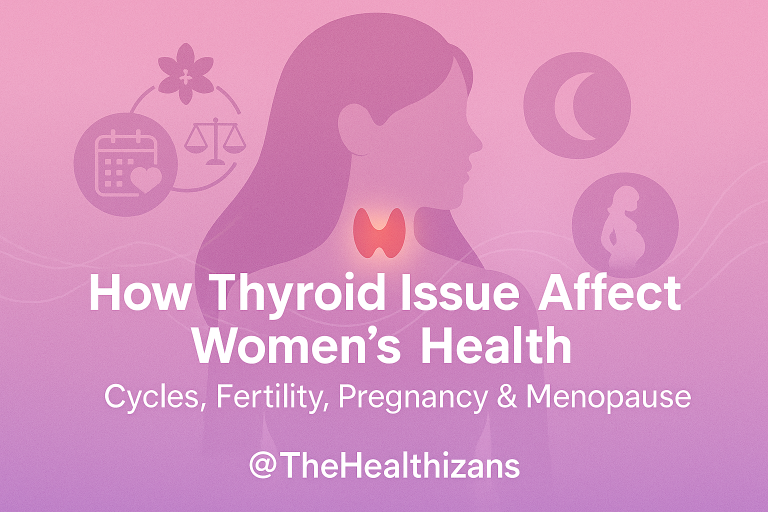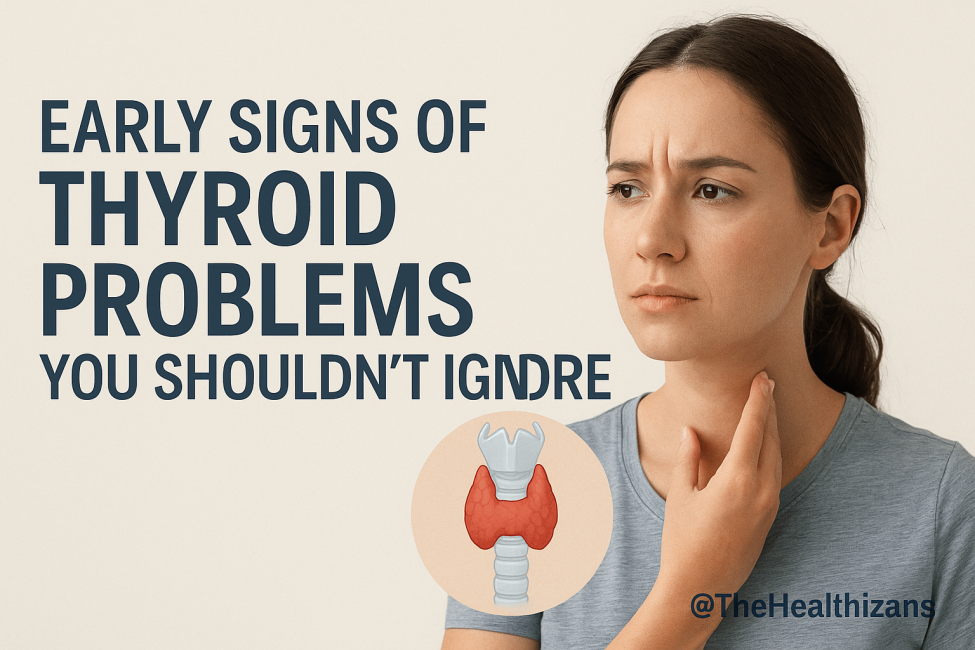
The thyroid is a small gland with an enormous influence on your health. Sitting quietly at the base of the neck, it helps regulate metabolism, energy, heart rate, mood, digestion, temperature, and even reproductive health. Yet thyroid problems are incredibly common — and the early signs of thyroid problems are often subtle, easily mistaken for stress, ageing, or lifestyle changes.
Understanding these early symptoms can help you get the right diagnosis quickly, avoid long-term complications, and improve your overall wellbeing.
Why Thyroid Problems Are Easy to Miss
Thyroid issues tend to develop gradually. Symptoms overlap with everyday experiences like fatigue, weight changes, poor sleep, and mood shifts. Many people go months — even years — without realising that the thyroid is responsible.
Thyroid problems generally show up in two ways:
- Hypothyroidism — thyroid is underactive
- Hyperthyroidism — thyroid is overactive
Each behaves differently, but both produce early signs that shouldn’t be ignored.
Early Signs of Hypothyroidism (Underactive Thyroid)
1. Fatigue That Doesn’t Improve With Rest – A persistent sense of tiredness — even after sleeping well — is one of the most common early signs. Many describe it as a “heavy” or “slow” feeling throughout the day.
2. Unexplained Weight Gain – Small but gradual weight gain, especially when your eating habits haven’t changed, can be a sign that metabolism has slowed down.
3. Feeling Cold More Often – If you’re the only one wearing a jumper in a warm room, it may be due to reduced thyroid hormone levels affecting temperature regulation.
4. Dry Skin and Hair Changes – Skin may become rougher, drier, or itchier. Hair may thin out or fall more easily, especially from the outer eyebrows.
5. Low Mood or Depression-Like Symptoms – Hypothyroidism can affect brain chemistry, leading to low mood, irritability, or difficulty concentrating.
6. Slow Heart Rate and Constipation – Metabolic slowdown affects other systems too — bowel movements become less frequent, and the heart may beat more slowly.
Early Signs of Hyperthyroidism (Overactive Thyroid)
1. Unexplained Weight Loss – If you’re eating normally (or more than usual) but losing weight steadily, the thyroid may be working too fast.
2. Feeling Hot or Sweaty Easily – Heat intolerance, sweating more than usual, or feeling shaky can be early indicators of excessive thyroid hormone.
3. Anxiety, Restlessness, or Irritability – Hyperthyroidism often affects mood, increasing feelings of nervousness or difficulty relaxing.
4. Fast or Irregular Heartbeat – A racing pulse, palpitations, or fluttering sensations may signal thyroid overactivity — particularly concerning if combined with anxiety or tremors.
5. Frequent Bowel Movements – Overactive thyroid speeds up digestion, leading to more frequent or looser stools.
6. Neck Swelling (Goitre) or Eye Changes – A visibly fuller neck or bulging eyes (common in Graves’ disease) can also be early signs.
Why Paying Attention Matters
Untreated thyroid problems can affect the heart, metabolism, fertility, mental health, and long-term wellbeing. Early diagnosis allows for simple treatment — often medication — with excellent outcomes.
The NHS recommends checking thyroid function if you have persistent, unexplained symptoms like fatigue, weight changes, mood shifts, or temperature intolerance.
For additional context on how hormonal changes affect health, also see our article on Early Signs of Hormonal Imbalance (coming soon in this series).
How Thyroid Problems Are Diagnosed
Diagnosis is straightforward and typically includes:
- A blood test for TSH, T3, and T4
- Thyroid antibody testing
- Physical examination of the neck
- Ultrasound (if needed for nodules or swelling)
What Treatment Looks Like
Treatment depends on whether the thyroid is underactive or overactive:
- Hypothyroidism: thyroid hormone replacement therapy
- Hyperthyroidism: medication to reduce hormone levels, radioiodine treatment, or surgery
- Lifestyle changes: improving sleep, managing stress, balanced diet, and checking for nutrient deficiencies like iodine and selenium
With the right treatment, most people return to normal energy, metabolism, and mood.
The Bottom Line
The early signs of thyroid problems are often mistaken for stress, ageing, or lifestyle fatigue — but recognising them early can make all the difference. Paying attention to subtle shifts in your energy, metabolism, temperature, or heartbeat is an investment in your long-term health. If something feels off, it’s always worth asking for a thyroid check.
Sources
- NHS — Underactive Thyroid (Hypothyroidism)
- NHS — Overactive Thyroid (Hyperthyroidism)
- Mayo Clinic — Thyroid Disease Overview
- American Thyroid Association — Thyroid Disorders
About the Author